
 Image credit: Asian Development Bank
Recent shifts in migration, consumption patterns, and increased importation of goods has seen the average per capita generation of municipal solid waste in Pacific Island countries grow to 1.2 kg/person/day, exceeding the global average of 0.74 kg/person/day – that’s a 62% difference.
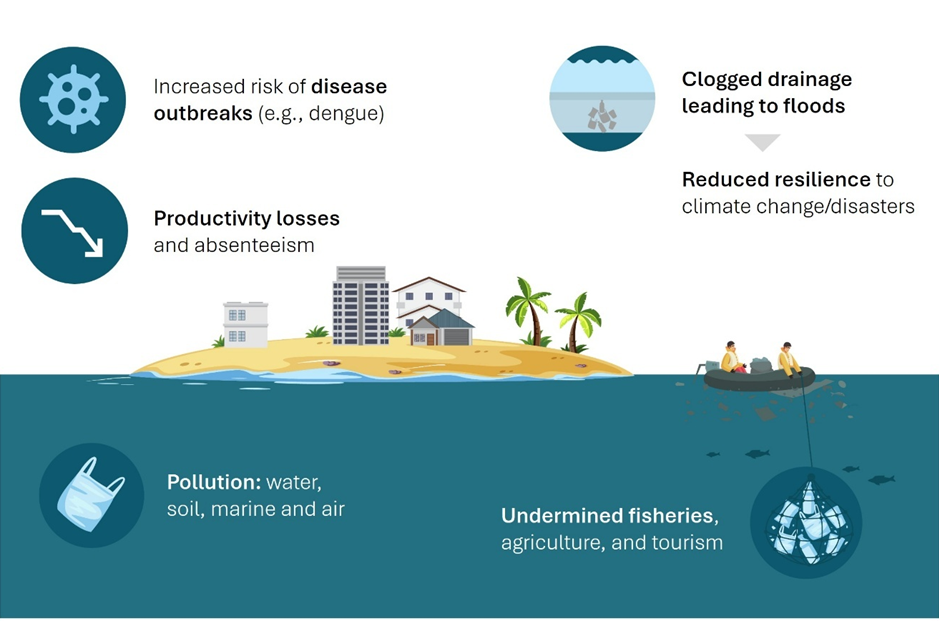
This growth in waste generation, coupled with inadequate solid waste management (driven by geographic isolation, small economies of scale, and high transportation costs), pose a significant threat to sustainable development in the Pacific region with impacts being felt on public health, cultural identity, economic productivity, and the natural environment.
Despite significant work having been undertaken over the past 10 years to improve solid and hazardous waste management outcomes for the Pacific region, especially via the delivery of the Cleaner Pacific 2025: Pacific Regional Waste and Pollution Management Strategy, a significant opportunity remains for greater regional cooperation to leverage investment to facilitate resource recovery and recycling.
Circular Pacific seeks to leverage this opportunity to:
- Explore the feasibility of aggregating sufficient volumes of materials for recycling.
- Provide access to regional recycling markets and cost-effective collection services.
- Improve financial capacity for waste services, collection, and infrastructure.
- Facilitate enabling national policies, regulations and governance.
The outcome will be strengthened collection, processing, and export capacity of targeted waste streams through the establishment of a regional recycling network, supported by hub facilities and regional agreements.