

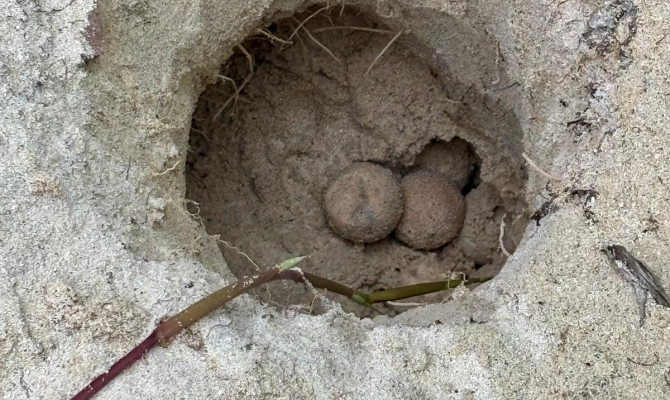
Positive impacts are being made through the Forest to Turtle project in Papua New Guinea that protects and conserves endangered sea turtles. Supported by WWF-Belgium, WWF-Pacific and the government of Papua New Guinea, the project takes place in Pomio District in New Britain PNG.
Having both an inland, and coastal focus, the project works with the Malai Youth Organisation of over 30 youth to carry out conservation efforts along a 5km stretch along the Pomio coast. Building the capacity of young people to undertake sea turtle monitoring, tagging and build awareness across their community as to the ecosystem value of leatherback turtles, has since led to successful outcomes.
“For the last season I have seen a change in our diet with our people leaving the turtle eggs alone and numbers have increased,” said Mr Glen Sonai Nowi, President of Malai Youth.
“Through this conservation programme we have seen good changes happen. We have worked hard, and it’s an honour to do this conservation work for the future of our youth, our community and our generations to come.”
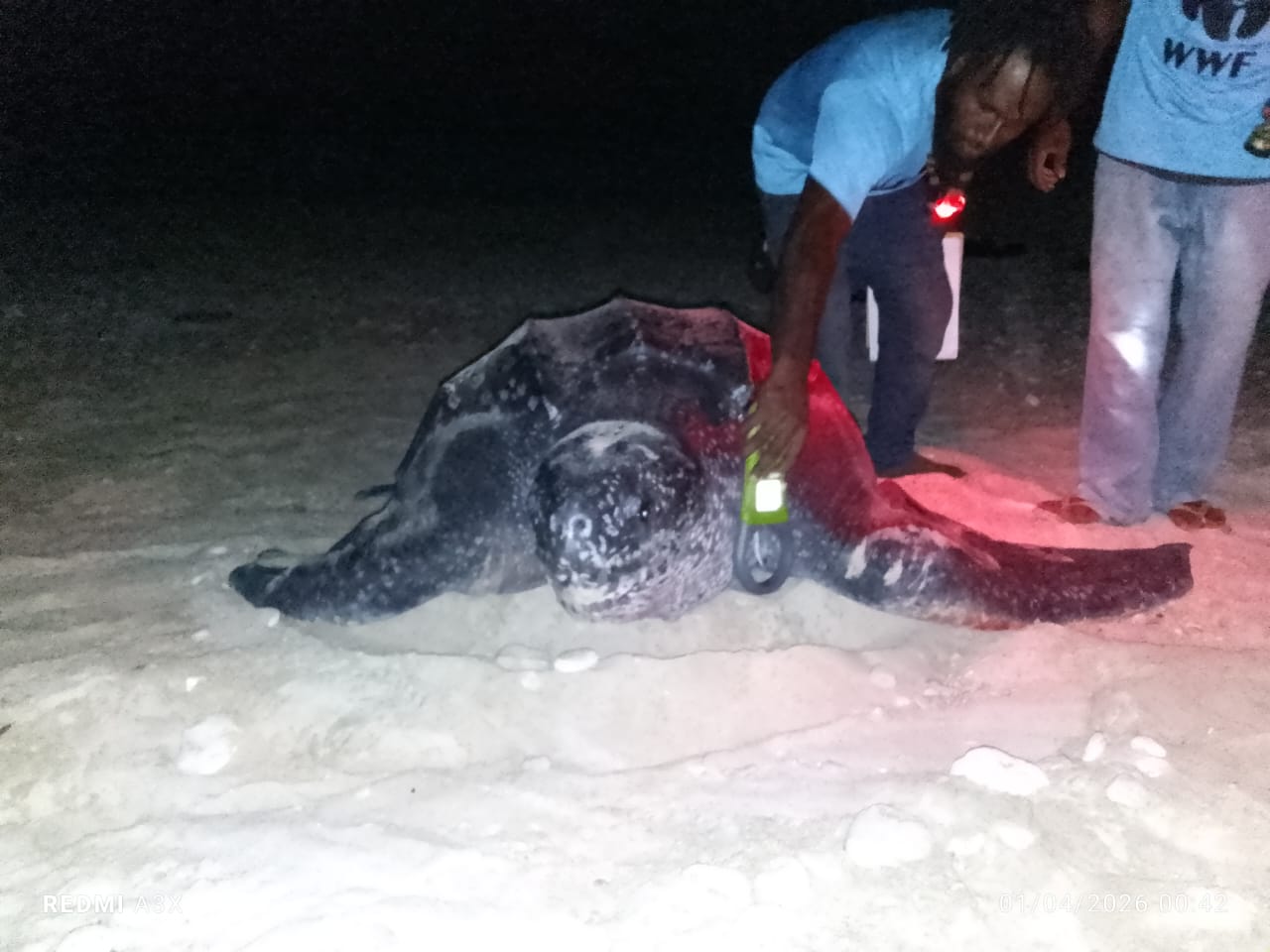
Mr Nowi, along with the Malai Youth, have learnt how to tag turtles for satellite tracking, collect and record data as well as undertaking night patrols to protect the turtles. They also collect waste and help ensure its as easy as possible for turtles to lay eggs and return back to the water with very little threat.
While focussing on leatherback turtles, the programme has also embraced other species of sea turtles along the Pomio coast such as the Green Turtle and the Olive Ridley Turtle.
“In doing this work I have learnt new skills and have also learnt much about the sea turtle species. It’s my first time to show conservation leadership with our youth – we have all learnt so much. Its nice to see these positive changes happening from our efforts,” said Mr Nowi.
Starting in 2024, the WWF-Belgium funding for phase two starts this year for the next three years. The inland component of the Forest to Turtle Project focuses on building local livelihoods through conservation efforts in coffee farming in Pomio, through establishing market access and providing support for processing coffee.
All community-led initiatives, the conservation efforts along the coast are being shared at the 11th Pacific Islands Conference on Nature Conservation and Protected Areas this week.
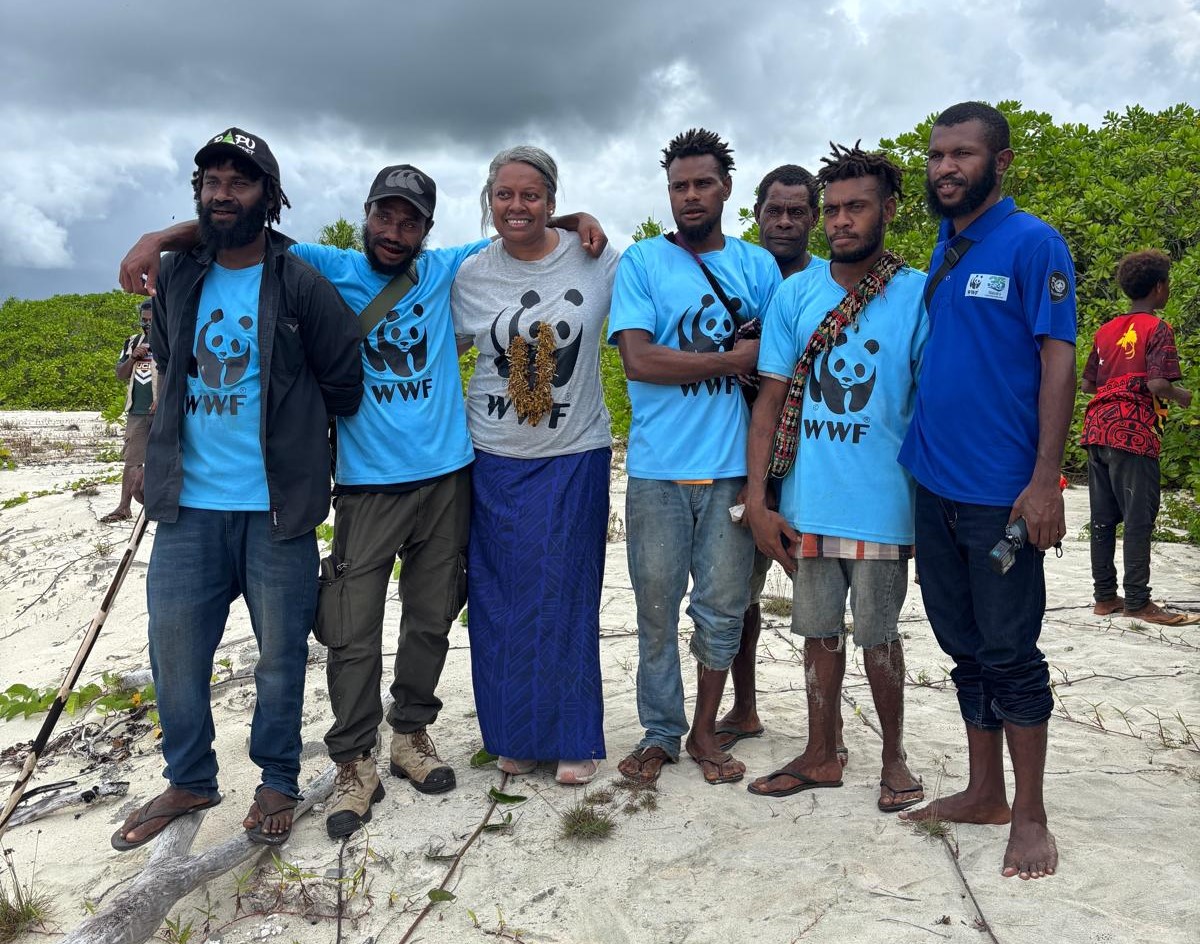
“We’ve included all communities in doing this conservation programme while supporting livelihood efforts,” said Mr Samuel Taluesina, the community and youth engagement officer for the project.
“We’ve worked with the youth to lead the turtle monitoring initiative instilling ownership and building sustainability for the work to continue once the project ends. This has seen them learn how to collect data from turtle nesting, satellite tagging as well as overall protection and conservation of the turtle nesting areas along the coast.”
As for the success of the conservation efforts which are community led in Pomio, Mr Taluesina commends the work of the Malai youth.
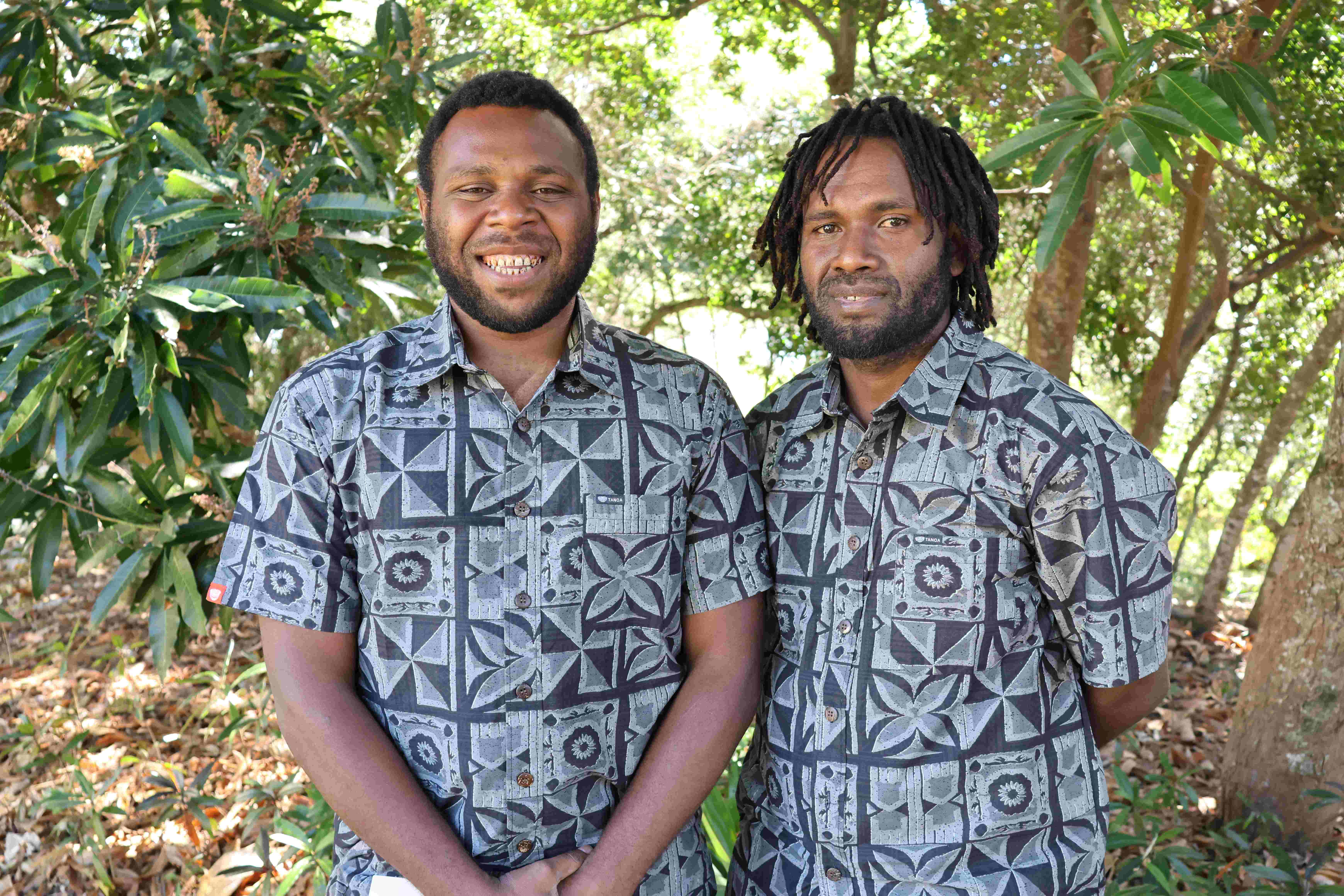
“In working with the communities over the past two years we have seen an increase in numbers through the data we are collecting, showing more turtles are coming up to nest along the coastline. We’ve also pegged many leatherback turtles and are now seeing an increase in other turtles as well. Through the work of the Malai Youth we are seeing that this project is a success for us all,” said Mr Taluesina.
The 11th Pacific Islands Conference for Nature Conservation and Protected Areas is held from 7 to 11 September 2026 at the Tjibaou Culturel Centre in Noumea New Caledonia. Bringing together over 400 delegates from across the Pacific, the conference is organised by New Caledonia, Secretariat of the Pacific Regional Environment Programme, and the Pacific Islands Roundtable for Nature Conservation with the support of partners.
For more information please visit : https://www.pacificislandsroundtable.com/pacific-nature-conference
Photos courtesy of Malai Youth.