

15 November 2026, Antalya - One of the key items at COP31 in Antalya is the second Global Stocktake (GST2), which starts here in Türkiye and concludes at COP 33.
The Global Stocktake is the primary mechanism under the Paris Agreement for monitoring and accelerating global climate action.
The Agreement mandates that Parties shall periodically take stock of its implementation to assess the collective progress towards achieving the purpose of the Agreement and its long-term goals. The process enables countries and other stakeholders to take inventory, to see where they’re collectively making progress – and where they are not.
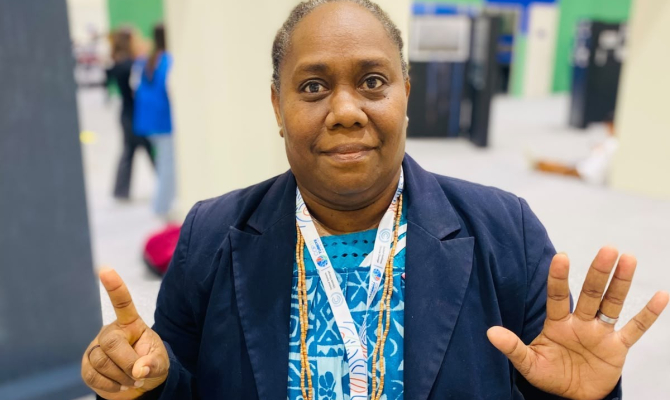
“For Pacific island countries, the Global Stocktake is not an abstract process,” said Ms Florence Iatu, of Vanuatu, who is the lead Coordinator for GST2 for the Pacific Small Islands Developing States (PSIDS).
“It is the moment the world checks whether it is keeping its promise to us.”
Pacific communities are already living with sea-level rise, stronger cyclones and saltwater in water supplies.
“We come to Antalya with our homework done,” added Ms Iatu. “Pacific countries have submitted ambitious NDCs and national adaptation plans, and are building the systems to deliver them. We ask our partners to match that commitment with ambition and support. A stocktake that tells us we are off track is only useful if it leads to action.
“The Pacific will stay united, constructive and firm on 1.5 °C. Our survival depends on it.”
As negotiations wrap up for the first week of COP31 in Antalya, Ms Iautu provides us with an update on the GST2:
QUESTION: Can you tell us what the key asks are from the Pacific at COP31?
ANSWER: COP31 is where the second Global Stocktake (GST2) begins. The second global stocktake commenced at CMA 8 in November 2026 and conclude at CMA10 in Nov 2028. So, for the Pacific, Antalya is about setting GST2 up to drive real course correction. Our key asks are:
Anchor GST2 in the best available science. That means the IPCC’s seventh assessment reports must be ready in time to inform it, with 1.5 °C as the benchmark for measuring collective progress.
Follow through on GST1. The outcomes of the first stocktake, including transitioning away from fossil fuels in energy systems, tripling renewables and doubling energy efficiency, must be implemented, not reopened or diluted.
A balanced stocktake. GST2 must give equal weight to adaptation, loss and damage, and means of implementation, alongside mitigation. For SIDS, the gap in finance and support is as real as the gap in emissions.
Carry forward what we’ve learned. The three annual dialogues on how GST1 informed NDCs gave us real lessons. We want those reports to feed into GST2, not sit on a shelf.
Inclusiveness. Small delegations must be able to take part fully in a process that will shape the next decade of climate action.
QUESTION: How have negotiations progressed/or lack of in Antalya?
ANSWER: We started on a positive note: an agenda fight, now a recurring feature of the climate negotiations, was averted through pre-sessional consultations.
Since then, progress on GST matters has been slow, and long-standing divisions remain.
On the annual dialogue report under paragraph 187, the LMDCs, Arab Group, and African Group opposed including key messages in the draft decision, stressing that this expands the mandate of the dialogue.
The latest draft text, dated 12 November, has a procedural core we can work with. It also includes an option with substantive language on the ambition gap, support for developing countries and 1.5 °C. Whether that option survives is the main question for week two.
The other concern is the science. For five consecutive meetings, countries have failed to agree on whether the reports should be completed before, or after, the second “global stocktake” process. A stocktake without the latest science would undermine its credibility.
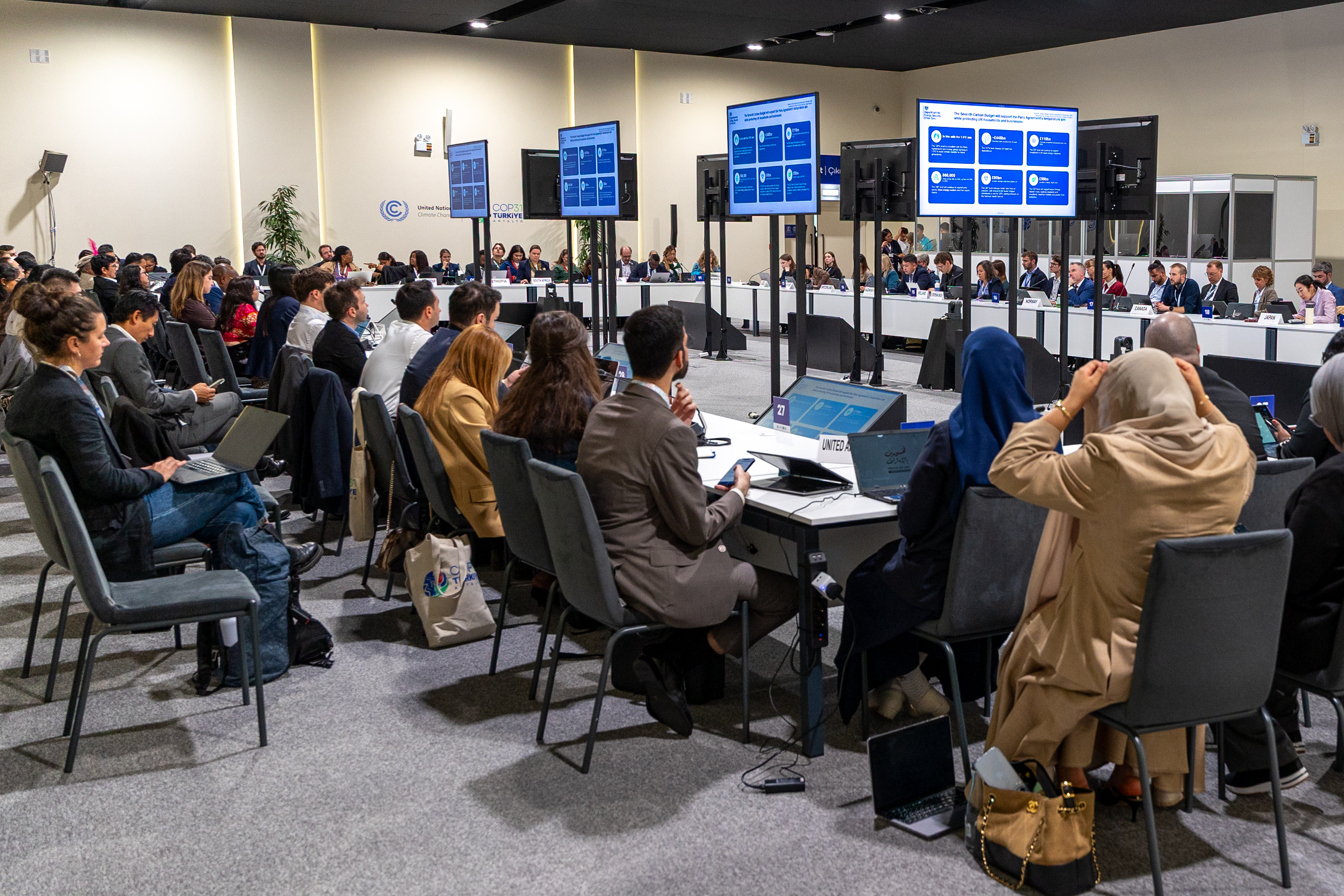
QUESTION: How do you see negotiations playing out in the remaining days of COP31. And what will it take for a positive outcome in as far as the Pacific is concerned?
ANSWER: Week 2 is when ministers engage, and much will depend on the Presidency’s cover decision. The Presidency will consult with heads of delegation and ministers to hear their views on issues to be captured in the decision, provide a high-level summary by Friday, 14 November, and invite written inputs until Saturday, 15 November.
For the Pacific, a positive outcome would mean a substantive decision on the dialogue report, not just a procedural one. It should recognise the ambition gap and the support needs of SIDS and LDCs and confirm that the dialogue reports feed into GST2.
It would also mean a clear signal on 1.5 °C. The science is sobering: a UNEP report released in September 2026 found that exceedance of 1.5°C is now widely assessed as unavoidable. For us, that makes it more urgent to keep 1.5 °C within reach and to limit any overshoot in both magnitude and duration, not less.
Progress on the science timeline, so that IPCC AR7 can inform GST2.
Implementation backed by finance, including a credible path to the commitment to triple adaptation finance by 2035.
It will take political will from all sides. We need Parties to see GST2 as a shared accountability exercise, not a threat.
The 31st Conference of the Parties (COP31) to the UN Framework Convention on Climate Change (UNFCCC) is taking place from 9-20 November 2026 in Antalya, Türkiye.
The Pacific Islands Parties to the UNFCCC are Cook Islands, Federated States of Micronesia, Fiji, Kiribati, Republic of Marshall Islands, Republic of Naoero, Niue, Palau, Papua New Guinea, Samoa, Solomon Islands, Tonga, Tuvalu and Vanuatu.
For further information on the Pacific at COP31 please visit: www.sprep.org/cop31