

Solomon Islands took centre stage during the global biodiversity conference now underway, sharing lessons learnt from its work on ecosystem-based adaptation.
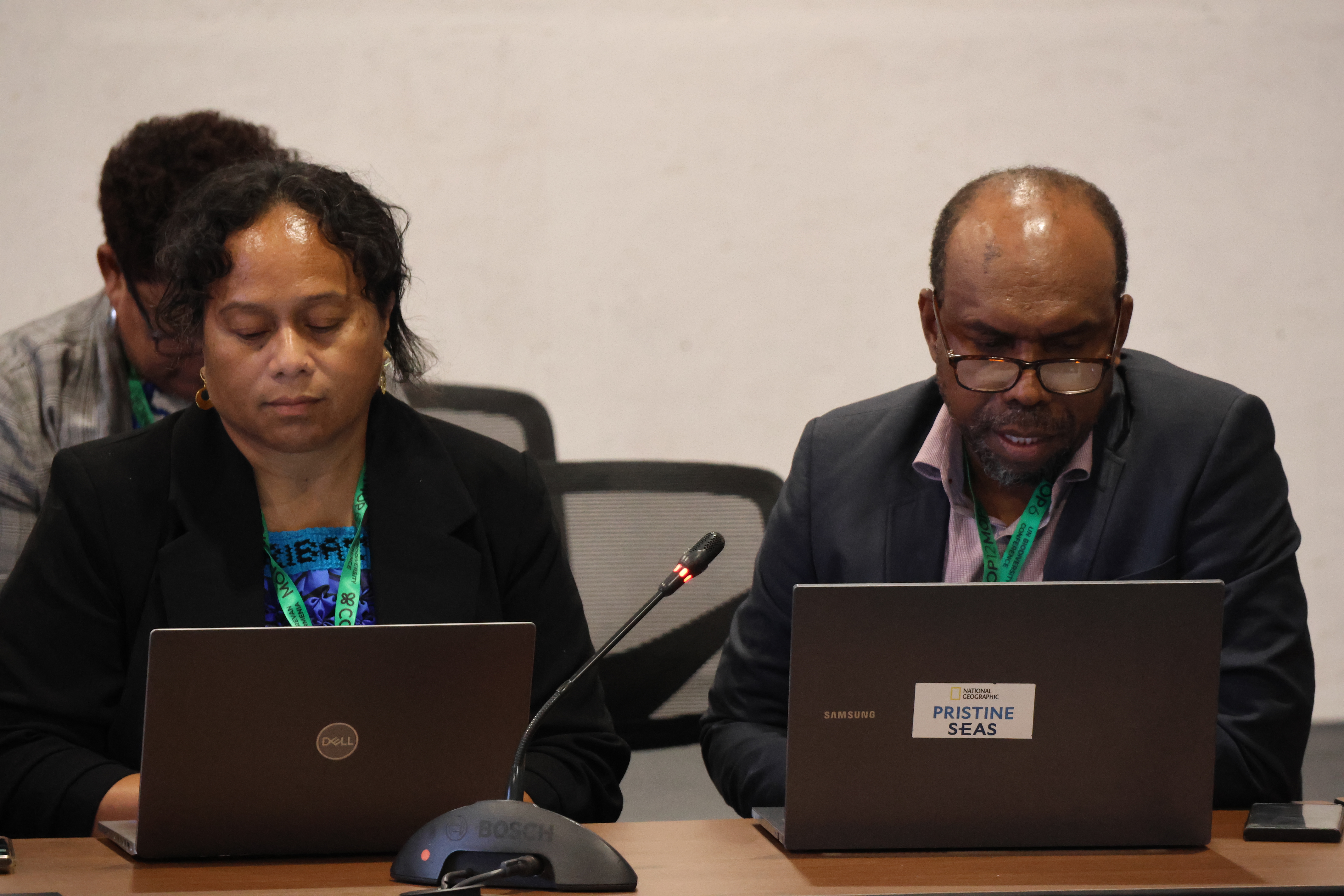
Engaging in the Seventeenth Conference of the Parties to the Convention on Biological Diversity (CBD COP17) in Yerevan Armenia, the Solomon Islands showcased its work in strengthening its environment to adapt to climate change, during Nature First Pacific event, held on the sidelines of the negotiations.
Ecosystem-based adaptation uses nature and biodiversity to protect communities from climate change while providing low-cost, multi-benefit solutions.
“For our communities-in Solomon Islands, biodiversity and climate resilience are connected to everyday needs: reliable water, healthy forests, productive coastal ecosystems and secure livelihoods,” said Mr Josef Hurutarau of the Solomon Islands delegation.
“Ecosystem-based adaptation brings these needs together by supporting the ecosystems on which people depend.”
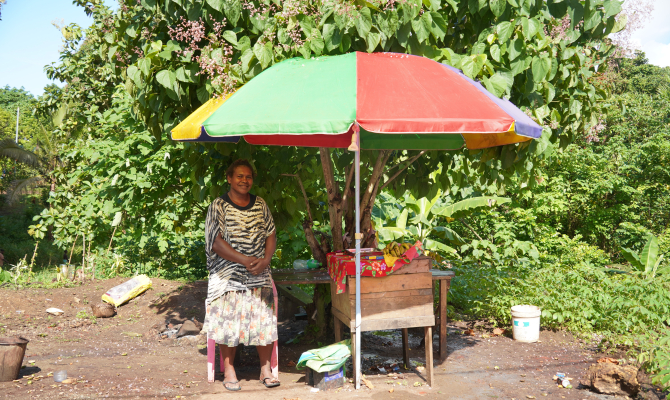
In Solomon Islands, local communities depend upon forests, watersheds and coastal ecosystems for food, water, livelihoods and protection from environmental hazards.
Through projects such as the Pacific Ecosystem Based Adaptation to Climate Change-Plus (PEBACC-Plus) Project implemented by the Secretariat of the Pacific Regional Environment Programme (SPREP) and funded by Kiwa Initiative and the French Facility for Global Environment, Solomon Islands has taken action for nature, and its people.
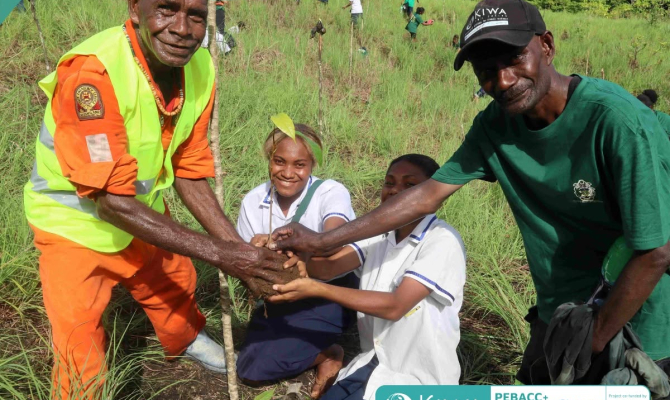
At Barana Community Nature and Heritage Park, a community owned conservation area in Solomon Islands that spans approximately 5,000 hectares of forest area PEBACC-Plus has undertaken forest rehabilitation across twenty hectares and the planting of ten thousand trees, with support from the Ministry of Forestry.
“We see this as a contribution to our priorities for restoring degraded ecosystems, conserving forests and protecting watersheds,” said Mr Hurutarau.
Training to manage invasive plants, particularly African tulip, has complemented the planting by helping communities address pressures on forest recovery. Agroforestry training and demonstration activities has also connected environmental management with food production.
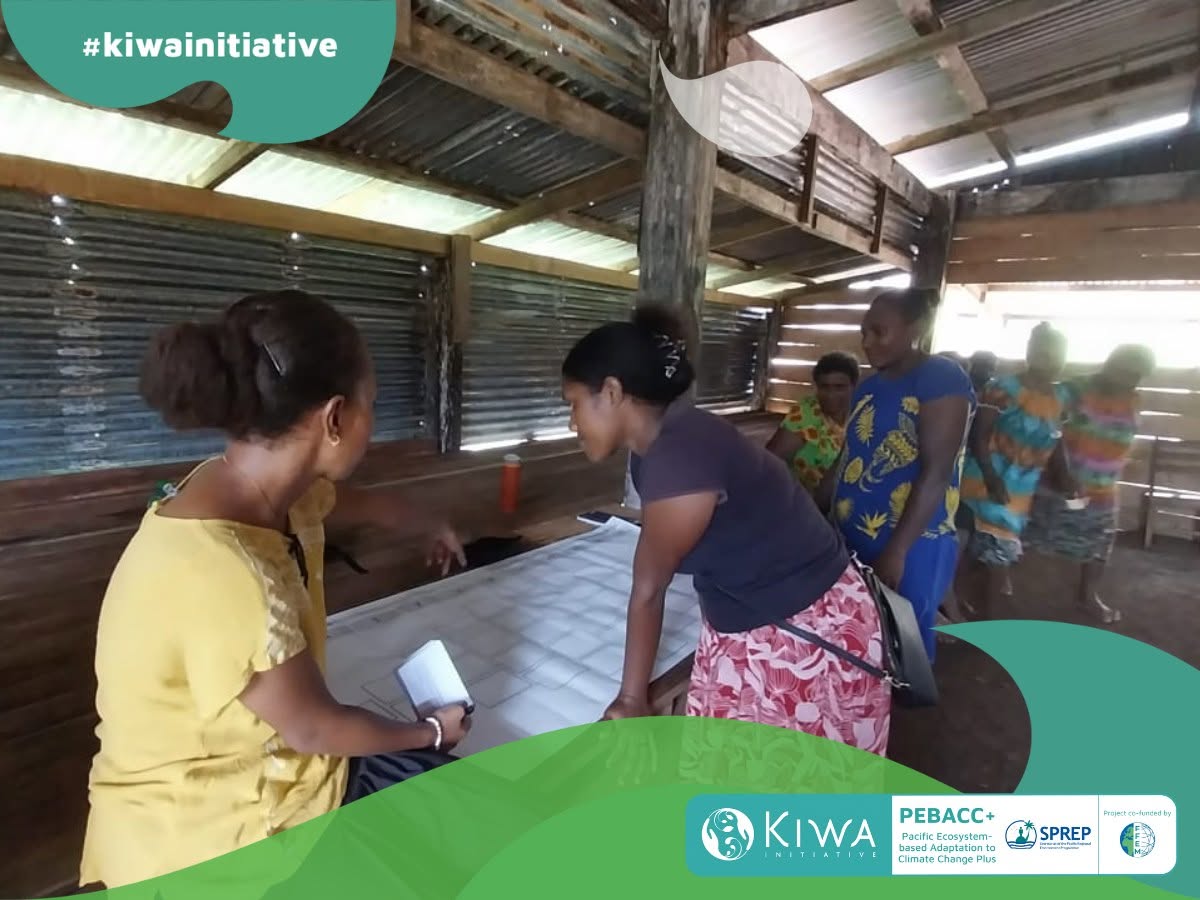
Support was also provided to approximately 100 women helping them build their financial-literacy through training on bookkeeping. These skills have helped Solomon Islands women manage livelihood activities and participate more effectively in local development.
“For government, this is an important connection: conservation activities should recognise the everyday needs of the people who manage and depend on the land,” shared Mr Hurutarau.
“Our lesson is that ecological restoration and community capability need to be supported together. Lasting conservation depends on people having the knowledge, opportunities and support to remain involved.”
Ecosystem-based Adaptation approaches across Solomon Islands is extensive. It has also seen 800 trees planted in degraded areas of the Botanical Garden with nursery improvements, a vegetation survey and visitor facilities support continuing conservation work and environmental education.
Seven sites in the central business district have also received urban greening and public-space improvements which brings biodiversity into urban management, demonstrating green spaces to be considered alongside infrastructure, waste management and public amenities as the city grows.
“Our message is that PEBACC Plus offers practical lessons for strengthening the way government and partners work together. We welcome partnerships that build national and provincial systems, support community leadership and help sustain results over time,” said Mr Hurutarau.
“We also need continuity of financing as initial project support is valuable, but restoration sites, nurseries and community facilities require maintenance. Monitoring and technical support must also continue beyond a project’s lifetime.”
He further highlighted the need to institutionalise ecosystem-based adaptation and nature-based solutions which means including them in national adaptation and biodiversity planning, provincial development plans, sector programmes and annual budgets.
Other lessons learnt through undertaking the EbA work across Solomon Islands was the need for clear coordination noting the relevant responsibilities across different sectors as well as stronger provincial and community capacity.
“National policies will have limited effect unless provinces and communities have the people, skills and resources to put them into practice. Customary landowners and resource owners must remain central, with respect for their rights and knowledge and meaningful participation by women and young people,” he shared.
Ecosystem-based Adaptation measures also spanned three assessments completed in three communities of South Malaita, followed by consultations and mapping to support management-plan preparation. Two communities focused on mangroves while one prioritised watershed and forest conservation.
The planting of fifteen hundred mangrove seedlings in two coastal communities also took place, a practical step towards restoration as well as support for proposal-writing, including the submission of one concept note through engagement with the UNDP GEF Small Grants Programme. This helped strengthen community capacity to seek further support, while funding is yet to be confirmed the development of these skills was valuable.
In Wagina, Choiseul Province, seven rainwater tanks are being installed across five communities following recommendations from an earlier assessment.
Mr Hurutarau ended his presentation stressing the need for the impact of these efforts and confirmation that planted trees survived, ecosystems have recovered and Solomon Islands people are now less vulnerable to climate risks.
“This information should guide future government decisions and investment. We look forward to building on this experience to advance biodiversity conservation, climate adaptation and resilient development in Solomon Islands.”
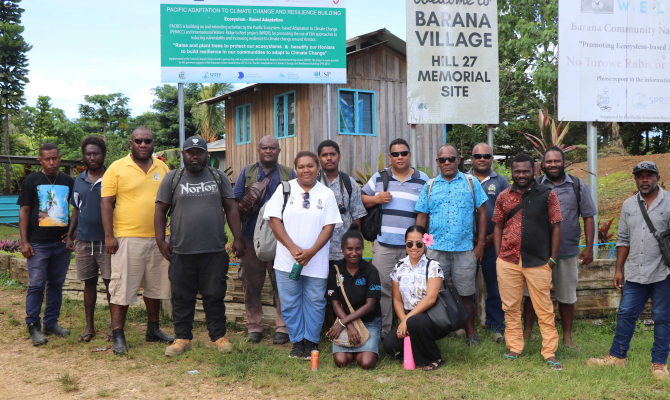
Having visited these PEBACC+ sites in the Solomon Islands, Barana community in Guadalcanal and South Malaita provinces, SPREP’s Director of Biodiversity Conservation, Amb. Amena Yauvoli, spoke in support of Mr. Hurutaru’s presentation. He acknowledged the role of France, New Zealand, Australia, Canada, and the European Union for their financial support.
“It is evident that the lessons and learnings from these sites could demonstrably promote the pivotal importance of EbA as a sustainable and effective solution to environmental and conservation challenges our communities confront on a daily basis,’’ said Amb. Yauvoli as he extended his appreciation.
Mr Hurutarau was one of four presentations showcasing Pacific-led solutions to halting and reversing biodiversity loss during the special event. Also featured was the Cook Islands sharing their experiences on the first OECM for the Pacific Islands region, Kiribati on their biodiversity policy work, and SPREP on the Môo Mâ Awé Declaration: Pacific Commitments to Nature Conservation and Protected Areas (2026–2030). The Nature First Pacific side event was held on Monday 19 October, at the CBD COP17 in Yerevan, Armenia.
CBD COP17 is taking place from 19 to 30 October 2026. The Cook Islands, Federated States of Micronesia, Fiji, Kiribati, Marshall Islands, Nauru, Niue, Palau, Papua New Guinea, Samoa, Solomon Islands, Tonga, Tuvalu, and Vanuatu are Pacific Island Parties to the CBD. For more information please visit: https://www.cop17yerevangreenzone.com/about-cop17