

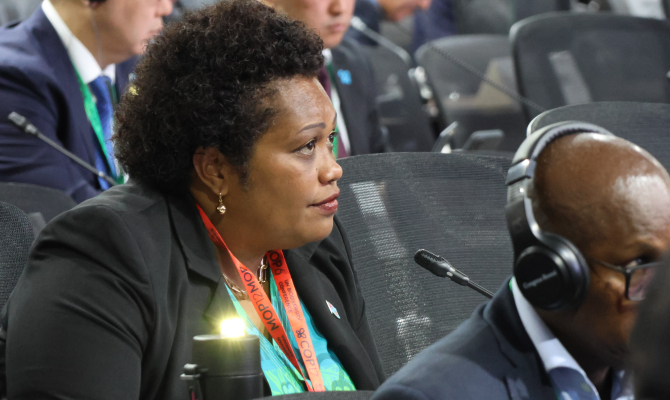
For Fiji, part of the Polynesia-Micronesia biodiversity hotspot for which over half of its birds and plants are endemic and all 24 native palm species are found nowhere else on Earth, the value of its biodiversity is valued and respected.
As stated by Hon Alitia Bainivalu, Minister for Fisheries and Forests as she addressed world leaders and ministers during the High-Level Segment of the 17th Conference of the Parties to the UN Convention of the Biological Diversity today in Armenia, for Fiji taking action for nature is not a choice.
“Our reefs, mangroves and forests feed our people, protect our coasts and sustain our economy. When they decline, our people are the first to feel it,” presented Minister Bainivalu.
“We have committed to protect thirty per cent of our marine spaces by 2030 and to manage one hundred per cent sustainably. Much of this work is led by our communities, in their customary fishing grounds, the qoliqoli, and through their locally managed marine areas. Our communities have shown what works. What they need now is the finance and resources to sustain and expand it.”
In May this year Fiji launched its National Biodiversity Strategy and Action Plan for 2026 to 2030, a plan for all of Fiji shaped by all of Fiji. It was launched together with a National Invasive Species Framework and a National Access and Benefit Sharing Policy that protects Fiji’s traditional knowledge and ensures that the benefits of its biodiversity returns to its people.
Fiji is also preparing a Biodiversity Finance Plan to ensure that biodiversity is planned and funded across the whole of government and with all stakeholders, so it is not left to the environment ministry alone.
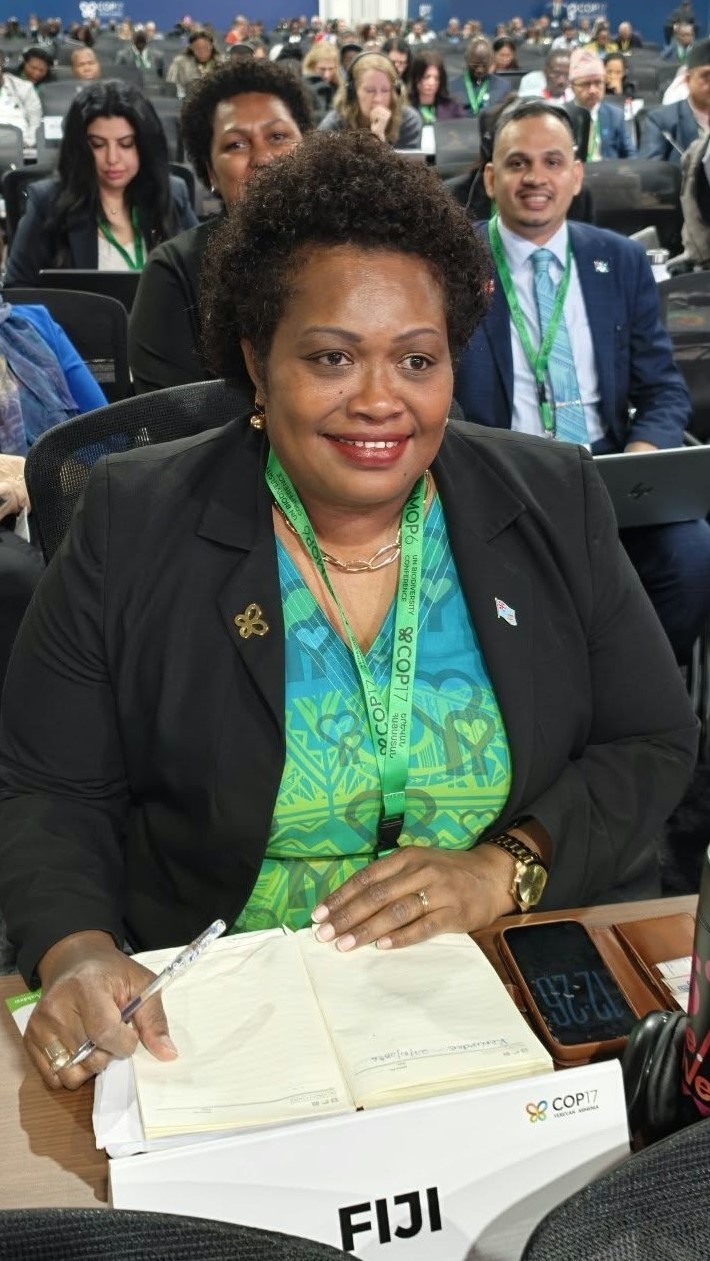
Hon Minister Bainivalu took the global stage today stressing that finance access must flow directly to support implementation and it must go to the communities who are the front face of the brunt of biodiversity loss. This will be supported by organisations and development partners, guided by Fijis ministries that are already taking strategic actions to expand the commitment that already exists.
“Excellencies, the gap we see globally is a gap in delivery, and finance remains our greatest barrier. Small island developing States need access to finance that is simpler, faster and more responsive to our circumstances,” stated Minister Bainivalu.
“We need support that follows country-led plans, and investment in capacity that stays in our countries after projects close. The international finance commitments made in Kunming-Montreal must now be met in full.”
Target 19 of the Kunming-Montreal Global Biodiversity Framework aims to mobilise 200 billion per year by 2030 for biodiversity, including international financial flows of at least 20 billion per year by 2025 and 30 billion per year by 2030 from developed to developing nations from all sources including through international finance.
Minister Bainivalu ended her statement calling upon the room to act for nature.
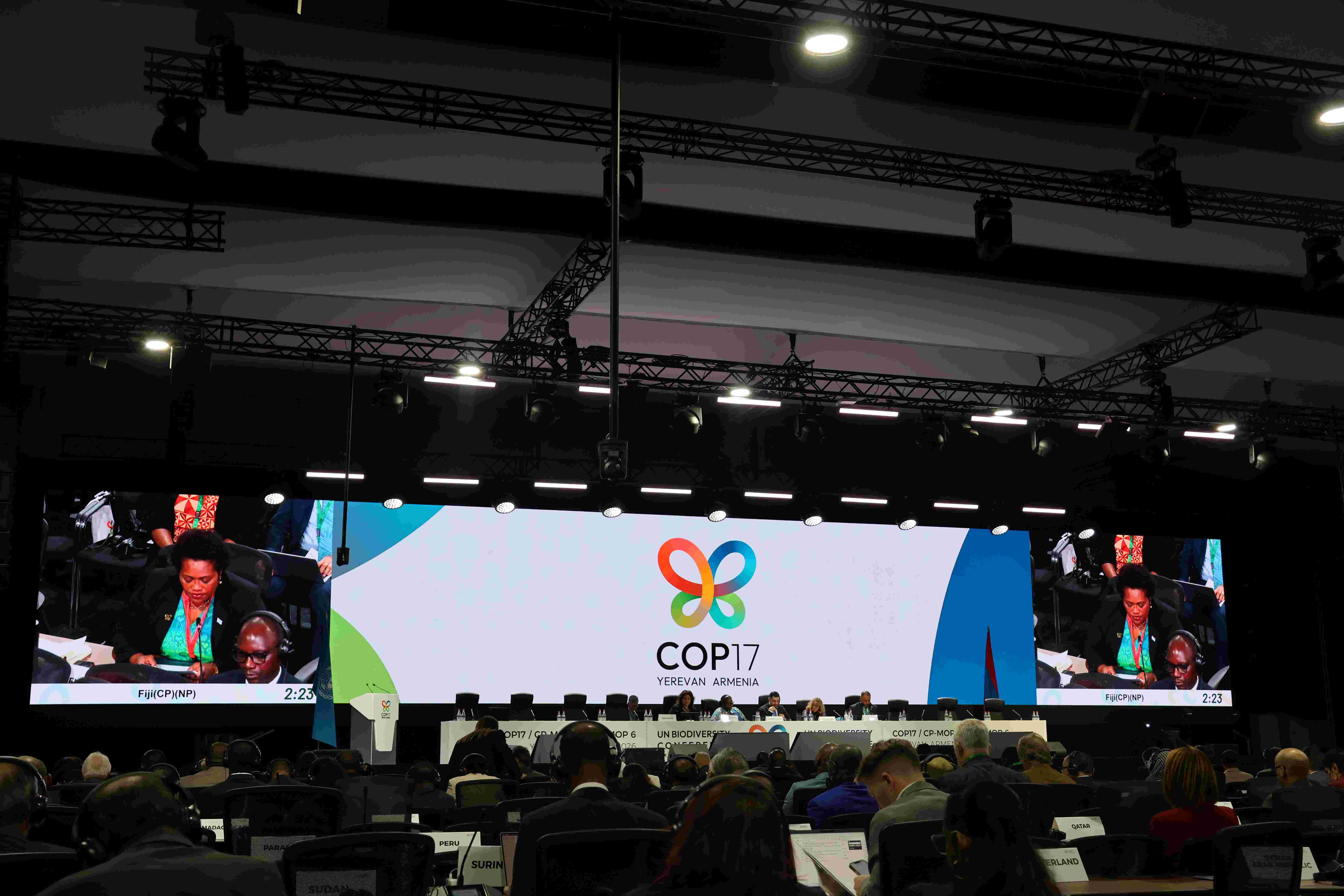
“For Fiji, biodiversity, ocean and climate are one agenda, an agenda that continues to suffer from silos and a fragmented financing architecture. We call for stronger synergies among the Rio Conventions, so that every dollar invested in nature also builds our resilience to climate change. Fiji will carry this message from Yerevan to COP31 in Antalya.”
“Let us leave Yerevan having turned our commitments into action, for nature, for our people, and for the generations to come.”
Hon Minister Alitia Bainivalu, Minister for Fisheries and Forests of Fiji spoke before global leaders and ministers on 27 October 2026 during the High-Level Segment of the 17th Conference of the Parties to the UN Convention on Biological Diversity hosted in Yerevan, Armenia from 19 to 30 October 2026.
The Cook Islands, Federated States of Micronesia, Fiji, Kiribati, Marshall Islands, Nauru, Niue, Palau, Papua New Guinea, Samoa, Solomon Islands, Tonga, Tuvalu, and Vanuatu are Pacific Island Parties to the CBD. For more information please visit: https://cop17yerevan.am/en