

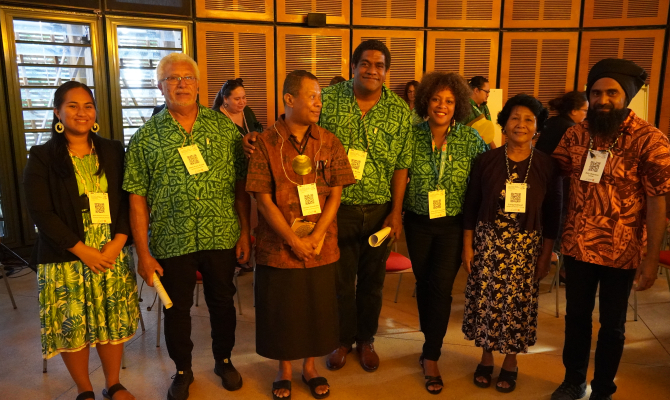
Bringing together indigenous leaders, cultural practitioners and conservation advocates from Kiribati, New Caledonia and Palau, at the 11th Pacific Islands Conference on Nature Conservation and Protected Areas (PCNC11) the Indigenous Voices: Nature Conservation Perspectives and Practices plenary session challenged participants. They were encouraged to think beyond conventional conservation models and explore how ancestral knowledge, spirituality, customary governance and cultural identity can help shape the future of nature conservation.
Held on the traditional lands of New Caledonia's customary guardians, the session began with an acknowledgment of the Indigenous custodians who welcomed delegates and shared their land, food and hospitality. Participants were reminded that conservation in the Pacific begins with relationships with place, with communities, with ancestors and with nature itself.
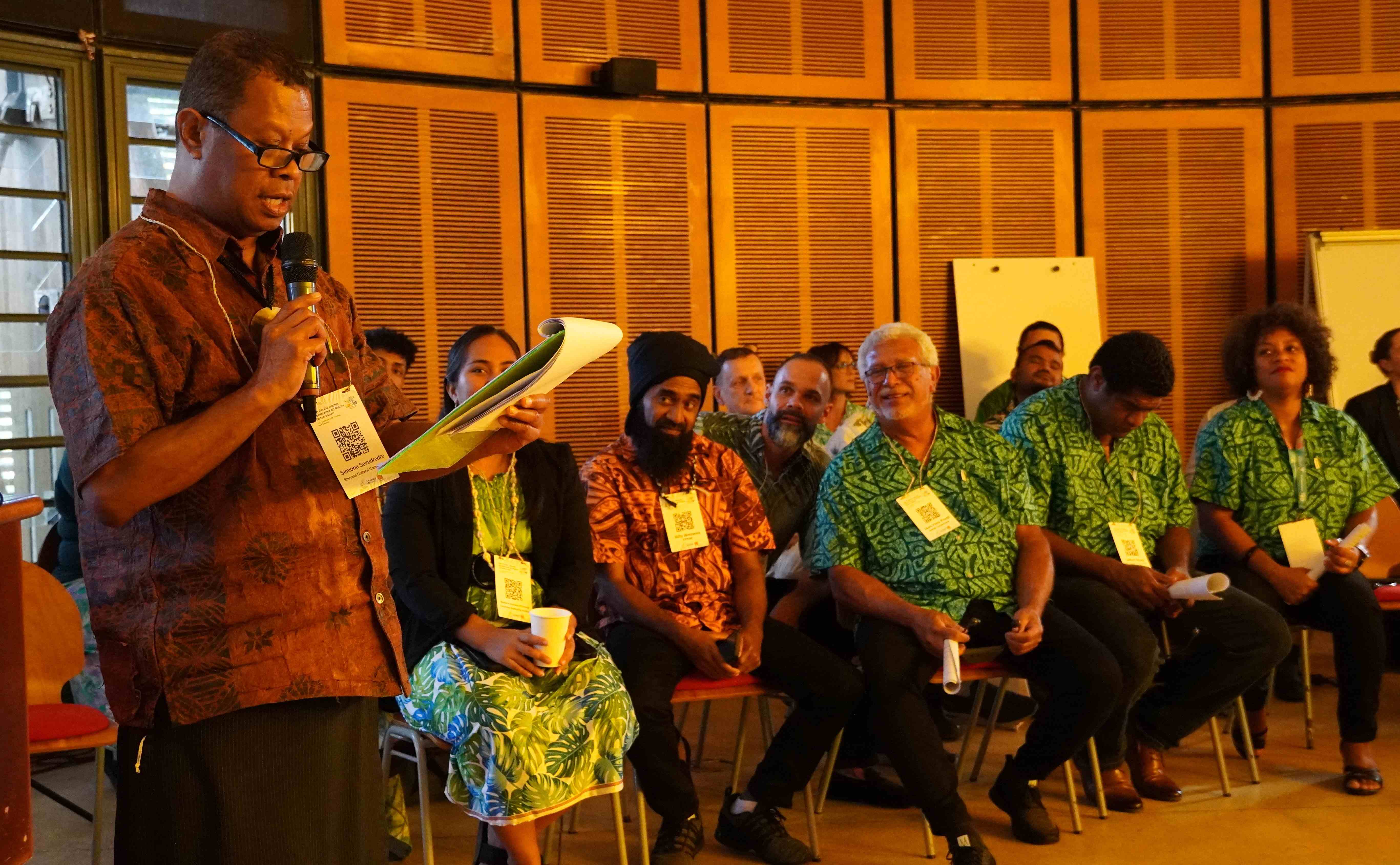
The interactive session was facilitated by Mr. Simione Sevudredre, a principal administrator on culture and language at the Ministry of iTaukei Affairs in Fiji and a prominent cultural advisor who advocates for traditional governance rooted in the land and its people.
“The intent of this is not simply a conference session but a "community of practice", bringing together people connected by a shared responsibility to care for the natural world”, commented Mr Sevudredre.
Participants were reminded that many indigenous conservation practices are preserved not through formal management plans, but through oral traditions, language and cultural practice. These systems continue to influence how communities interact with land, sea and resources today.
A highlight of the plenary was the presentation of the Vision Kanak de l'Océan (VKO), an initiative led by New Caledonia's Customary Senate and customary authorities to place Indigenous knowledge and customary governance at the centre of marine conservation and policy development.
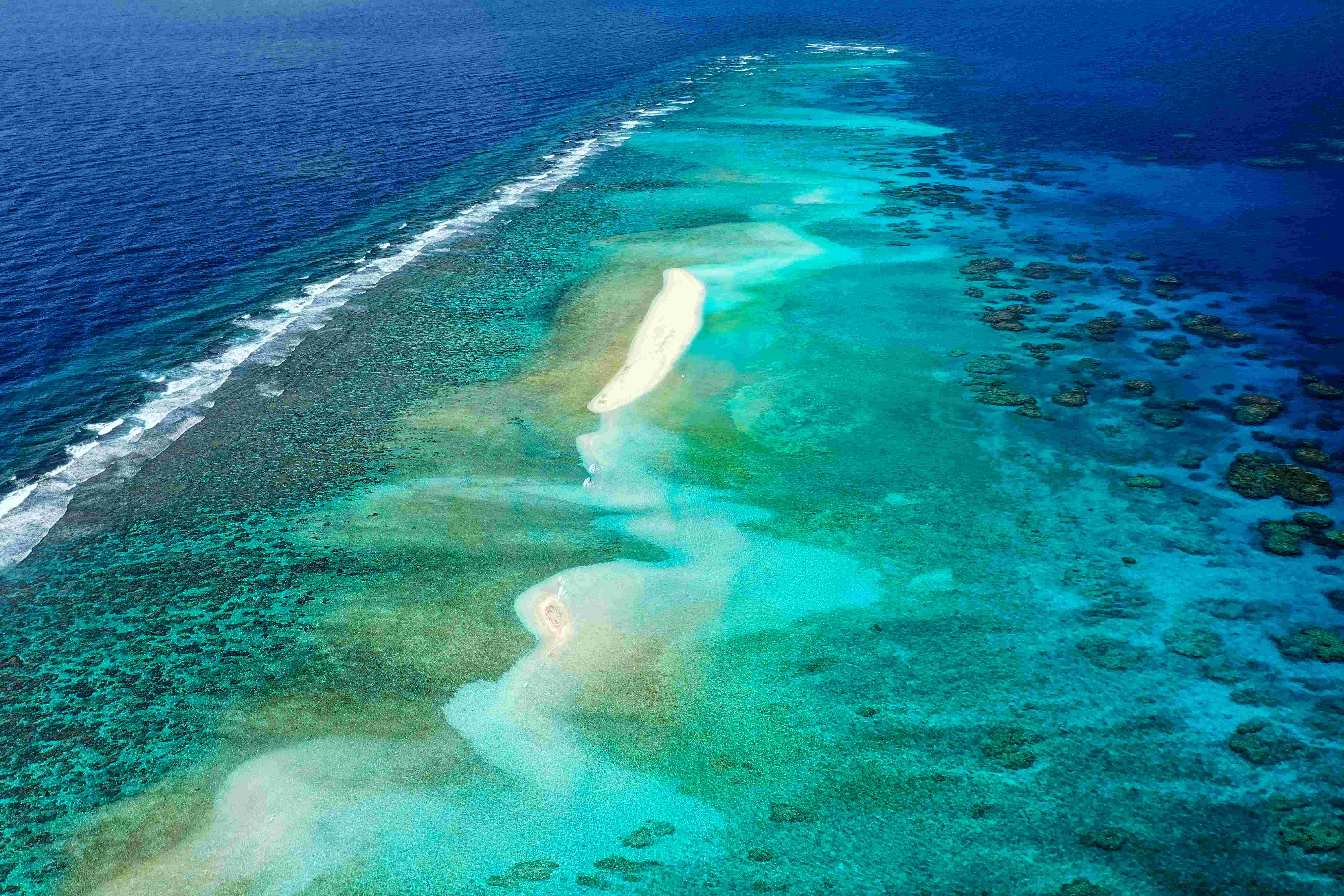
Developed over four years, the initiative seeks to ensure that Kanak perspectives are recognised not merely as cultural contributions but as legitimate and essential approaches to ocean stewardship.
"Humans are not above nature, nor beside it. We are part of it”, commented Senator Jean-Yves Poedi of the Customary Senate.
"The Kanak vision of the ocean is not based on ownership, but on responsibility. People are not separate from nature. We are part of it, and our role is to maintain balance between the human, natural and spiritual worlds,” added Senator Ludovic Boula.
Throughout the plenary, speakers repeatedly challenged delegates to reconsider what conservation means in a Pacific context. Participants were encouraged to "look back”, remember, recognise, reset and reimagine" conservation through Indigenous wisdom. The consistent message was that conservation is not only about protecting species or ecosystems. It is also about maintaining the cultural systems that guide sustainable relationships with those ecosystems.
An inspiring presentation came from Reverend Billy Wetewea who serves as the General Secretary of the Église Protestante de Kanaky Nouvelle-Calédonie (EPKNC), the Protestant Church of Kanaky New Caledonia. Reverend Wetewea shared a Pacific worldview structured around three interconnected symbols, the canoe, the traditional house and the ancestor.
“The canoe represents unity across Oceania, connecting islands and peoples through shared journeys and collective purpose.”
“The traditional house symbolises the diversity of cultures that together form a strong and balanced community and the ancestor represents continuity, reminding participants that present-day actions are connected to both past generations and those yet to come.”
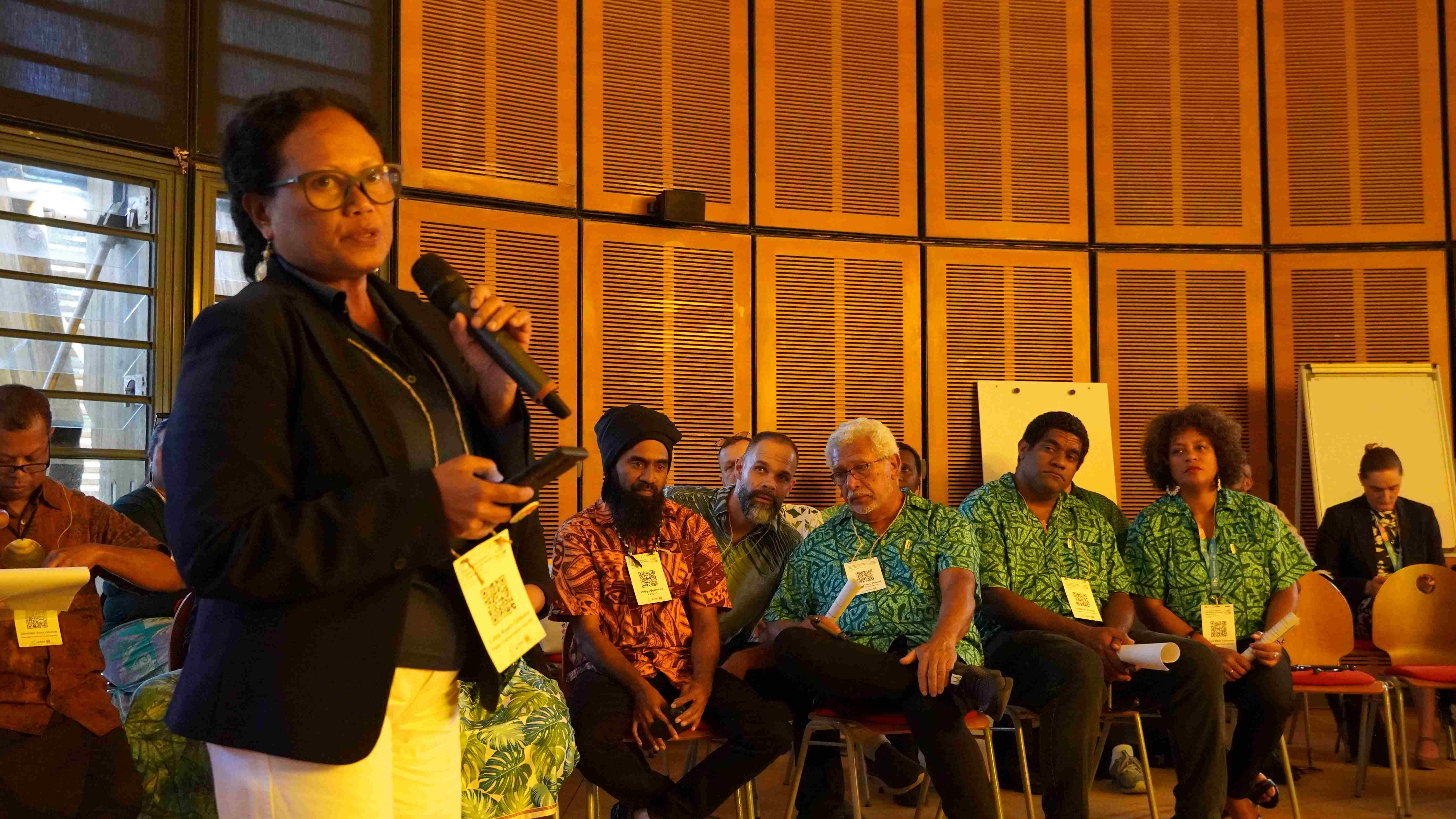
Ms Lolita Gibbons-Decherong, the Programme Manager for the Conservation and Protected Areas Program at the Palau Conservation Society (PCS) shared how traditional values continue to underpin conservation efforts in Palau, where substantial areas of both marine and terrestrial environments are now protected and increasingly supported through sustainable financing mechanisms.
“Our efforts in Palau has protected 70% of its inshore areas, with 40% under sustainable financing and 19% of land, of which 6% is sustainably financed and our Mangrove protection remains limited at less than 10%.”
“The North Star is really our traditional value, that's where everything emanates from. We celebrate our traditional values. We try to underpin the values in every action we take, within the responsibilities that we have to do as Pacific Islanders to protect our ocean, our land and ensure that we have some remaining for our children.”
A traditional Palauan chant offered at the conclusion of the presentation symbolised unity, collective responsibility and a shared commitment to protecting the Pacific environment for future generations. As the session concluded, speakers collectively challenged participants to rethink how conservation success is measured rather than focusing solely on protected areas or biodiversity targets, delegates were encouraged to consider broader questions about governance, authority and equity.
"The question is not only how much nature we will conserve by 2032. The question is whether our cultures, communities and customary institutions will be stronger stewards than they are today,” concluded Mr. Sevudredre.
As discussions continued throughout PCNC11, the messages shared by Indigenous leaders reinforced one of the conference's central themes, that lasting conservation outcomes will only be achieved when traditional knowledge, customary governance, science and policy work together.
The 11th Pacific Islands Conference for Nature Conservation and Protected Areas is held from 7 to 11 September 2026 at the Tjibaou Culturel Centre in Noumea New Caledonia. Bringing together over 400 delegates from across the Pacific, the conference is organised by New Caledonia, Secretariat of the Pacific Regional Environment Programme, and the Pacific Islands Roundtable for Nature Conservation with the support of partners.
For more information please visit : https://www.pacificislandsroundtable.com/pacific-nature-conference