

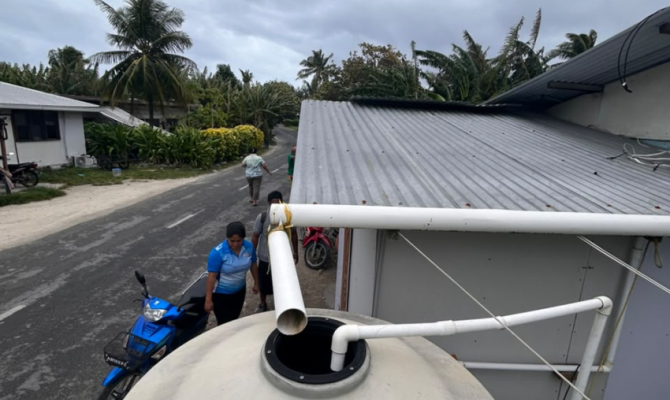
27 October 2026, Funafuti, Tuvalu - A study conducted on Funafuti Island, Tuvalu’s administrative, economic and population centre, has found no statistically detectable difference in stored rainwater quality associated with rooftop solar photovoltaic (PV) systems, while identifying microbial contamination as a key water safety concern.
The findings were presented at a validation workshop in Funafuti on 21–22 October 2026, where government agencies, community representatives and key stakeholders reviewed recommendations to protect water security while supporting the country’s transition to renewable energy.
The study, Assessing the Impacts of Rooftop Solar Photovoltaic (PV) Systems on Rainwater Harvesting in Funafuti, Tuvalu for Climate Resilience and Water Security, was implemented by the Secretariat of the Pacific Regional Environment Programme (SPREP), through the Regional Pacific Nationally Determined Contribution (NDC) Hub, in partnership with the Tuvalu Climate Change Department, with technical support from Teulava Consultancy. The study examined whether rooftop solar PV systems have any measurable impact on the quality of rainwater harvested from rooftops in Funafuti. The assessment found no statistically detectable difference in stored rainwater quality associated with rooftop solar PV systems. All measured heavy metal levels were below applicable World Health Organization (WHO) benchmark values.
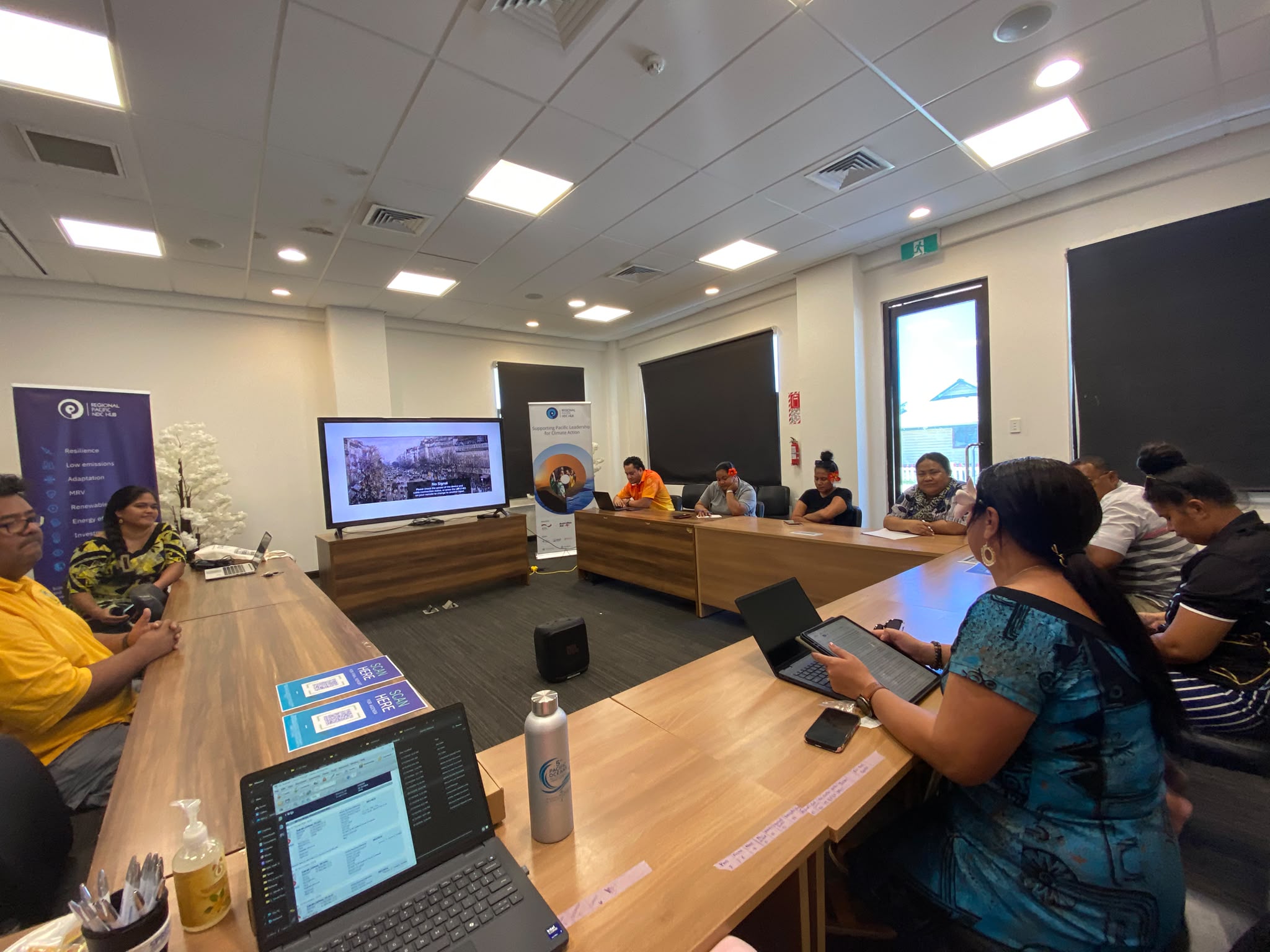
Participants discussed the study’s key finding that water safety risks identified during the assessment were primarily linked to microbial contamination rather than the presence of solar PV systems. The study detected Escherichia coli (E. coli) in a significant proportion of harvested water samples, highlighting the importance of improved catchment hygiene, water treatment practices and regular monitoring.
Opening the validation discussions, representatives from the Government of Tuvalu emphasized the importance of the study in addressing community concerns while supporting the country’s transition towards renewable energy.
According to Ms Mervina Paueli, “This study provides important evidence from Funafuti, where population density and infrastructure developments are concentrated, to help Tuvalu balance two national priorities: expanding renewable energy and protecting the quality of harvested rainwater that our communities depend upon. The findings will help guide future policies, investments and practical actions to strengthen both water security and climate resilience.”
Recommendations presented at the workshop included strengthening water-quality monitoring, improving rainwater catchment management and first-flush systems, establishing standards for point-of-use water treatment devices, enhancing PV installation and inspection procedures, and developing safety protocols for rooftop solar systems.
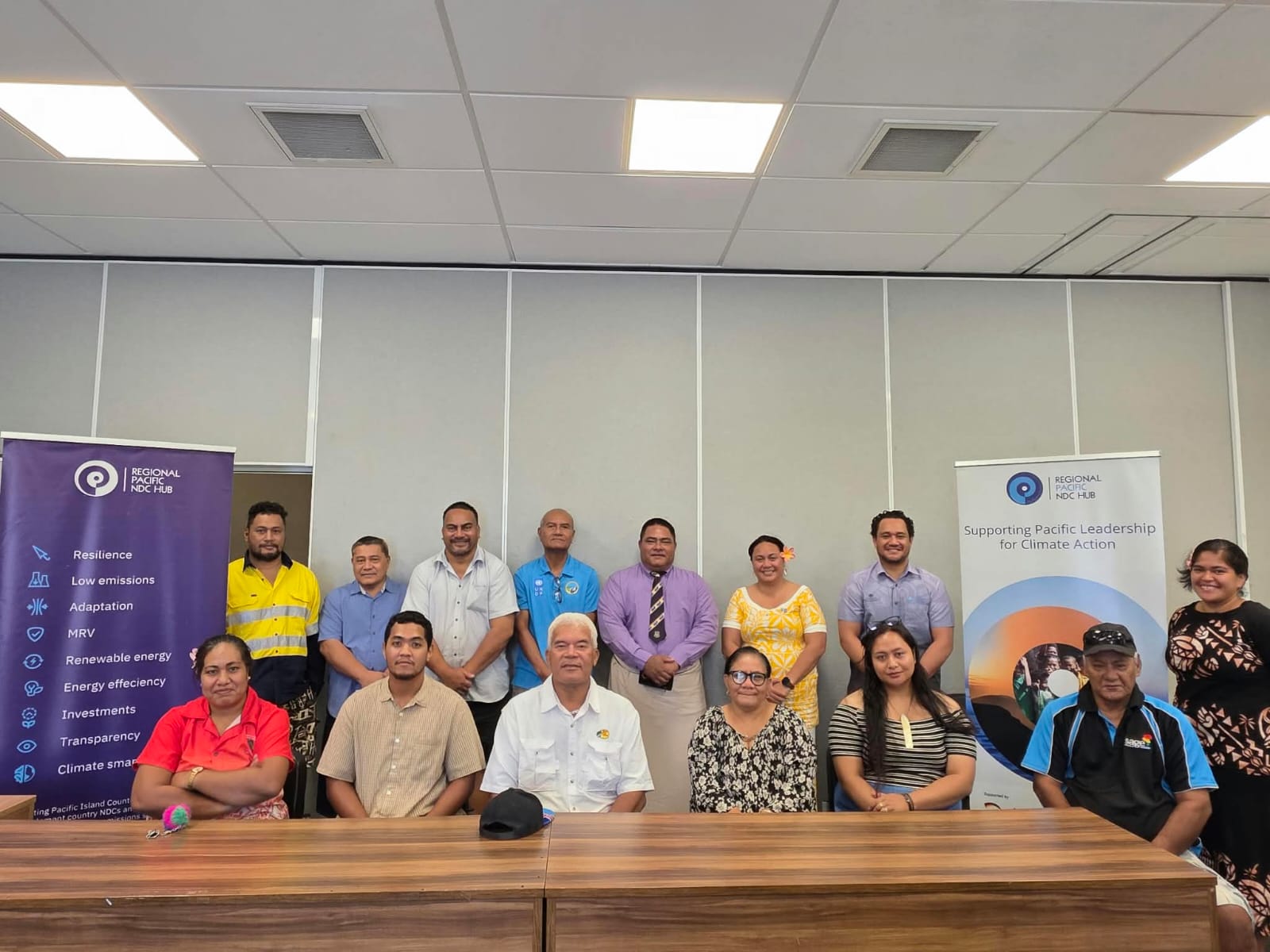
Principal Consultant Dr Kakau Foliaki of Teulava Consultancy thanked the Government of Tuvalu, participating agencies and communities for their contributions throughout the study and validation process. He emphasised that collaboration between government agencies, technical experts and communities was essential to ensuring the final recommendations reflected local knowledge, national priorities and practical implementation needs.
The project team acknowledged the support and cooperation of households, schools, public institutions and community members who participated in field sampling and consultations carried out in Funafuti during July 2026. Their contribution was essential in assessing harvested rainwater quality in locations with rooftop solar installations.
The validated findings and recommendations will inform the finalization of the case study report and support future government decision-making for Tuvalu. While the study focused solely on Funafuti, the findings provide an important evidence base for considering water security and renewable energy development across Tuvalu.
This assignment was funded through the Regional Pacific NDC Hub and implemented in partnership with the Government of Tuvalu as part of ongoing efforts to strengthen climate resilience, renewable energy development and water security across the Pacific.
For more information:
• Ms Vanda Faasoa-Chan Ting, Climate Change Mitigation Advisor, SPREP - vandac@sprep.org
• Ms Toiata Apelu-Uili, Pacific NDC Technical Officer, SPREP - toiatau@sprep.org