

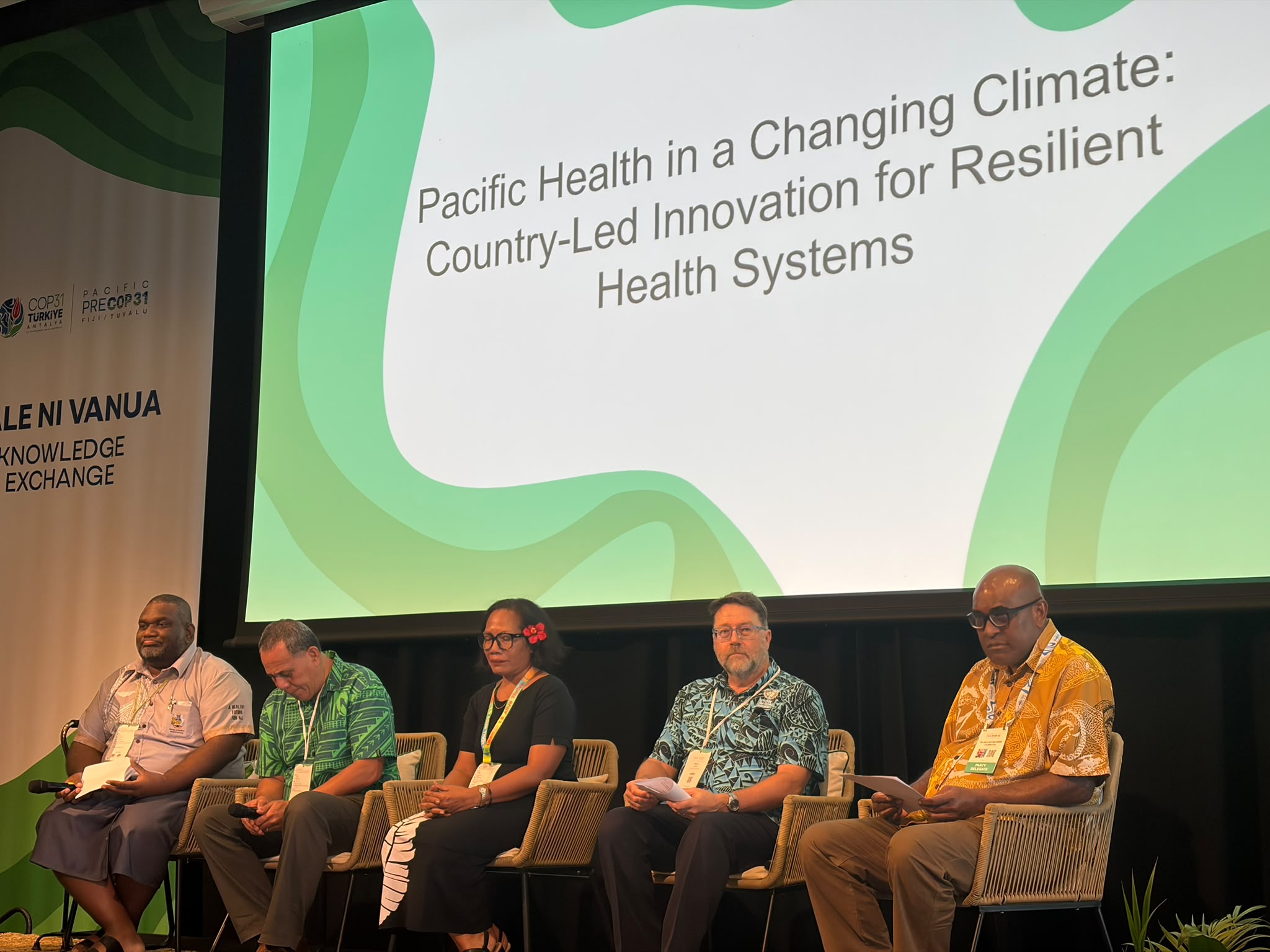
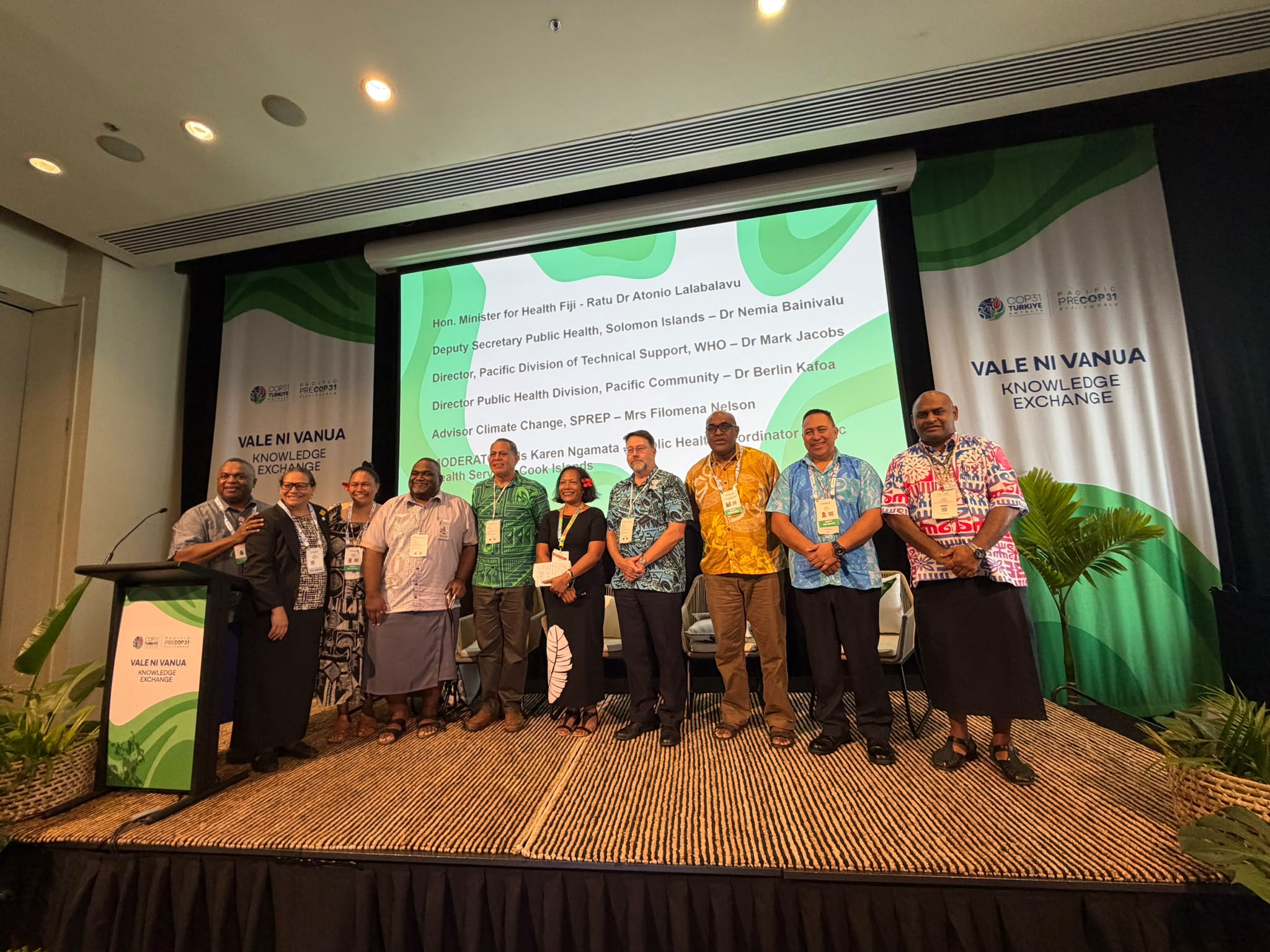
15 October 2026, Nadi – At the Pacific Health in a Changing Climate - Country-Led Innovation for Resilient Health Systems, a Pre-COP31 panel event in Nadi, Fiji, health leaders argued that climate change is already a health crisis in the Pacific, and that global negotiations must recognise it as one.
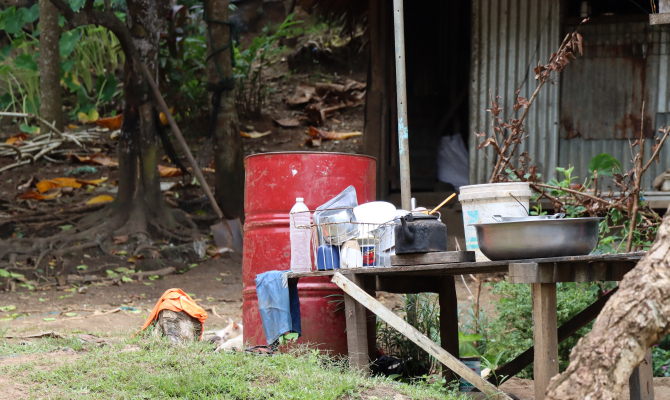
For Pacific Island countries, the health effects of climate change are not a prediction. They show up as clinics are exposed to the sea and have inadequate water supplies.
“The effects of climate change are actually happening now,” said Dr Nemia Bainivalu, Solomon Islands Deputy Secretary of Public Health from the Ministry of Health and Medical Services.
Health Facilities on the Front Line
In Solomon Islands, about 60% of the country's 300-plus health facilities are on the coast, exposed to sea-level rise and storm surge. When Category 5 Cyclone Maila struck in April, 21 health facilities were affected.
As the country finalises its climate and health vulnerability assessment, Dr Bainivalu said the priority is reaching the most remote communities - “the last mile.”
“The Assessment requires the participation of not only health people, but also finance people, planners, architects, provincial health services,” he said.
In Fiji, Dr Antonio Lalabalavu, Minister of Health and Medical Services pointed to high temperatures and water security as the most pressing risks. Launched in 2024, Fiji's Health Adaptation Plan, guides the Ministry's response through five pillars, including water, sanitation and hygiene. This is an area, Hon. Lalabalavu said he’s “very passionate about. If water is not available, we can't provide services.”
Dr Lalabalavu, who has attended previous UN Climate Conferences (COPs) said health has struggled to hold its place in global negotiations. There were good discussions on health in Dubai at COP28, but at the conferences that followed, he said “it kind of diluted down.”
“Health should be elevated, not only as another side event, but as one of the main events in any discussion moving forward. It affects everyone.”
Making Health Visible in the Plans
Dr Berlin Kafoa, Pacific Community’s (SPC) Director of Public Health Divison said the problem starts on paper. When SPC's Climate Change division recently reviewed countries' Nationally Determined Contributions (NDCs), many contained few or no health indicators.
“It's hard to advocate for them at global level, or with those who have resources, when it's not there. If we want it to appear there, then we have to work as organisations to help our countries document it.”
Health, he argued, should not only be talking about adaptation. “The biggest health gain is to reduce the pollution. That should be the focus.”
Telling the Story Beyond the Health Sector
Dr Mark Jacobs, WHO Representative to the South Pacific, and Director Pacific Technical Support, described the organisation's role as responsive technical support, from vulnerability assessments and health adaptation plans to tools that help staff identify the most vulnerable clinics.
“There are huge health impacts already experienced from climate change, and health is an issue that speaks to everybody, to every community,” he said.
The sharpest point was about audience. “As health professionals, we can be very comfortable talking to other health professionals about why health is important. That is not how it will be successful. It will be successful by having those conversations with people in other sectors, with communities, with leaders.”
Deeply Connected
“Climate resilience must be measured by what it means for people- safe drinking water, secure food supplies, protection from disease, and access to health services when they are needed most," said Filomena Nelson, SPREP’s Climate Change Adaptation Adviser.
SPREP's Pacific Climate Change Centre is leading the Pacific Action to enhance the Visibility of Evidence on Health and Climate Impacts (PAVE-Health) with the University of Melbourne, with funding support from the Wellcome Trust. The three-year project works with the Federated States of Micronesia, Kiribati, Samoa and Solomon Islands to train national teams, generate local evidence and turn it into plans and investable proposals.
“Community knowledge also deserves recognition as evidence. Research should build on that knowledge and return findings in forms communities can use. Data is critical in establishing evidence base, and there is an urgent need to strengthen capacity and capability of health Ministries and other key national agencies to collate, analyse and communicate climate change impacts on health,” Ms Nelson said.
The Road to Antalya
The PreCOP31 panel discussion was a stop on the busy road to COP31, which runs from November 9-20th in Antalya, Türkiye.
Pacific health delegates have their messages cut out for them. Some of these include make health measurable in national adaptation plans, NDCs and the Global Goal on Adaptation, Finance climate-proofed health facilities, disease surveillance and service continuity, Count health losses in Loss and Damage and to Ensure health representatives have a seat in climate finance decisions.
For Dr Lalabalavu, the test is whether this time it will be different. “I'm hopeful that the one in Türkiye (COP31) will be different.”