

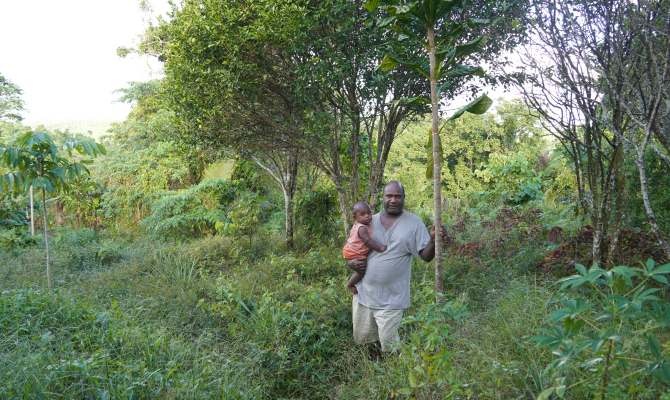
Jimmy Joshua Tasitu's farm in Rangorango helps provide education for children in his community while building resilience through agroforestry.
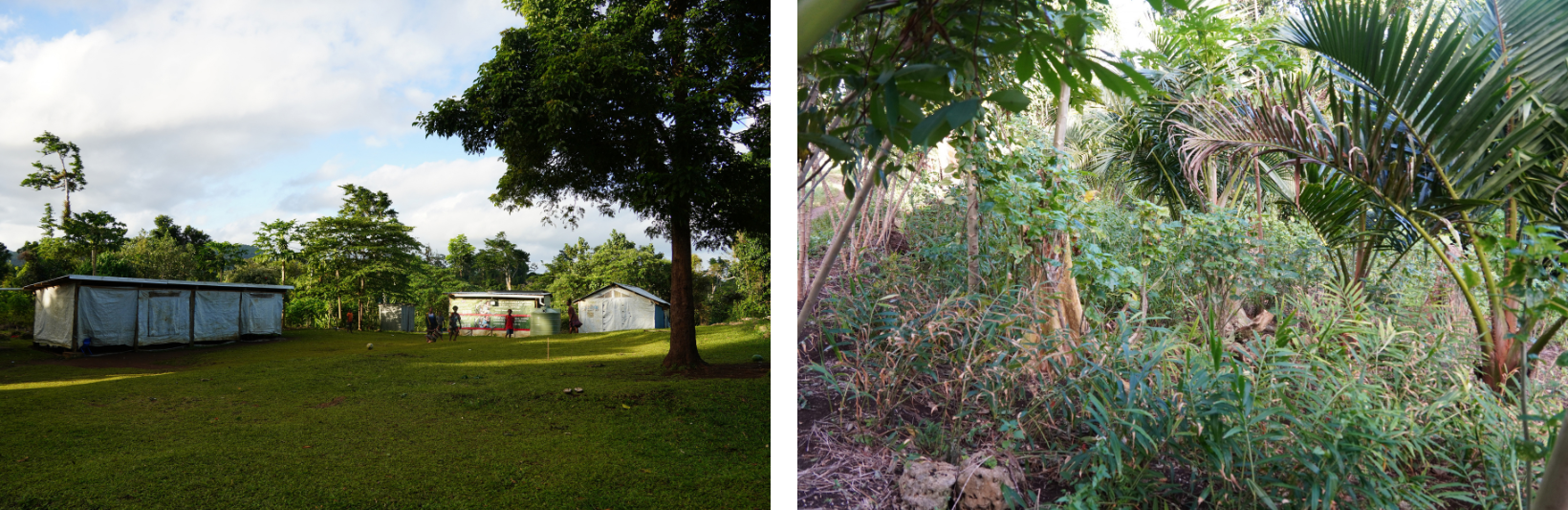
A farmer, father of nine, grandfather of seven and principal of Tasitu Christian School, Jimmy founded the school five years ago after seeing the challenges his own children faced travelling long distances to attend school.
“My children had to walk 14 kilometres one way every day to get to the nearest school and walk 14 kilometres back. I feel sorry for them; that’s why I started the school because of that challenge.”
What started as a school for his own children has grown into a registered private school serving around 60 students from kindergarten to Year 9. Today, income from Jimmy’s farm helps support the running of the school.
“I plant peanuts, sweet potato and cassava. We sell to earn money and support our school,” he explains. Jimmy’s farm is roughly 2 hectares, where he practices agroforestry and crop rotation, growing a mix of crops and trees including ginger, island cabbage, cassava, mahogany, kauri and natapoa. “I have planted around 1,000 trees around the farm, including pandanus and nut trees. These trees provide food and other resources and help protect my family’s homes from strong winds.”
Jimmy’s journey in agroforestry received early support through the Pacific Adaptation to Climate Change Resilience (PACRES) project, which assisted him with his first plantings. Building on this foundation, he was later selected as a lead farmer under the Pacific Ecosystem-based Adaptation to Climate Change (PEBACC+) project. Through PEBACC+, Jimmy received support to establish one of the three demonstration plots in Tagabe, helping showcase agroforestry practices and their potential benefits for local farmers.
The PEBACC+ project also supported Jimmy’s agroforestry activities by providing seedlings for his farm. Among the seedlings he received are natagura palms, which are now around one year old and approaching harvest.
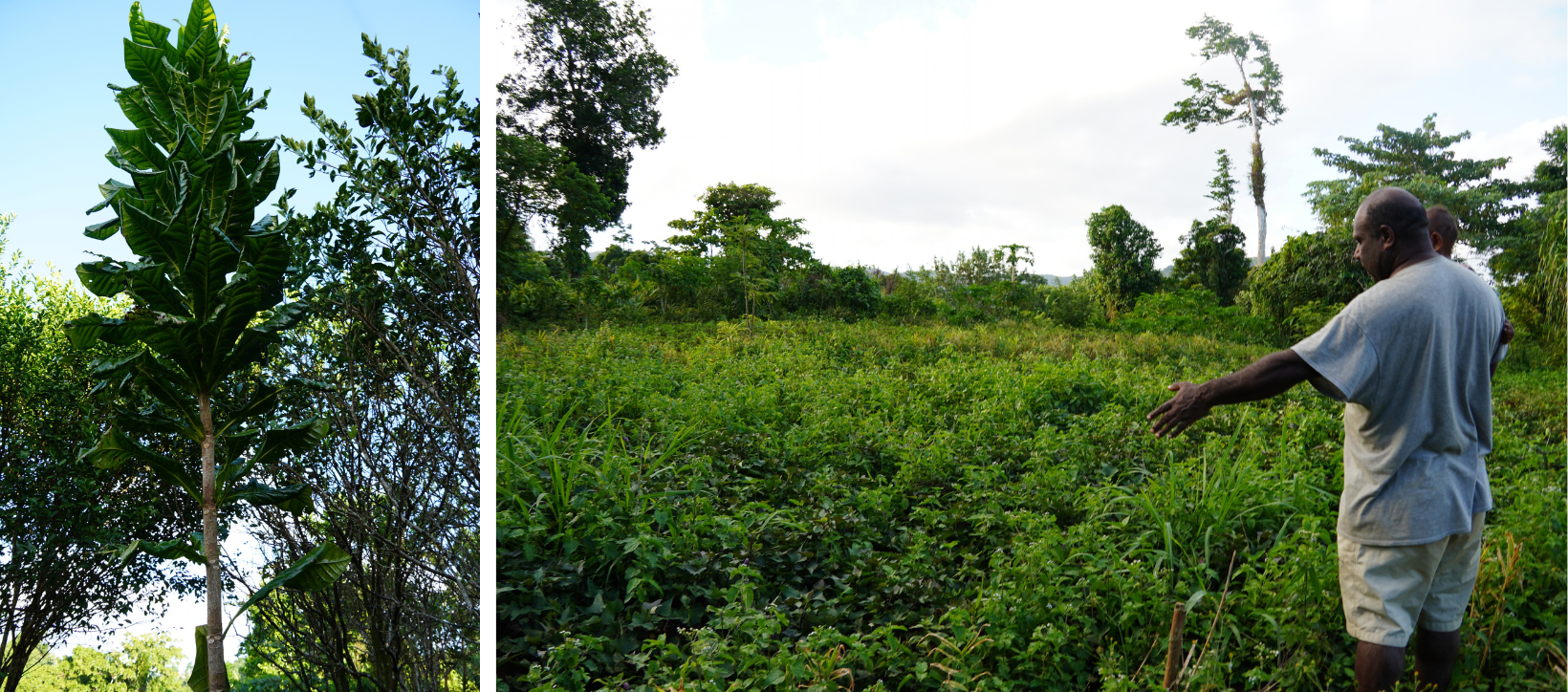
Jimmy sells the leaves from the palms at the local market. He also gives some trees to communities for construction, as the strong palm material can be used to build homes that are better able to withstand cyclones.'
The seedlings provided through PEBACC+ have therefore become part of Jimmy’s wider farming system, which combines trees and crops to provide food, generate income and strengthen resilience.
For Jimmy, tree planting is closely connected to the resilience of his family and community. He is also Chairman of the Community Disaster and Climate Change Committee for Sector Three in his area and plans to build a permanent school building that can also serve as an evacuation centre during disasters.
His vision is already expanding. After recently purchasing land in Santo, Jimmy plans to extend his farming activities there, starting with kava and ginger.
William Bani, PEBACC+ Country Coordinator, said, “Jimmy’s story shows how support for sustainable land management can create benefits that extend beyond the farm. By providing seedlings and supporting agroforestry, PEBACC+ is helping farmers establish trees that can contribute to livelihoods, provide useful resources, and strengthen resilience to climate-related impacts. What is particularly inspiring about Jimmy’s work is how he is using the income from his farm to support education for children in his community.”
Jimmy’s successful participation in PEBACC+ has helped strengthen his relationships with the Vanuatu Department of Forests and the Department of Agriculture, both of which continue to support his farming activities. The Department of Forests assists him with tree crops, while the Department of Agriculture provides agricultural crop varieties according to his preferences. Jimmy is also a registered ginger farmer with the Department of Agriculture.
This ongoing technical support builds on the assistance he received through PACRES and PEBACC+, helping him develop his farm over time. As a lead farmer, Jimmy is also well placed to serve as a model and mentor for other farmers, demonstrating how sustained support for agroforestry can contribute to livelihoods, community development and resilience.
PEBACC+ is a regional project implemented by SPREP and funded by the Kiwa Initiative through its donors, the European Union, Agence Française de Développement (AFD), Global Affairs Canada, Australian Government Department of Foreign Affairs and Trade (DFAT), and New Zealand Ministry of Foreign Affairs and Trade (MFAT), with co-financing from the French Facility for Global Environment (FFEM).