

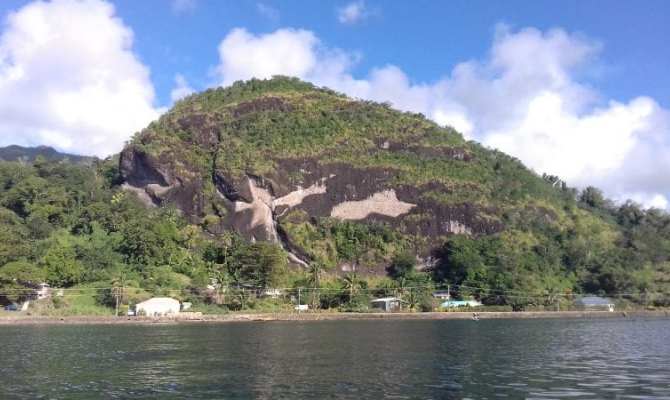
6 October 2026, Nadi, Fiji - On Ovalau Island in Fiji, the people of Nasaga village have planted 675 trees and 400 vetiver grass along their riverbanks to hold back the erosion eating away at their land. At a Nature Based Solutions for Climate Adaptation panel discussion during Pre-COP in Nadi, Fiji their story was highlighted as a national case study on nature-based solutions.
Opening the panel discussion, France's Minister for Ecological Transition, Biodiversity and International Climate and Nature Negotiations, Ms. Monique Barbut, said Pacific community testimonies showed what happens when local action is backed by supportive policies.
"These solutions work because they are rooted in local knowledge, designed with the people who use them, and owned by those who maintain them," she said.
Launched in 2020, the Kiwa Initiative is funded by the European Union, France, Canada, Australia and New Zealand, with a budget of about 79.5 million Euros. Managed by the French Development Agency (AFD) with the Pacific Community (SPC), Secretariat of the Pacific Regional Environment Programme (SPREP) and International Union for Conservation of Nature (IUCN), it supports nature-based solutions in 17 Pacific Island countries and territories.
Nasaga village is one of the sites supported by the Kiwa Initiative and implemented by the Wildlife Conservation Society (WCS). Village headman (Turaga-ni-Koro), Mr. Noa Bolevakadinata said his community had watched climate change take its toll through riverbank and coastal erosion, flooding and low drinking water quality.
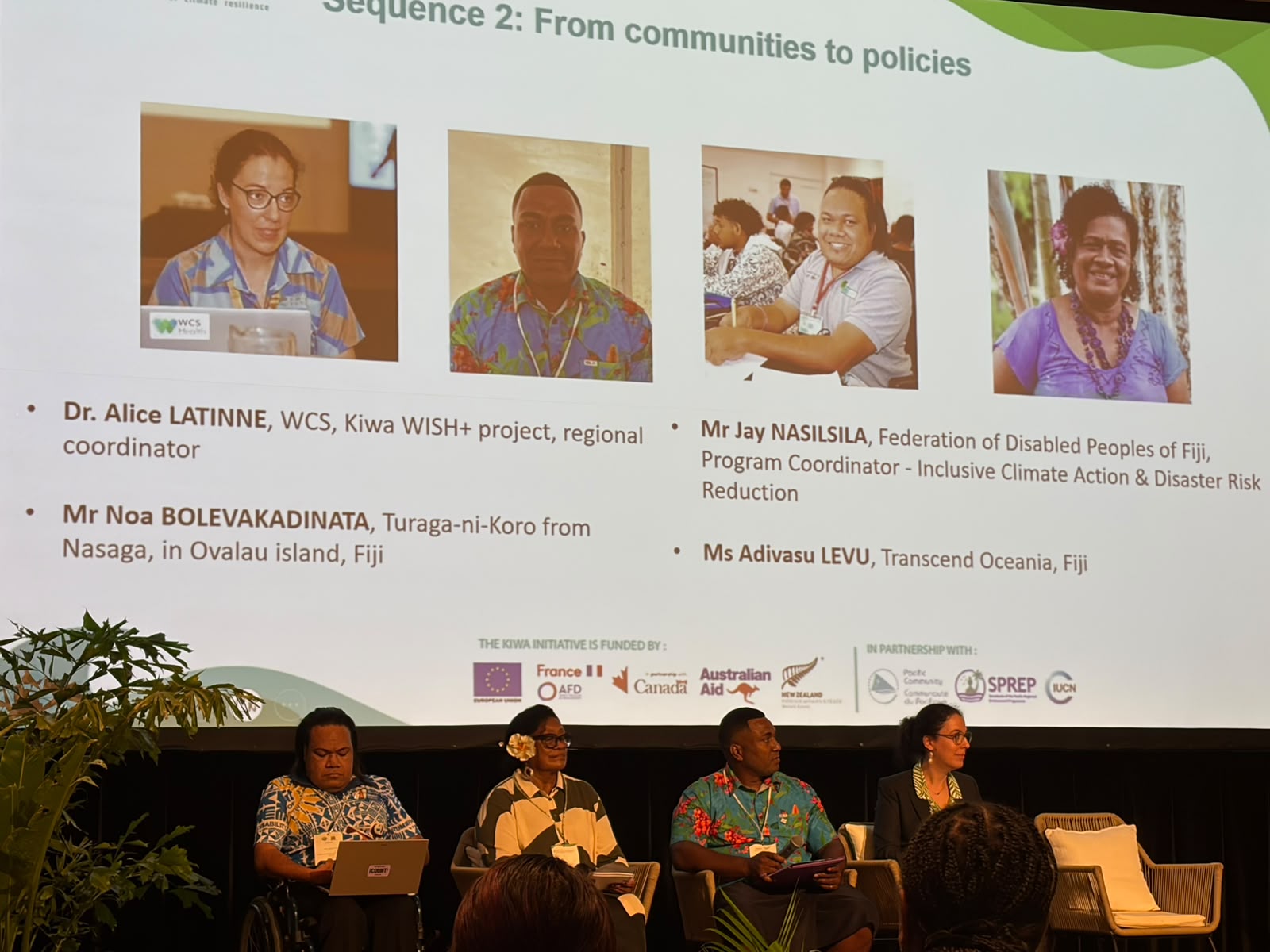
He added that through the Kiwa Initiative farmers were taught to cut chemical use and stop cutting trees near water sources.
"Our role is not only to participate in the process, but to take ownership of the lessons and practices that will benefit our community in the long term. Kiwa has reminded us that healthy people depend on a healthy environment," said Mr Bolevakadinata.
For Mr Amena Yauvoli, SPREP's Director of the Fiji Office and Biodiversity Conservation, the challenge is making such gains stick. Many Pacific projects are still "operating with limited technical and institutional support.” He added that there were capacity gaps at individual and organisational levels and at the negotiating table.
"What needs to be strengthened around those ecosystems to make restoration work, and what sustains it to make it last? This is a critical question. This is really at the heart of the technical assistance programme over the next three years."
Mr. Yauvoli said phase two, supported through the French Development Agency (AFD), will take "a deliberate, practical and context-specific approach," as low-lying atolls and coral islands face very different challenges.
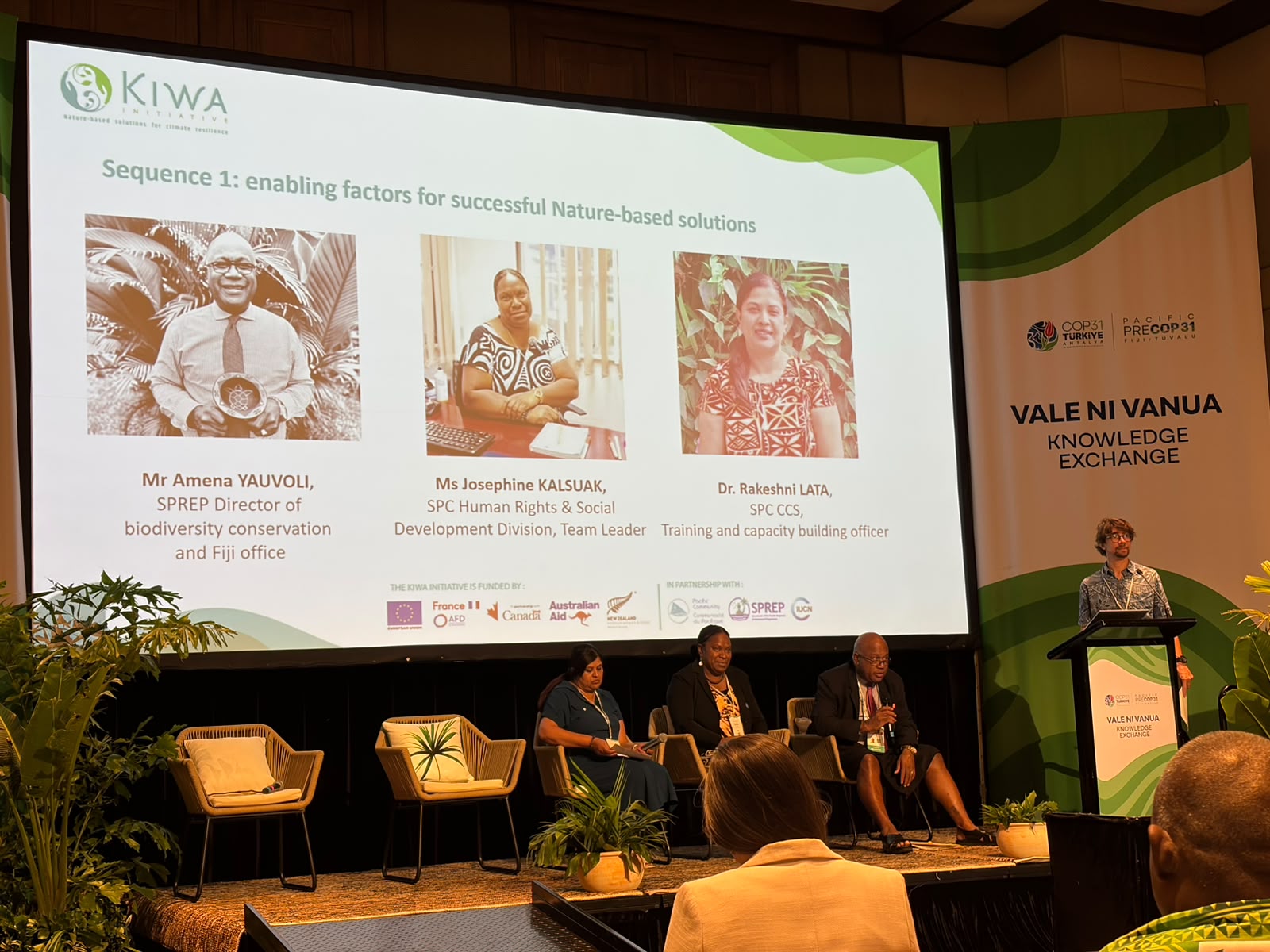
Speaking about social inclusion, Ms Josephine Kalsuak, Pacific Community (SPC) Team Leader, Mainstreaming and Capacity Building said “Phase one had also changed how partners approach social inclusion, which historically has always been an afterthought".
"We come from different geographical areas, different abilities, different socio-economic stages. Social inclusion is important so that we can address the diverse needs of our people."
“SPREP has developed a Gender equality, Disability and Social Inclusion (GEDSI) nature based solution community of partners, which is made up of the Kiwa partners. And it's a community of partners who come together to learn and share best practices and lessons learned. So we'd be maintaining the support, providing the outgoing capacity building and technical support,” she added.
For phase two, SPC is developing a GEDSI analysis, while a GEDSI community of Kiwa partners formed in phase one will continue to share lessons.
From 5-8 October, Fiji, Tuvalu and Australia are partnering to deliver the official COP31 pre-COP ministerial meeting and Leaders’ event. Attendance at Pre-COP is expected to include leaders, ministers, senior representatives and officials from invited countries, Türkiye, UN representatives and selected observers.
Stakeholder programming is also expected to include civil society, private sector, academia, First Nations, youth and community organisations