

In New York, Pacific leaders made the case that the ocean cannot be governed in pieces – and that the region that knows it best is ready to lead the world towards COP31.
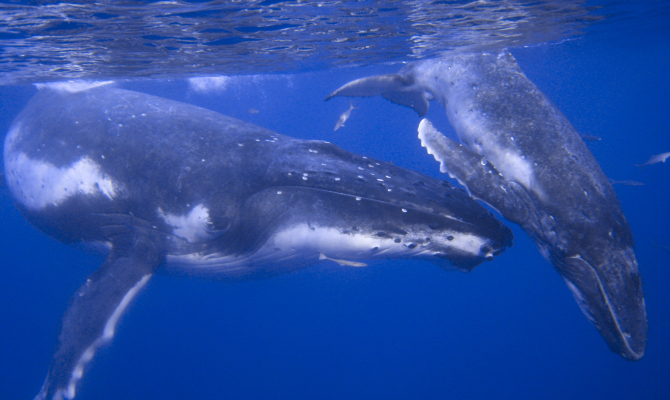
Every year, humpback whales return to Tonga’s warm waters to give birth. Then, with their calves at their side, they turn south for the long journey to Antarctic feeding grounds - crossing, without ever knowing it, out of Tonga’s waters and into the high seas that belong to no one.
For Tonga’s Prime Minister, Honourable Lord Fakafanua, that journey holds a lesson about the way the world governs the ocean.
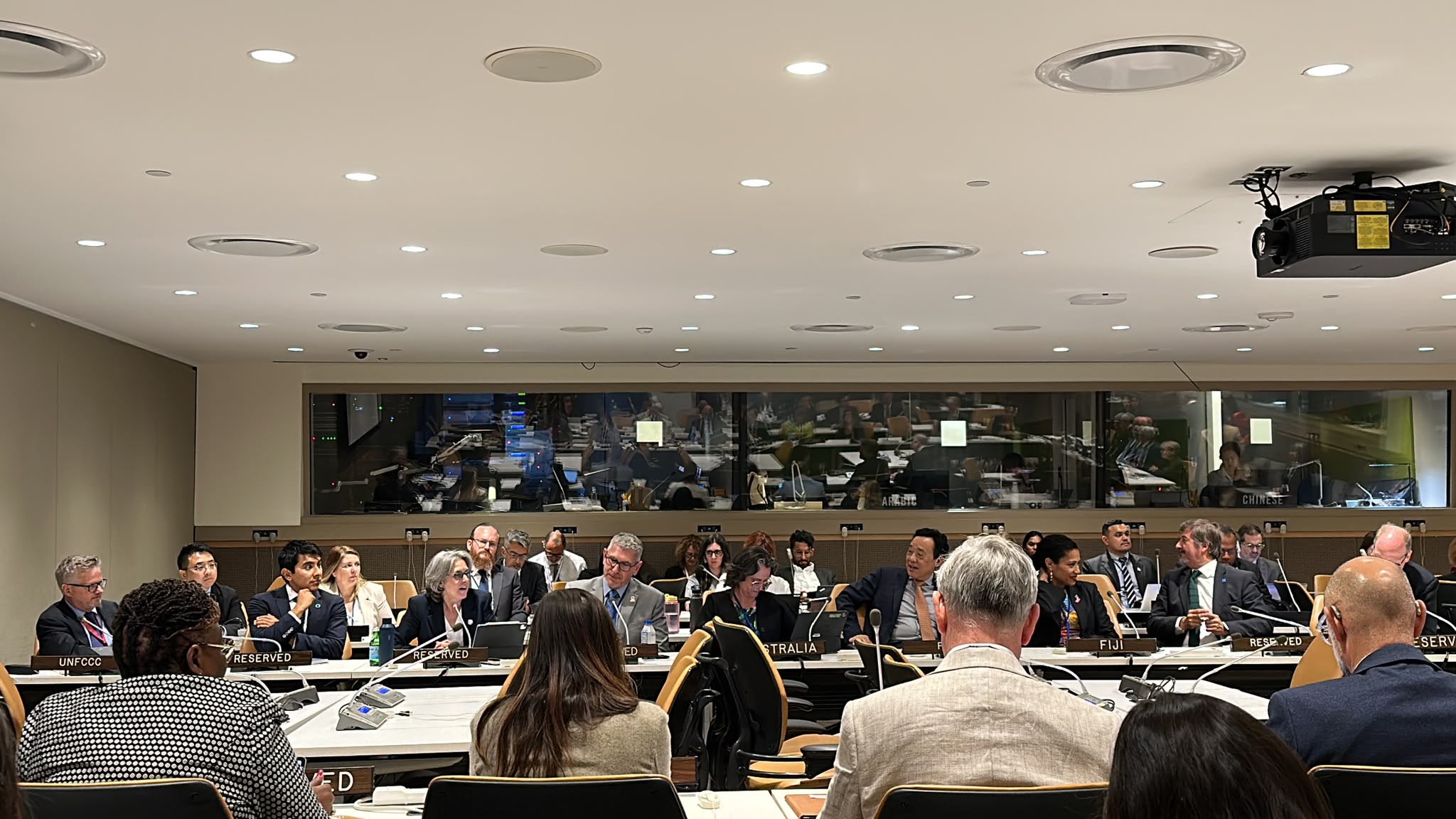
“The whales don’t know about borders. The krill don’t know about borders. We do, and we have an opportunity to do something about it,” he told the UN Solutions Dialogue on Ocean Action and Leadership in New York.
It was a message Pacific leaders delivered with one voice- the ocean cannot be managed in fragments, and the region that depends on it most is ready to lead. As Lord Fakafanua put it, “Small states, large oceans, global solutions.”
From dialogue to agenda
The Pacific’s COP31 Ocean Envoy, Honourable Inia Seruiratu, challenged the international community to move from discussion to delivery. “We all know what the problem is. There’s a big difference between a dialogue item and an agenda item.”
That distinction sits at the heart of the Pacific’s push. The ocean already has its own dialogue within the UN climate talks, but it is not yet a standing item on the negotiating agenda - where decisions are made and delivery can be measured. The Pacific wants the ocean moved from the margins to the centre of the table.
Fiji’s Minister for Environment and Climate Change, Honourable Lynda Tabuya, said that fragmentation begins much closer to home. “Even the silos exist within cabinet and within our ministries, let alone what we’re talking about on a global stage.”
A threshold of survival
For Tuvalu, with nine low-lying islands whose highest point sits less than five metres above sea level, the stakes could not be higher.
“For Tuvalu, the ocean is not one issue among many on the international agenda,” said Prime Minister Honourable Feleti Teo. “The ocean is our home. It is our history. It is our culture and it is our future.”
Rising seas, warming waters, ocean acidification and coastal flooding are already threatening homes, freshwater, food security and cultural heritage. “These are not predictions of some distant future. They are the reality of our present situation.”
The same urgency applies to the world’s temperature goal. “For Pacific people, the 1.5 degrees target is not an abstract negotiating benchmark. It is a threshold of survival.”
Yet he was clear that the Pacific does not come to the global stage simply as a region of vulnerability. “We come as custodians of the vast Pacific Ocean. We come as leaders in ocean governance. And we come with solutions.”
The blue thread
Chairing the dialogue, the UN Secretary-General’s Special Envoy for the Ocean, Ambassador Peter Thomson, described the growing momentum as a “blue thread” linking Pacific leadership, ocean governance, science and finance on the road to COP31.
That thread now runs from New York back to the Pacific. Leaders will gather in Funafuti, Tuvalu, on 5–6 October for the leaders’ segment of Pre-COP, before talks continue in Nadi, Fiji, until 8 October. From there it leads to COP31 in Antalya, Türkiye, from 9 to 20 November, with Australia presiding over the negotiations in partnership with the Pacific.
Its message is simple- the ocean cannot be separated from climate, from people or from development.
“Ultimately,” PM Teo said, “we share the one ocean, one climate, one planet and one future.”
In the coming weeks, the humpbacks will leave Tonga’s waters again, heading south across lines they will never know exist. The question the Pacific is now putting to the world is, whether the rest of us can learn to govern the ocean the way they travel it - as one.
The 81st session of the United Nations General Assembly and Climate Week New York was held from 20 to 28 September 2026. The UN Solutions Dialogue for Oceans event was held on 22 September 2026.