

Nuku’alofa, Tonga – Pacific countries are advancing an Earth Systems Approach with regards to the Multi-Hazard Early Warning, recognising that weather, climate, water, ocean and geological hazards are interconnected and require stronger coordination across science, monitoring, risk information and warning systems.
The direction was supported at the Eighth Pacific Meteorological Council (PMC-8) in Nuku’alofa, following consideration of the Third Regional Geohazards Meeting outcomes held in Honiara, Solomon Islands in August this year. Recent cascading hazards have reinforced why this approach is needed.
Pacific Met Directors, experts and regional development partners are attending the PMC-8, which is chaired by the host country Tonga, alongside the Secretariat of the Pacific Regional Environment Programme (SPREP). The three-day meeting will conclude on the 14th of September, preceding the Ministerial meeting.
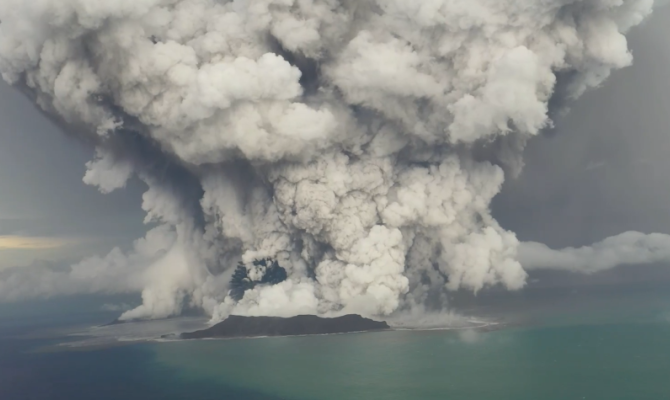
The Hunga Tonga-Hunga Ha’apai volcanic eruption and tsunami demonstrated how a single event can generate multiple hazards across the atmosphere, land and ocean, with impacts extending far beyond national boundaries.
This reinforces a simple lesson for the Pacific: recognising that weather, Climate and Geological hazards do not occur in isolation but are interconnected. For this reason, the systems for understanding and providing warnings must be linked across disciplines and institutions at national and regional level.
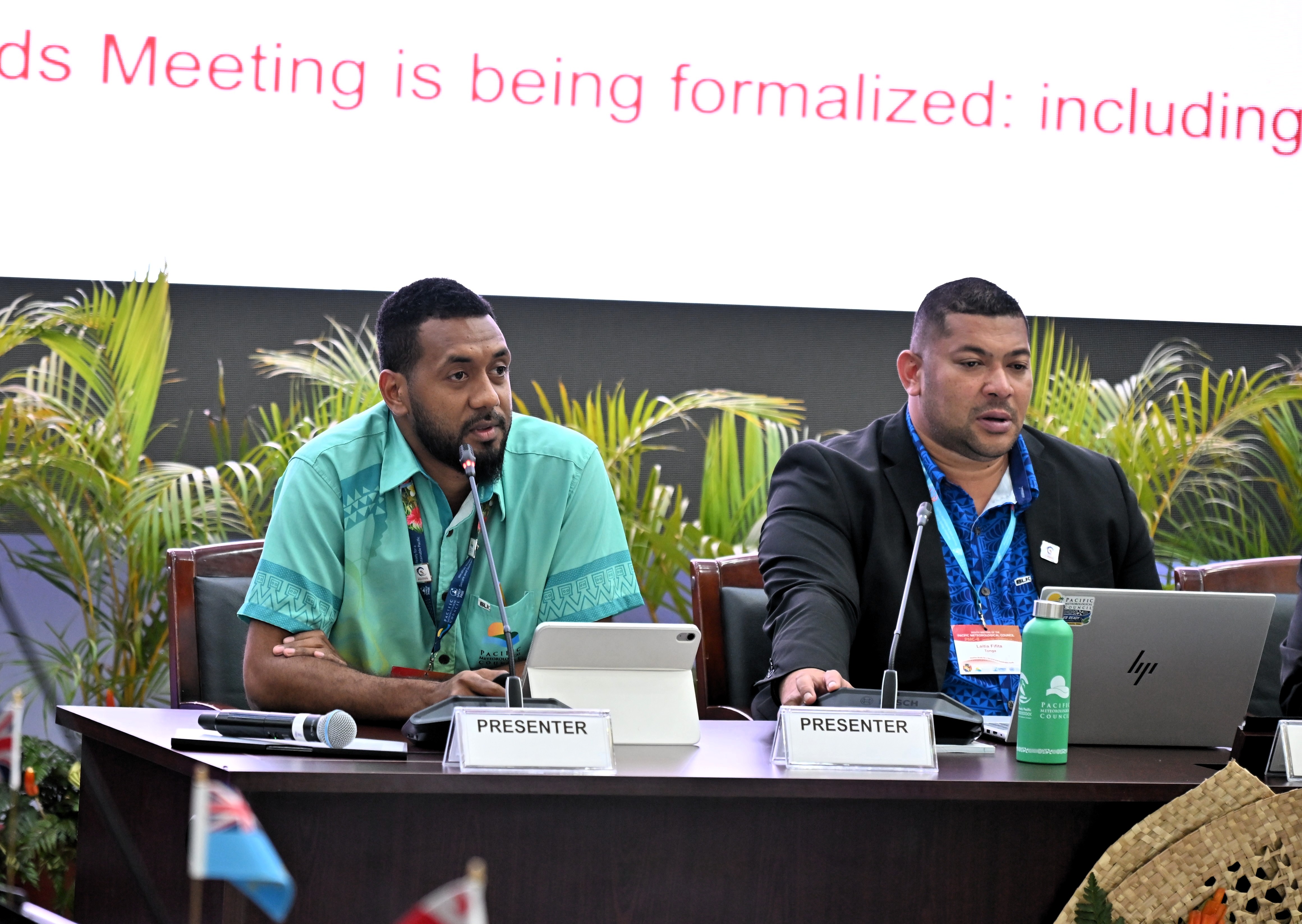
Chair of the Regional Geohazards network, Mr John Jr Niroa, presented the Regional geohazards meeting outcomes and recommendations to PMC-8.
“Our hazards are interconnected, and our approach to understanding and the warning systems must also be connected. Stronger regional cooperation will allow Pacific countries to share expertise, data and infrastructure and provide better information to protect our communities from all Hazards,” Mr Niroa said.
The Honiara meeting identified common challenges across the region, including fragmented monitoring networks, unreliable telemetry and power, limited technical capacity, ageing equipment, maintenance gaps, uneven data sharing and insufficient sustainable financing.
A key outcome was the formalisation of a Regional Geohazards Network, coordinated by the Pacific Community (SPC), bringing together regional expertise on earthquakes, tsunamis, volcanoes and landslides while strengthening existing mechanisms such as Oceanic Regional Seismic Network (ORSNET) and the Pacific Tsunami Warning System Pacific Island Countries and Territories Working Group (PTWS WG-PICT).
A 2026–2030 work programme has been developed, including a Pacific Regional Geohazards Strategy, costed investment and implementation plans, strengthened data sharing and standards, improved infrastructure, capacity development and a partnership and resource mobilisation framework.
PMC-8 supported strengthening the integration of geohazards collaboration within the Pacific Islands Meteorological Strategy 2027-2036, contributing to a broader Earth Systems approach to Multi-Hazard Early Warning.
The approach respects existing national mandates. Rather than transferring responsibilities between agencies, it seeks to strengthen collaboration between meteorological, hydrological, ocean, geological, and disaster management institutions so that science, observations, risk information and warnings work together more effectively.
It also complements Weather Ready Pacific and Early Warnings for All, with Pacific priorities nationally owned, regionally coordinated and supported through sustainable investment.
Sustained financing will be critical. Investment must cover not only new monitoring equipment but its full lifecycle, including resilient power and communications, maintenance, calibration, replacement, data systems and the skilled people required to operate them.
The direction emerging from PMC-8 is clear: Weather, Climate and Geohazards are interconnected. Our science, institutions, investments and early warning systems must be connected too.
The Pacific Meteorological Council is a specialised subsidiary body of the Secretariat of the Pacific Regional Environment Programme (SPREP) established to facilitate and coordinate the scientific and technical programme and activities of Pacific National Meteorological and Hydrological Services.
The eighth meeting of the Pacific Meteorological Council (PMC-8) is held from 10 – 14 September 2026 in Nuku’alofa, Tonga. It follows a series of pre-meetings which starts on 7 September 2026 and will conclude with the convening of the fourth Pacific Ministerial Meeting on Meteorology (PMMM-4) on 16 September 2026.
The PMC-8 and PMMM-4 are made possible through the partnership and collaboration between the Government of Tonga, SPREP, World Meteorological Organization-Climate Risk and Early Warning Systems (WMO-CREWS) project, United Kingdom-Weather and Climate Information Systems (UK-WISER), Australian Department of Foreign Affairs and Trade (DFAT), New Zealand Ministry of Foreign Affairs and Trade (MFAT), Weather Ready Pacific Programme (WRPP), European Union-funded Intra-ACP Climate Services and Applications programme (ClimSA), Climate and Oceans Support Program in the Pacific (COSPPac), Republic of Korea-Pacific Islands Climate Prediction Services Phase 3 project (ROK-PI CliPS 3), Apec Climate Centre (APCC), and the Pacific Community (SPC).