

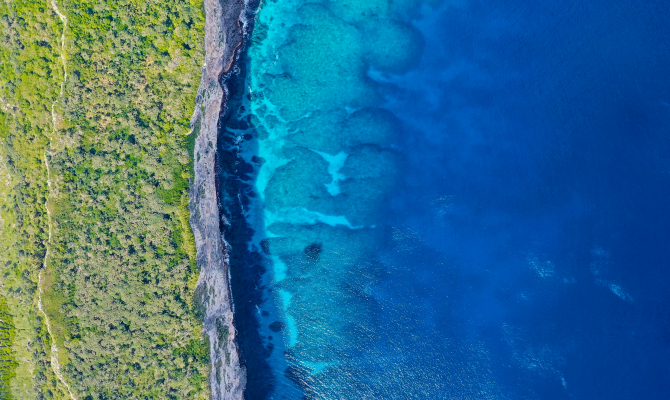
Pacific breakthroughs have been made on the Protected Areas work during the 17th Conference of the Parties to the UN Convention on Biological Diversity.
Pacific Island delegates have been calling for Other Effective Area-Based Conservation Measures (OECMs) to be recognised as a Protected Area under Target 3. This was agreed during negotiations, as well as the text inside the preamble that recognises the contributions of indigenous and traditional territories.
While this text is in there now - on the final day of the COP, it is not officially closed and agreed until the gavel bangs to signify the end of the CBD COP17 now underway in Yerevan, Armenia from 19 to 30 October.
“The recognition of indigenous and traditional territories must be formalised by the CBD COP so we can recognise their work and contributions towards meeting Target 3 of the Kunming-Montreal Global Biodiversity Framework,” said Mr Dean Wotlolan of Vanuatu. He has been following this negotiation thread both for Vanuatu and for Pacific Small Islands Developing States.
“In Vanuatu the majority of the conservation areas that we are targeting to contribute to Target 3, the 30 by 30 are owned and managed by traditional indigenous owners so we must have this recognition from the COP.”
Target 3 of the KMGBF is to conserve 30% of Land, Waters and Seas by 2030. It is to “ensure and enable that by 2030 at least 30 per cent of terrestrial, inland waters, and of coastal and marine areas, especially areas of particular importance for biodiversity and ecosystems functions and services, are effectively conserved and managed through ecologically representative, well-connected and equitably governed systems of protected areas and other effective area-based conservation measures, recognising indigenous and traditional territories where applicable, and integrated into wider landscapes, seascapes and the ocean, while ensuring that any sustainable use, where appropriate in such areas, is fully consistent with conservation outcomes, recognising and respecting the rights of indigenous peoples and local communities, including over their traditional territories.”
For the Pacific Islands region OECMs are also crucial, these are geographically defined spaces—outside of formal protected areas—that are governed and managed in ways that deliver long-term, positive results for biodiversity conservation. While the Cook Islands is the only OECM across the Pacific, there are plans for others to establish these.
Vanuatu is currently reviewing its Principle Environment Act and has the specific inclusion and recognition of OECMs.
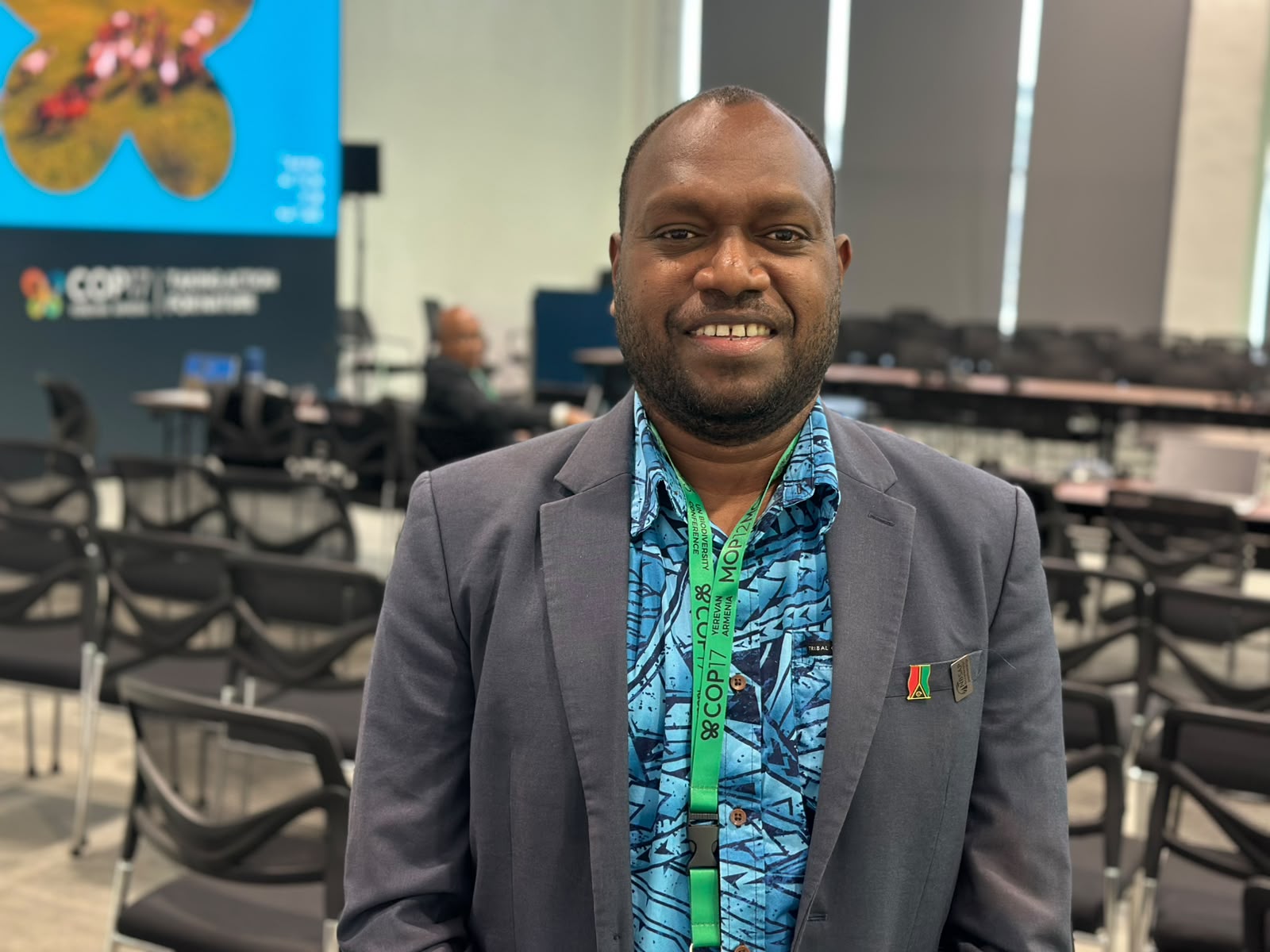
“For Vanuatu, approximately 90 percent of all conservation areas are owned and governed by indigenous people,” said Mr Wotlolan.
“It’s a win for us to have this recognised to date, as well as the inclusion of the OECM’s.
The latest Protected Planet Report (2024) indicated that globally, 8.5 per cent of the world’s terrestrial land is both protected and connected, up from 7.84% with the inclusion of OECMs in 2020.
Regionally, connectivity of protected terrestrial land varies greatly between countries and territories ranging from 0% to 60%, due to their spatial arrangement, size and coverage. According to the State of Protected and Conserved Areas in Oceania report, Pitcairn, New Caledonia, and Tuvalu have the highest level of land both protected and connected at 58%, 56%, and 37% respectively.
The 17th Conference of the Parties to the UN Convention on Biological Diversity hosted in Yerevan, Armenia from 19 to 30 October 2026.
The Cook Islands, Federated States of Micronesia, Fiji, Kiribati, Marshall Islands, Nauru, Niue, Palau, Papua New Guinea, Samoa, Solomon Islands, Tonga, Tuvalu, and Vanuatu are Pacific Island Parties to the CBD. For more information please visit: https://cop17yerevan.am/en
Lead image - Parc Naturel de la Mer de Corail - Récifs de l_Astrolabe (c)Squale Odyssey- PNMC.