

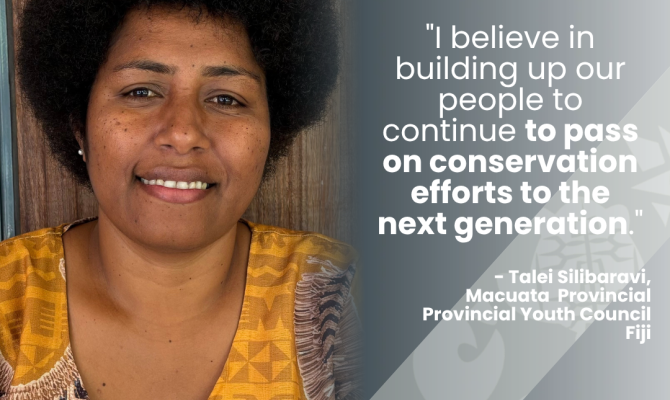
Biodiversity, climate and ocean action must be implemented together and not treated in isolation. The health of Pacific reefs, forests, fisheries, and communities depends on integrated action and finance and resourcing that reflects the realities and lived experiences of Pacific people.
This was one of four key asks the Pacific chapter of the Global Biodiversity Youth Network (GYBN) put on the table at the 11th Pacific Islands Conference for Nature Conservation through a call-to-action declaration. The declaration puts into perspective the stakes of the next five years, a critical window that will determine whether young Pacific people will inherit of future of abundance, or one defined by loss.
In a time of aging societies and shrinking populations, the Pacific region boasts a youthful population with 50% under the age of 25. The decisions leaders make today will ultimately shape the world youth will inherit, and with time, govern.
Pacific Biodiversity Coordinator for the Pacific Islands Roundtable for Nature Conservation, Ms Claire Oiire delivered the declaration during the Ministerial segment of the conference opening.
When asked about the purpose of the strategy she said, “by 2030 young Pacific people will be in or nearing positions of leadership, and the declaration was drafted with this in mind. We are putting our asks on the table now, letting our leaders know what is required for young people to meaningfully participate in biodiversity action. And by the time they assume leadership they would’ve already been included in the decision-making that will determine their future.”
In addition to integrated actions, the youth declaration calls on leaders to recognise young Pacific people as decision-makers and not just stakeholders, a recurring theme from across the week where young people were asking for meaningful inclusion in national, regional and international processes, and not merely being selected for token representation. Investment in youth leadership through financing, capacity building and support for youth-led initiatives is how this achieved according to the declaration.
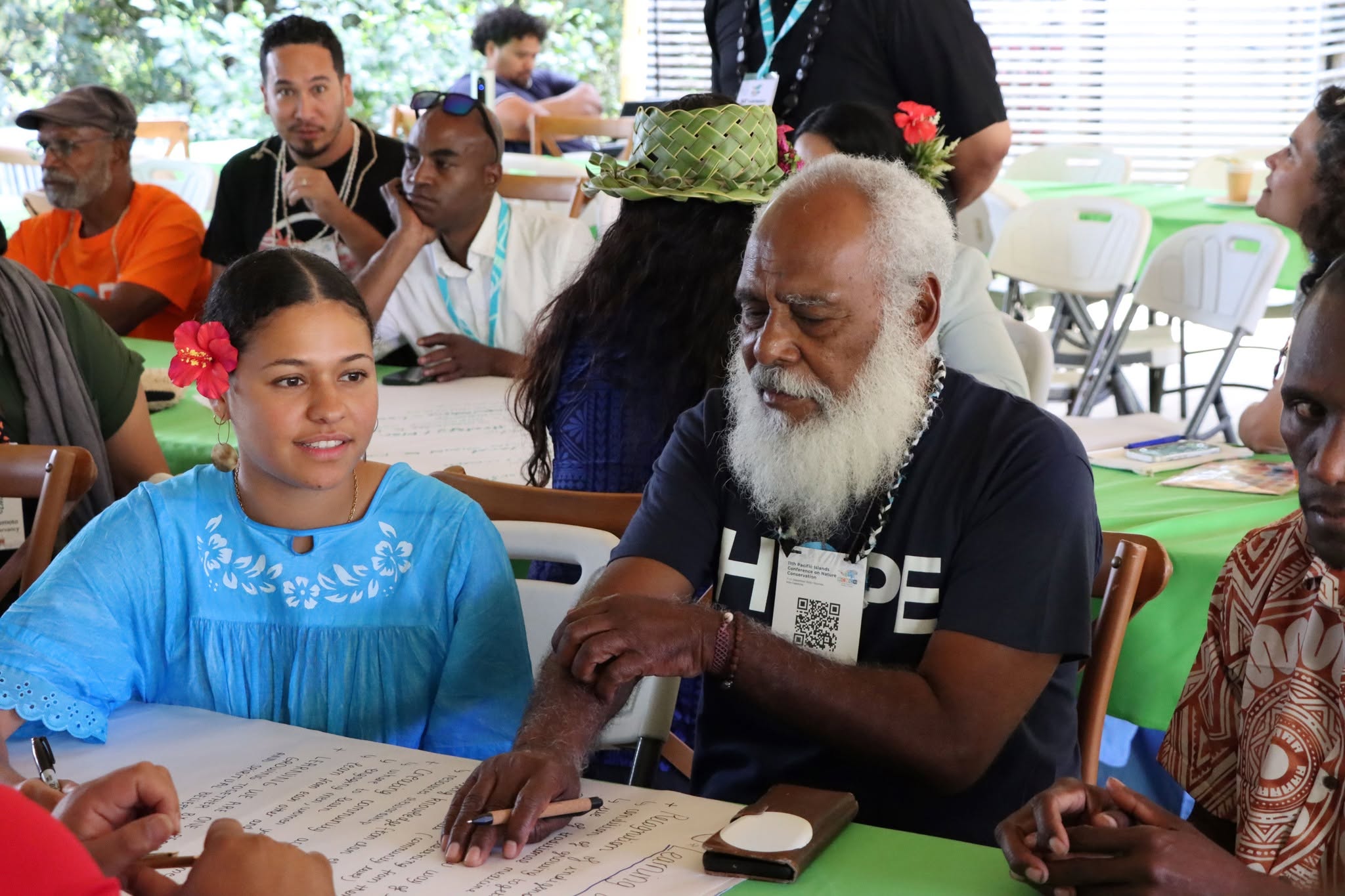
Intergenerational dialogue and traditional knowledge preservation is also a key ask for young Pacific people. They recognise the strength of Pacific leadership and traditional and indigenous knowledge. Pacific youth have acknowledged that they cannot do this work without the wisdom, mentorship and experience of their elders.
“Our hope is the declaration will go far beyond PCNC-11, with the UN Biodiversity Conference and Climate Change Conference later this year, as well as the High Seas Treaty and Global Plastics Treaty negotiations. Ensuring that actions are integrated across these thematic priorities will strengthen all efforts to protect the Pacific environment. We hope our leaders will take heed of what young Pacific people are calling for now, we are running out of time”, said Ms Oiire.
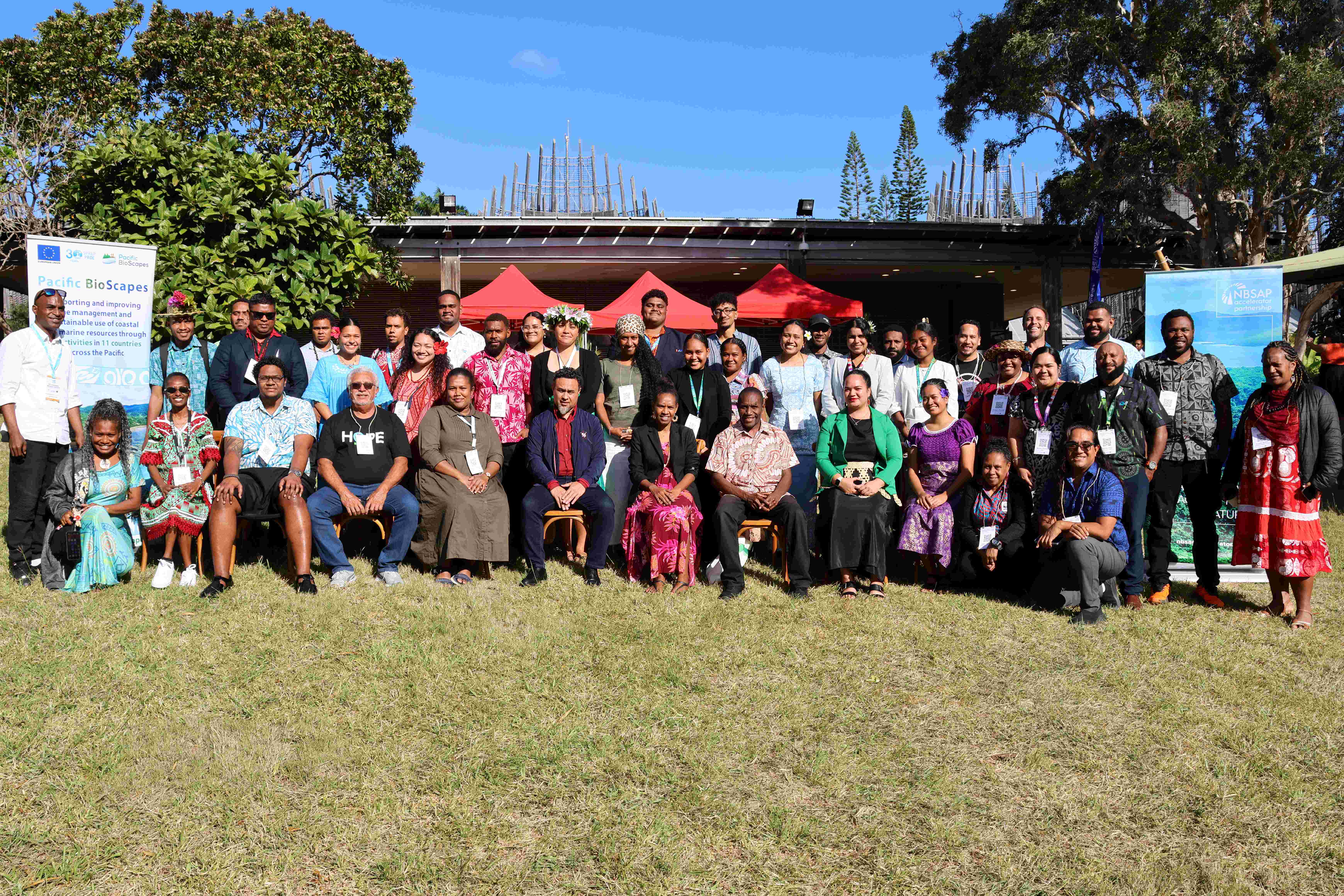
The Ambassadors of the Pacific Global Youth Biodiversity Network participation in the PCNC11 was made possible through the generous support of the Pacific BioScapes Programme, a European Union (EU) funded action, managed and implemented by the Secretariat of the Pacific Regional Environment Programme (SPREP), whose continuous commitment to youth engagement and biodiversity conservation has been instrumental in bringing the Pacific Chapter to life.
Further assistance for the activity in Noumea was provided by the NBSAP Accelerator Partnership.
Pacific Youth Declaration at the 11th Pacific Islands Conference for Nature Conservation and Protected Areas
Honourable Ministers, Pacific leaders, Elders, distinguished delegates, and partners.
I speak today on behalf of the Global Youth Biodiversity Network – Pacific Chapter, representing young people from across our Blue Pacific Continent.
The Pacific is one if not the youngest region in the world. Nearly half of our population is under the age of 25, and by 2030, today's young people will be the generation responsible for carrying forward every commitment made in this room.
Yet we are also the generation witnessing the rapid loss of the ecosystems that define who we are. Our coral reefs are bleaching, our forests continue to decline, invasive species threaten our islands, and pollution is reaching even our most remote communities. These are not distant environmental issues, they are threats to our food, our cultures, our livelihoods, and our future.
The choices made over the next five years will determine whether Pacific youth inherit abundance or loss.
We welcome and stand behind the Môo Mâ Awé Declaration because it reflects a truth Pacific youth have always known, biodiversity conservation in the Pacific cannot be separated from our identity, our customary stewardship, and our responsibility to future generations.
The declaration commits our region to conservation that is grounded in Pacific cultures, respects Indigenous knowledge and languages, protects customary rights, restores species and ecosystems, addresses pollution and invasive species, strengthens environmental governance, and invests in regional cooperation, science, and knowledge sharing.
As youth, we are not asking to replace this vision. We are asking to help deliver it.
Across our islands, young people are already restoring mangroves, monitoring reefs, protecting endangered species, reviving traditional ecological knowledge, advancing community conservation, and bringing Pacific voices into global biodiversity negotiations. We are already implementing the future this declaration describes.
Today, we ask Ministers to make four commitments.
First, recognise youth as decision-makers, not just stakeholders. Ensure meaningful, funded, and permanent youth representation in national biodiversity strategies, protected area governance, and regional and international biodiversity processes.
Second, invest directly in youth leadership. Create accessible financing and capacity-building mechanisms that support youth-led conservation, Indigenous youth initiatives, research, innovation, and community action across the Pacific.
Third, uphold intergenerational and Indigenous knowledge systems. Protect the rights of young Indigenous peoples to learn, practice, and lead conservation through our languages, cultures, and customary governance systems, as envisioned in this declaration.
Finally, ensure biodiversity, climate, and ocean action are implemented together. Pacific youth refuse to see these crises treated in isolation. The health of our reefs, forests, fisheries, and communities depends on integrated action and finance that reflects the realities of our islands.
Honourable Ministers,
Declarations matter only when they change lives.
As this declaration travels from Nouméa to other Conventions (CBD COP17, COP31, the BBNJ Conference of the Parties, and the Global Plastics Treaty negotiations), we ask that Pacific governments carry more than ambitious words, they carry measurable action.
By 2030, we want to be able to say that youth were included in biodiversity governance, that youth-led initiatives were financed, that Indigenous knowledge was protected, and that the commitments of the Môo Mâ Awé Declaration were implemented in our communities, not just recorded in conference outcomes.
Pacific youth will do our part. We will continue restoring ecosystems, mobilising communities, generating knowledge, and holding ourselves accountable.
Today, we ask you to do yours.
Because we are not the leaders of tomorrow.
We are the partners you need today.
Tagio tumas, Fakafetai. Vinaka vakalevu. Mālō ‘aupito. Merci.
The 11th Pacific Islands Conference for Nature Conservation and Protected Areas is held from 7 to 11 September 2026 at the Tjibaou Culturel Centre in Noumea New Caledonia. Bringing together over 400 delegates from across the Pacific, the conference is organised by New Caledonia, Secretariat of the Pacific Regional Environment Programme, and the Pacific Islands Roundtable for Nature Conservation with the support of partners.
For more information please visit : https://www.pacificislandsroundtable.com/pacific-nature-conference