

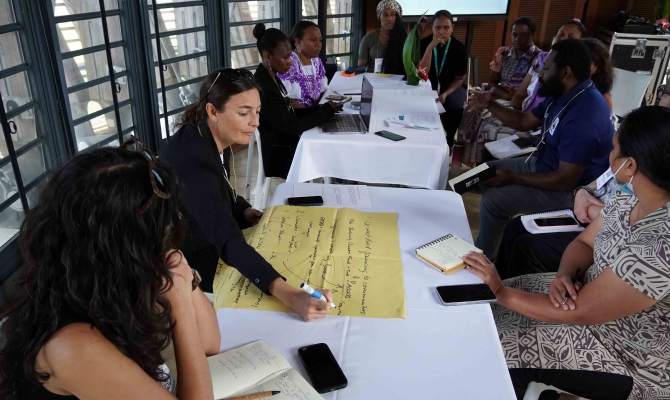
From biodiversity credits and blended finance to conservation trust funds and community-led investment, delegates at the 11th Pacific Islands Conference for Nature Conservation and Protected Areas (PCNC11) explored how sustainable financing can help secure a future where both people and nature thrive across the Blue Pacific.
As Pacific nations confront the dual challenges of biodiversity loss and climate change, securing long-term financing for conservation remains one of the region's most pressing priorities. During a cross-cutting session on Sustainable Financing for Nature, delegates examined how innovative financing mechanisms can support conservation outcomes while ensuring Pacific communities remain at the centre of decision-making and benefit-sharing.
Held at the iconic Tjibaou Cultural Centre in New Caledonia, the session brought together government representatives, community leaders, NGOs, conservation practitioners, development partners and finance experts to share lessons and explore pathways for increasing investment in Pacific conservation. The discussion formed the second part of a broader dialogue on sustainable finance at PCNC11, focusing on tools and mechanisms that support long-term ecosystem management while remaining grounded in Pacific values, equity and customary stewardship.

Opening the session, Ms Kalara McGregor, Director of Pacific Partnerships at the Great Barrier Reef Foundation, encouraged participants to reflect on the intersection of conservation and finance, drawing on her experience working with private investors, tourism development and philanthropic partners across the region.
"The true conservation is not about separating people from nature. It is about supporting sustainable livelihoods that allow both to thrive."
Her remarks echoed a key theme of PCNC11 of successful conservation must strengthen the relationship between people, culture and environment rather than treat them as separate objectives.
Grounding the discussion within the framework of the 2050 Strategy for the Blue Pacific Continent, Ms McGregor highlighted the importance of Pacific leadership in shaping future investments and conservation priorities. "Our region is defined not by the land that separates us, but by the vast ocean that connects us."
Reflecting on the setting of the Tjibaou Cultural Centre, she drew inspiration from the site's indigenous landscape, where native vegetation guides visitors through a journey of culture and place. "Like the indigenous landscape that introduces this building and guides visitors through the site, we must ensure that Pacific people continue to drive and underscore what happens in our region."
A central theme throughout the session was the challenge of balancing two critical objectives of attracting investment while ensuring conservation initiatives remain equitable and community-led.
Historically, conservation efforts across the Pacific have relied heavily on philanthropy and development assistance. While these investments remain essential, delegates acknowledged that grants alone are unlikely to meet the scale of financing needed to achieve lasting biodiversity and climate outcomes.
"To achieve permanence, we increasingly hear that we must unlock private capital and design initiatives that are investable."
At the same time, participants recognised that Pacific communities operate within realities that often differ from investor expectations. Community-managed marine areas, sustainable fisheries, blue carbon projects and ecosystem restoration programmes generate significant social and environmental benefits but may struggle to meet conventional investment criteria designed for larger commercial ventures.
Ms McGregor noted that investors often focus on scale, risk mitigation, governance arrangements and measurable financial returns. However, delegates agreed that conservation finance in the Pacific must also account for cultural values and customary ownership systems.

This led to a broader discussion on equity and benefit-sharing. Participants stressed that conservation projects cannot be considered successful if communities lose control over their resources or receive only a small share of the benefits generated. Equitable governance, meaningful participation and transparent benefit-sharing arrangements must be embedded from the outset.
Participants explored a range of emerging financing mechanisms, including conservation trust funds, biodiversity credits, carbon markets, domestic resource mobilisation, crowdfunding and blended finance approaches that combine public, philanthropic and private capital.
A key question was how public and philanthropic investment could be used to de-risk smaller, community-led conservation initiatives and attract greater private-sector participation. Delegates also challenged traditional concepts of return on investment, arguing that conservation finance should capture broader outcomes, including biodiversity protection, cultural resilience, community wellbeing and sustainable livelihoods.
Following the keynote discussion, participants broke into working groups to examine practical challenges and opportunities associated with conservation finance across the Pacific. While financing options continue to expand, discussions revealed that access remains a significant challenge for many communities.
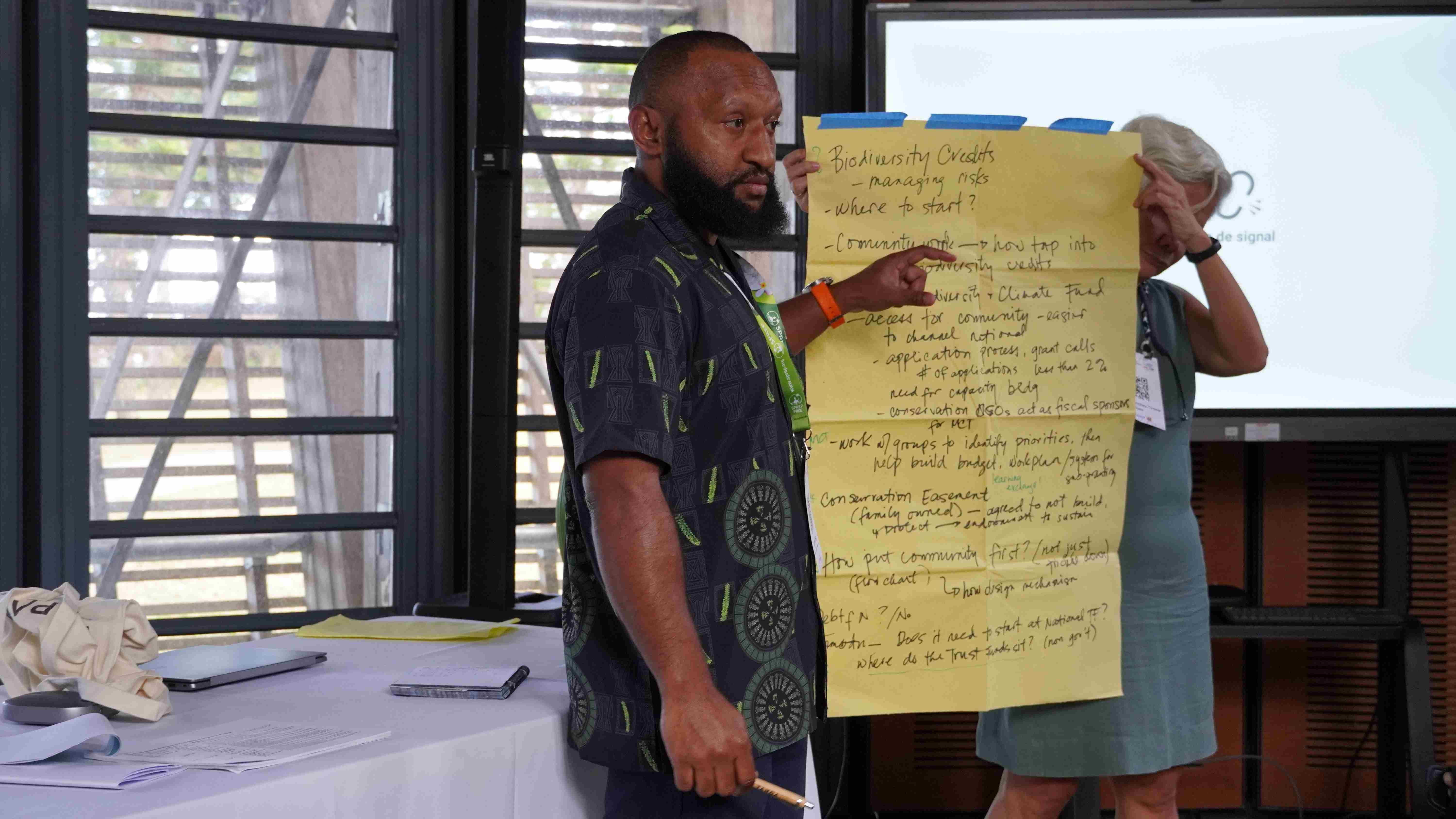
One group explored biodiversity credits, noting that the concept remains relatively new across much of the Pacific, including Papua New Guinea and other Melanesian countries. Participants highlighted uncertainty around how communities can engage in biodiversity markets and what frameworks are needed to support participation.
Delegates also discussed barriers to accessing climate and biodiversity finance. Papua New Guinea's Biodiversity and Climate Fund was cited as an example where resources exist but can be difficult for communities to access due to technical application processes, accreditation requirements and limited capacity at the local level.
Participants expressed concern that highly centralised systems can reduce the proportion of funding reaching community conservation efforts. Discussions focused on how financial mechanisms can be redesigned to ensure local communities, who contribute land, traditional knowledge and labour, receive the greatest share of benefits.
Several delegates pointed to the Micronesia Conservation Trust as a model that could offer lessons for more decentralised and community-responsive financing systems. Similar approaches may improve accessibility in geographically dispersed countries such as Papua New Guinea and Solomon Islands.
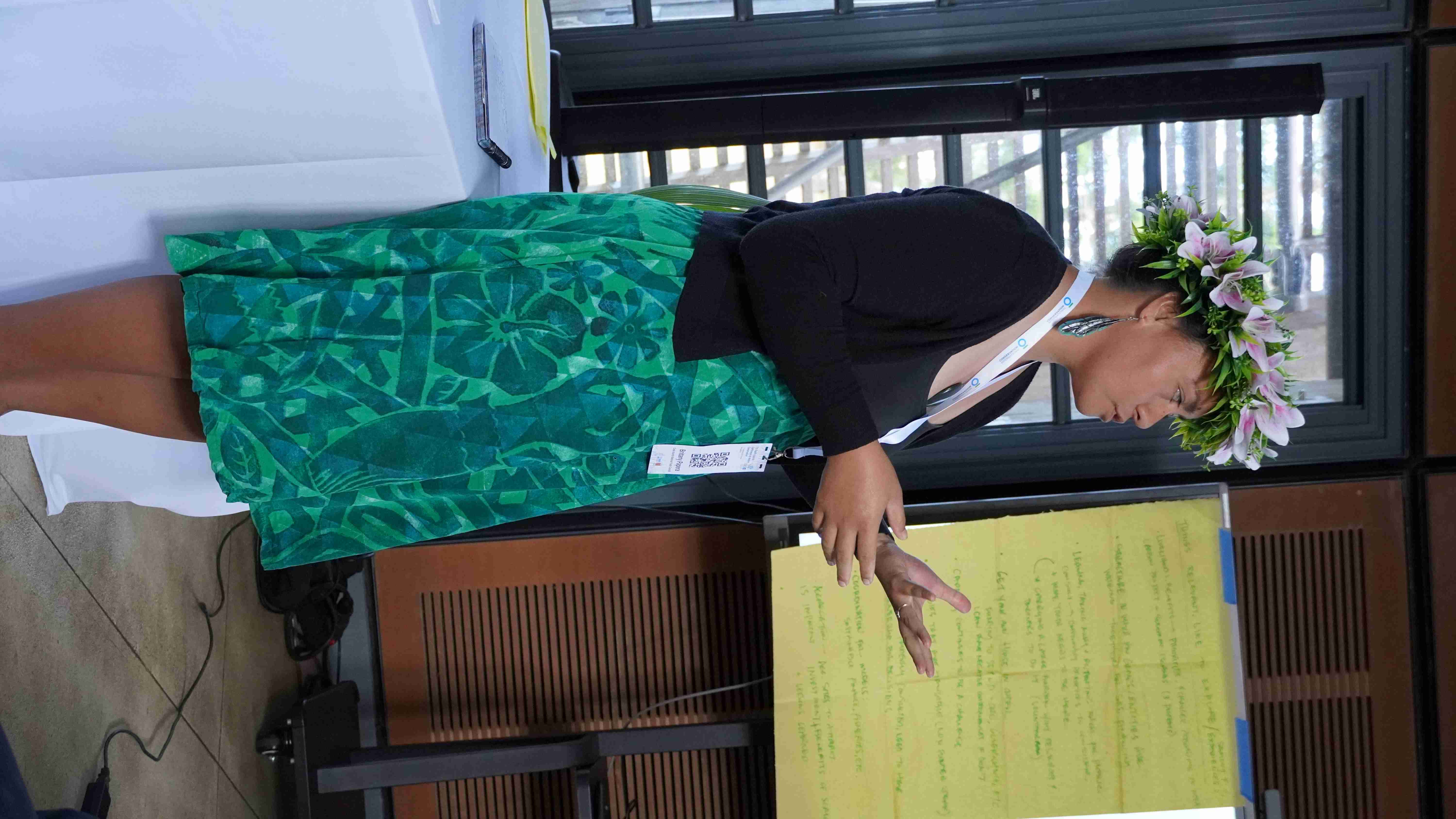
Across all working groups, participants emphasised that consultation is fundamental to sustainable finance. Many noted that funding frameworks are often developed without sufficient engagement with local communities, resulting in resources flowing disproportionately to organisations that already possess technical expertise and institutional capacity. This creates barriers for grassroots organisations and emerging conservation leaders.
Delegates agreed that sustainable financing requires more than funding projects. Long-term success depends on strengthening local governance systems, supporting community institutions and investing in ongoing capacity development. Several participants advocated for greater use of traditional and community governance structures rather than creating parallel systems that may disappear when projects or governments change.
Another recurring theme was the importance of diversifying funding sources.
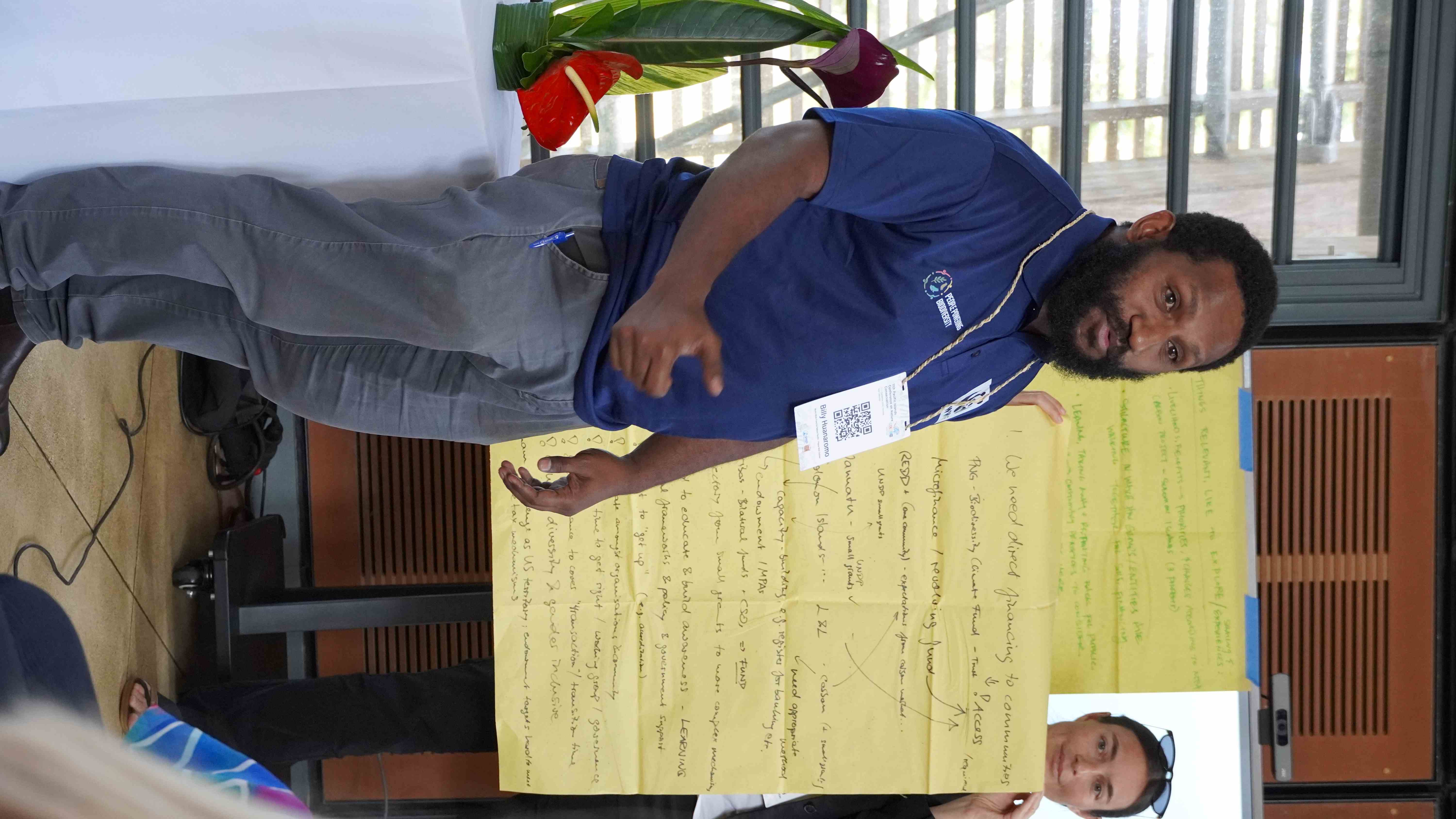
Participants agreed that no single financing mechanism can address the varied ecological, economic and governance contexts found across the Pacific.
Examples discussed included national biodiversity funds, UNDP Small Grants Programmes, bilateral assistance, carbon trading initiatives, trust funds, blended finance mechanisms and innovative tools such as parametric insurance, which may offer opportunities to support both climate resilience and conservation outcomes.
Delegates also highlighted the importance of political will in establishing the legal and institutional frameworks needed to attract investment and scale successful conservation initiatives. National Biodiversity Finance Plans, accreditation pathways for local organisations and supportive governance arrangements were identified as critical building blocks for success.
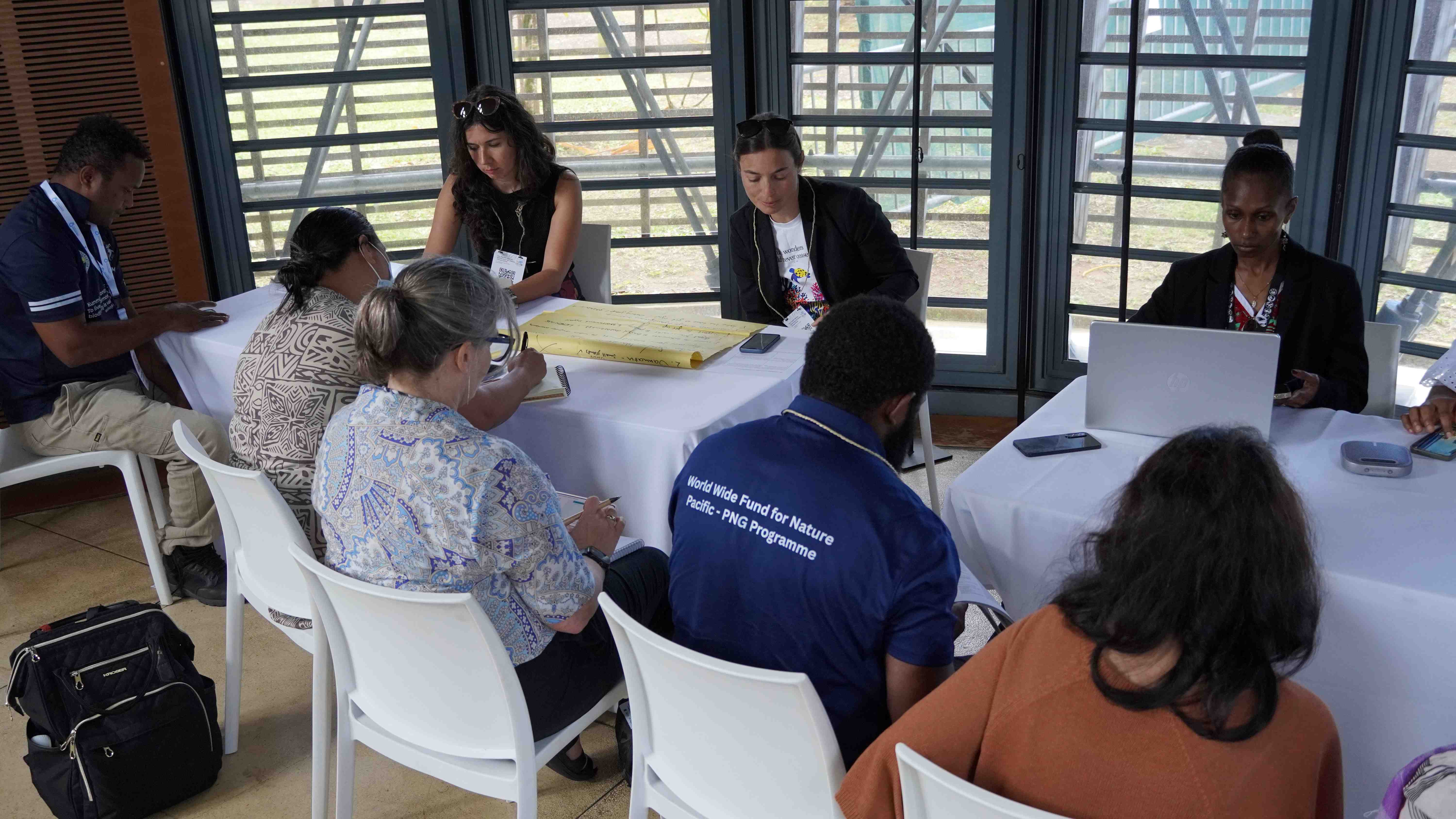
Throughout the session, participants repeatedly returned to the importance of creating direct pathways for communities to access funding. Examples were shared where resources were allocated directly to local communities, strengthening decision-making authority, improving accountability and ensuring benefits remained closer to those delivering conservation outcomes.
Delegates called for simplified application processes, improved coordination between governments and development partners, and increased awareness of financing opportunities beyond traditional grant funding. Many also highlighted the need to move beyond short-term project cycles towards financing models that build long-term community resilience and economic opportunity.
Ms Bridget Kennedy, a climate and environmental professional who collaborates with Rare and other international organisations to develop locally-led, gender-inclusive ocean and climate solutions while also serving as the Deputy Director of the Pacific Ocean and Islands Program at Conservation International commented that, “Pacific communities possess invaluable expertise drawn from generations of environmental stewardship and resource management.”
“The challenge moving forward is to ensure that conservation finance systems recognise, value and support that knowledge."
She reminded participants that while biodiversity credits, blue carbon, conservation bonds and trust funds represent exciting opportunities, financial innovation alone will not guarantee conservation success.
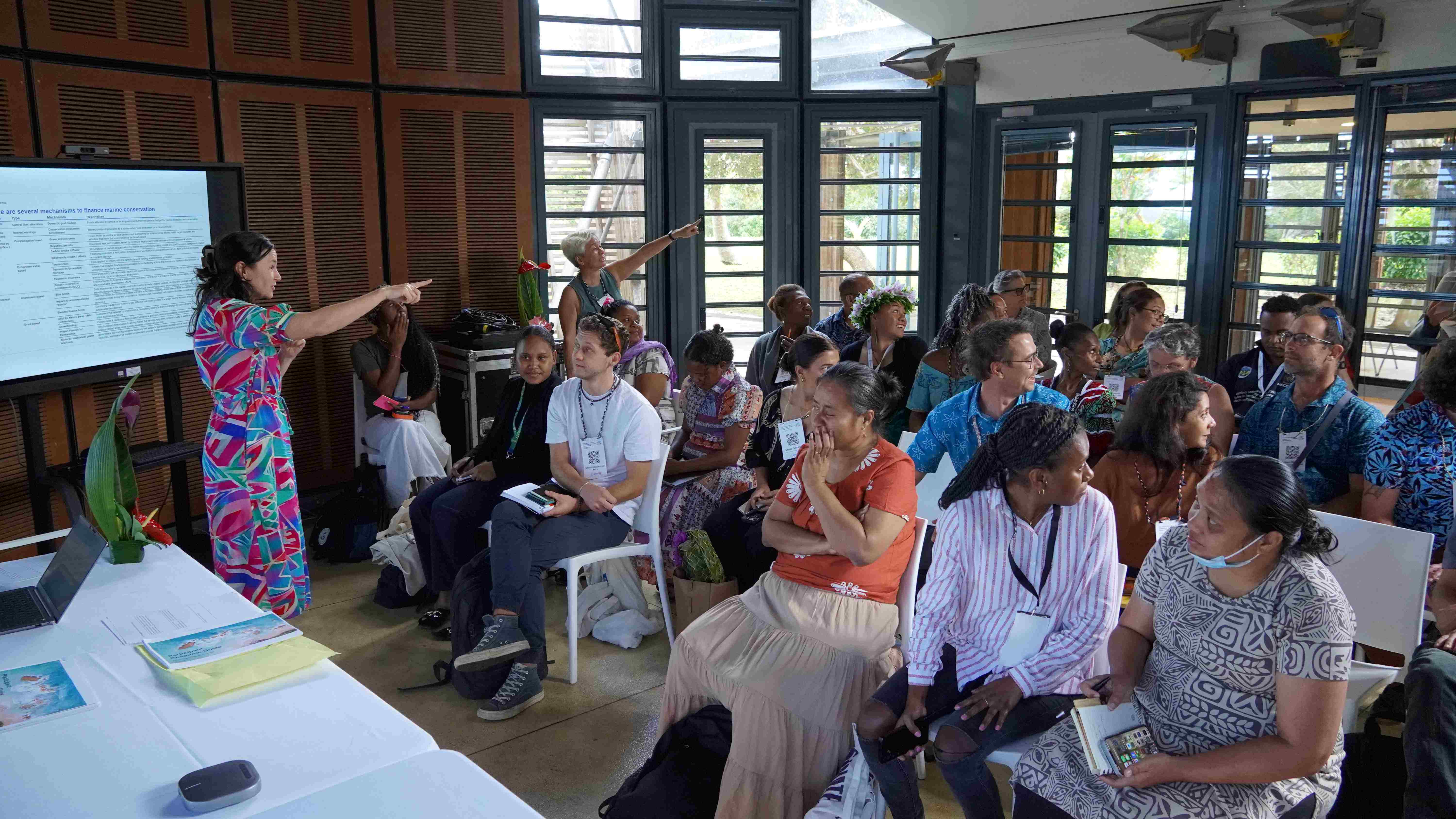
“The effectiveness of any financing mechanism ultimately depends on how well it engages communities, respects customary governance and delivers fair and equitable benefits."
The Sustainable Financing for Nature session at PCNC11 reinforced a powerful message that the future of conservation finance in the Pacific will not be measured solely by the amount of money mobilised, but by who shapes the decisions, who receives the benefits and how effectively investment strengthens the enduring relationship between people, culture and nature across the Blue Pacific.
The 11th Pacific Islands Conference for Nature Conservation and Protected Areas is held from 7 to 11 September 2026 at the Tjibaou Culturel Centre in Noumea New Caledonia. Bringing together over 400 delegates from across the Pacific, the conference is organised by New Caledonia, Secretariat of the Pacific Regional Environment Programme, and the Pacific Islands Roundtable for Nature Conservation with the support of partners.
For more information please visit : https://www.pacificislandsroundtable.com/pacific-nature-conference