

7 October 2026, Nadi, Fiji – The Intergovernmental Panel on Climate Change (IPCC) Assessment Reports on Climate Change are the best available science and evidence base for negotiations and policy under the United Nations Framework Convention on Climate Change (UNFCCC).
In each assessment cycle, hundreds of the world’s best climate scientists synthesise and determine the world’s scientific view on climate change. For a region standing at the forefront of the climate crisis, it is imperative to strengthen the engagement of the Pacific scientific community in global climate science processes, ensuring Pacific experiences are properly reflected in the global understanding of climate change.
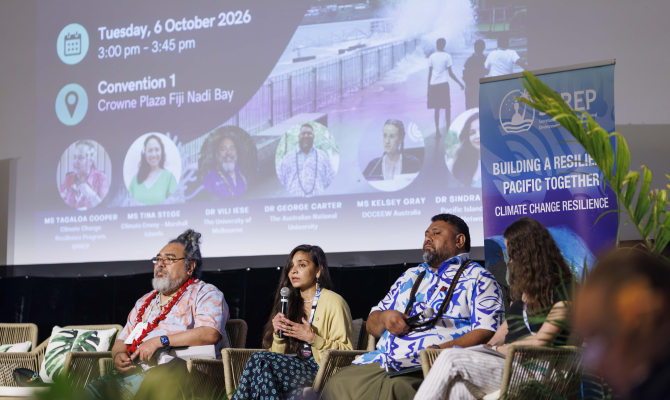
This was at the heart of a side event, held 7 October 2026 at the Vale ni Vanua Knowledge Exchange Pre-COP31 Stakeholder Program in Nadi, Fiji and organised by the Pacific Climate Change Centre (PCCC) hosted at the Secretariat of the Pacific Regional Environment Programme (SPREP).
“Small Island Developing States face some of the greatest impacts of climate change yet contribute the least. And it is our stories and narratives that need to be captured in the science and eventual policy that will help us become more resilient to its effects”, said Ms Tagaloa Cooper, Director of the Climate Change Resilience Programme at SPREP, in her opening remarks.
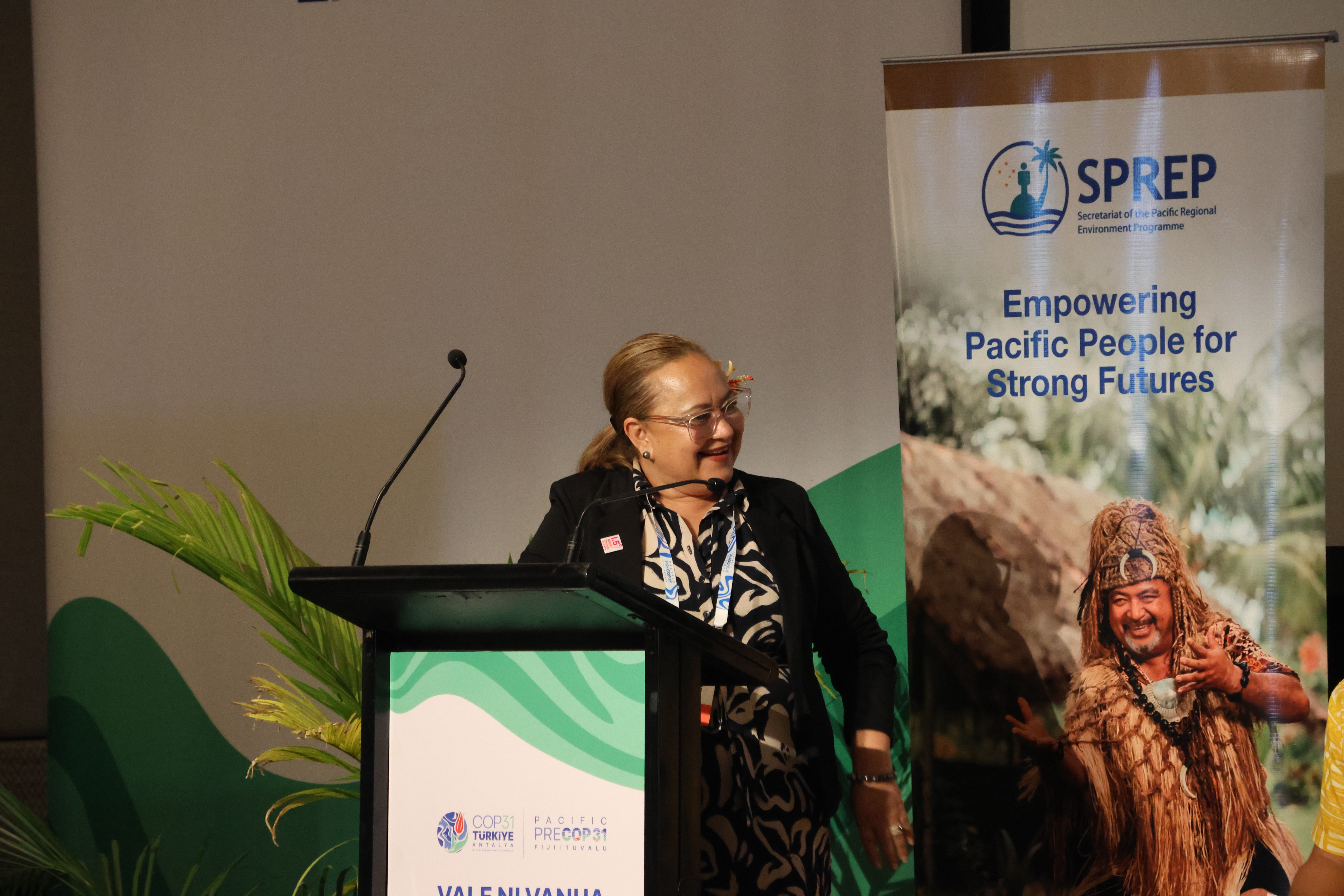
This was echoed by Pacific COP31 Envoy focusing on keeping the 1.5°C temperature goal within reach, Ms Kristina Stege.
“The findings from the recent report confirm that overshoot is inevitable, and it really brings home the implications for our region. And while those impacts are daunting and grim, it must be the basis of our fight to go out onto the world stage and make sure that we come back from overshoot. That is the only response we must take.”
“In the Pacific, we have capable and growing scientific institutions, and regional expertise that is on display in this panel, that demonstrate the depth and breadth of knowledge that we can bring to the table in addressing the greatest challenge of our time”, said Ms Stege.
The panel comprised of Dr Vili Iese, University of Melbourne, Dr Sinda Sharma, Pacific Island Climate Action Network (PICAN), Ms Kelcey Gray, Department of Climate Change, Energy, the Environment and Water (DCCEEW), Government of Australia and Dr Sala George Carter, The Australian National University (ANU), and moderated by Mr Vensel Margraff, IPCC Regional Coordinator for the Pacific at PCCC SPREP.
Panellists spoke to strengthening Pacific priorities reflected in the IPCC assessment reports, Pacific youth leadership and roles of researchers and research institutions in ensuring meaningful contributions to global climate science.
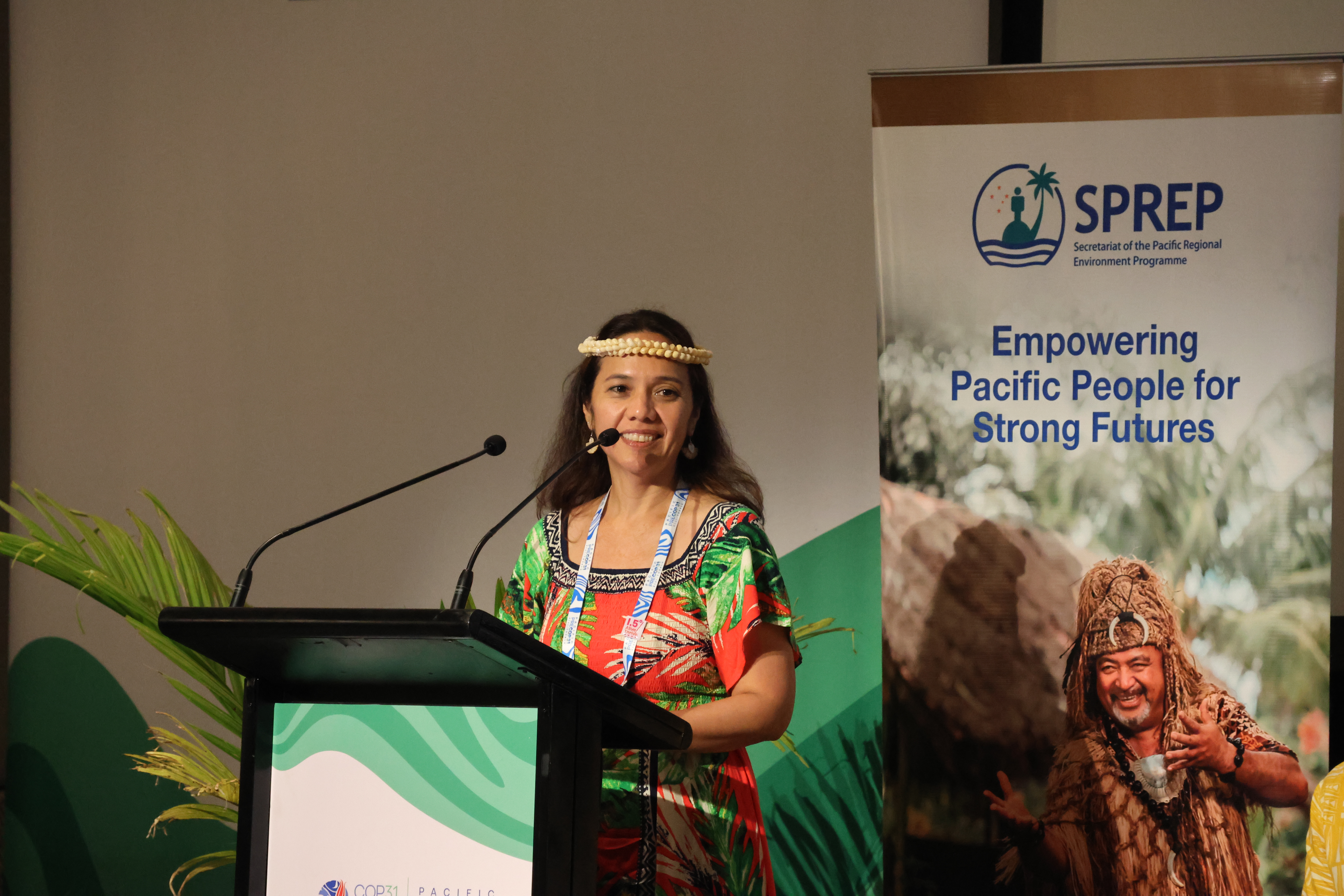
Dr. Sindra Sharma, Policy Lead at PICAN and coordinating Lead Author for the Small Islands Chapter of the IPCC Assessment Report (AR7) spoke to the leadership of Pacific youth in the scientific community.
“It is inspiring to see how much work our young scientists are doing, and how they are bridging the diverse systems of knowledge that shape the voice of the Pacific in this global process. A process that continues to evolve, driven by the Pacific and the ambition of our youth, who have already bought immense changes to the world we navigate, from leading the fight for the ICJ Advisory Opinion to advancing science and evidence.”
Dr Vili Iese, Senior Lecturer at University of Melbourne shared about his journey to becoming a Lead Author for AR7, Working Group 2 and opportunities for the Pacific to get involved in the IPCC process.
“There are write shops and several other opportunities that allow us to come together to put our science into these knowledge systems and scientific papers, because the IPCC is an assessment that looks into these peer reviewed papers.”
Dr Iese also encouraged young Pacific academics to get involved in write shops and opportunities to strengthen their engagement in the IPCC process.
Dr Sala George Carter, Head of the Department of Pacific Affairs at ANU shared about the role of academia in making the IPCC process accessible to the public and making the connection to the politics of the UNFCCC.
“We have a special role as researchers in bringing the science to negotiators, ensuring we are able to provide the information in real time for our Pacific to participate effectively in the UNFCCC process.”
He also shared about the work undertaken by ANU and partners to make this information available to the public through the development of information sheets, a dedicated website and translation into several Pacific languages.
Through a partnership with the Australian Government through DCCEEW, SPREP has hosted several coordination activities that have developed the capacity of Pacific scientific community to join this international science coalition.
“We are proud of the partnership we have with SPREP through PCCC that has led to enhanced engagement through the IPCC AR7, with 7 authors compared to just 2 in AR6. We see this as critical because traditional and indigenous knowledge really needs to be incorporated into the IPCC”, said Ms Kelcey Gray.
The PCCC recently launched the Pacific Climate Change Journal at the 5th Pacific Ocean Pacific Climate Change Conference in Honiara in September 2026, as a platform to unite climate science literature from our scientific community and connect it to the IPCC.
“Progress shows a positive correlation between regional level coordination and the scientific outputs of the region. SPREP, alongside its partners in the Australian Government DCCEEW and New Zealand Ministry of Foreign Affairs and Trade, is proud to be leading this work to empower our researchers”, said Ms Cooper.
Severe Pacific climate realities exist today, and the science will enable us to translate, package, and convey these messages to our communities, decisionmakers and leaders for a resilient Pacific future.
From 5-8 October, Fiji, Tuvalu and Australia are partnering to deliver the official COP31 pre-COP ministerial meeting and Leaders’ event. Attendance at Pre-COP is expected to include leaders, ministers, senior representatives and officials from invited countries, Türkiye, UN representatives and selected observers.
Stakeholder programming is also expected to include civil society, private sector, academia, First Nations, youth and community organisations.