

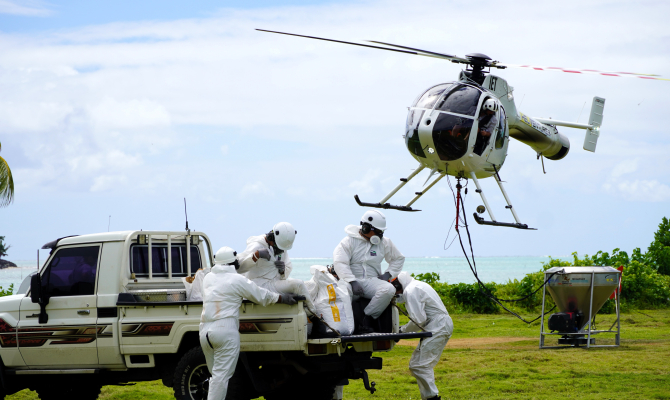
At the 11th Pacific Islands Conference for Nature Conservation and Protected Areas (PCNC11), delegates gathered for a timely and forward-looking discussion on one of the Pacific's most pressing conservation needs of developing and sustaining the next generation of invasive alien species (IAS) practitioners.
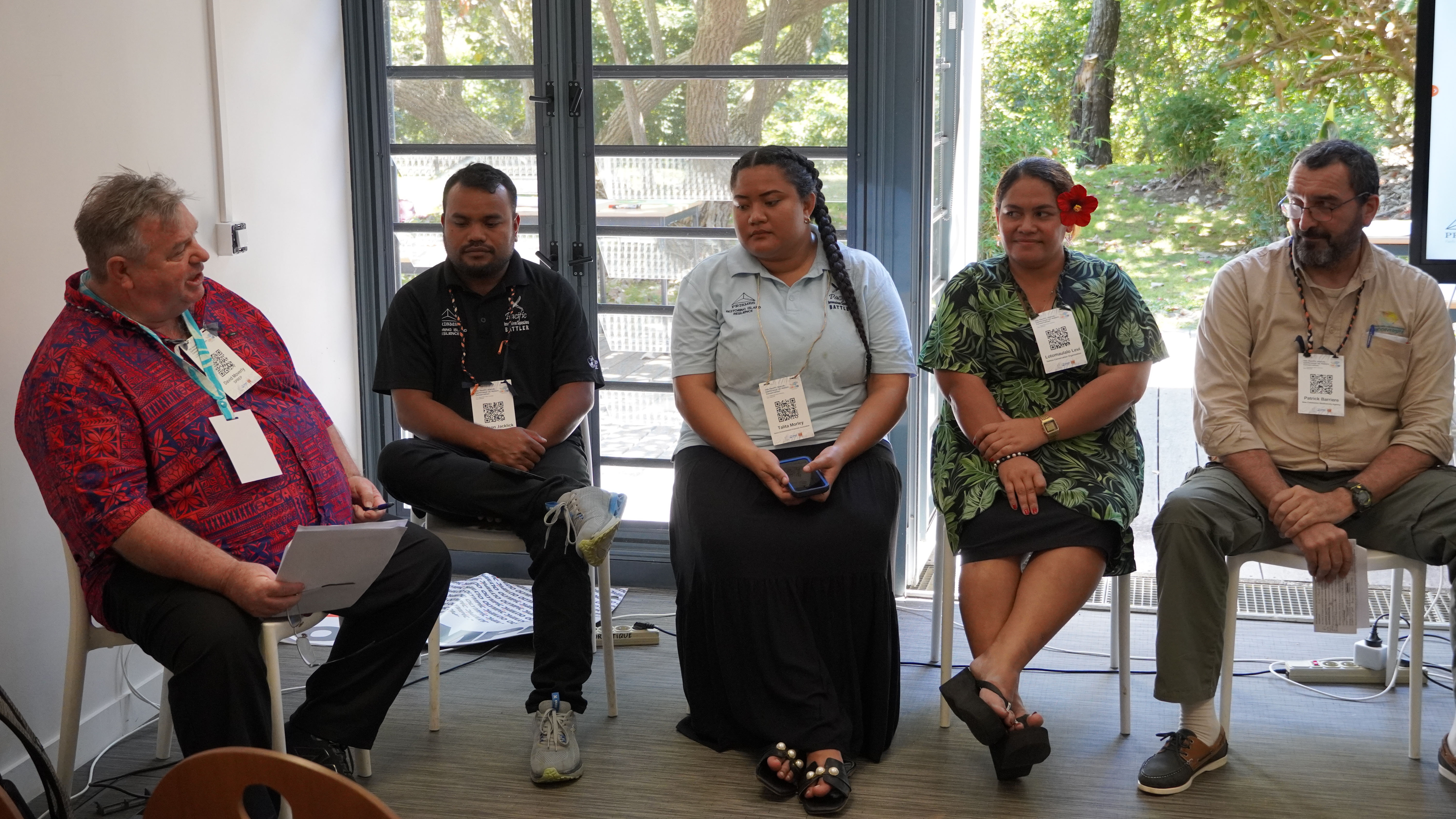
The invasives species thematic session, Training the Next Generation of IAS Practitioners in the Pacific, brought together emerging conservation leaders, experienced practitioners and regional partners to explore how the Pacific can build a skilled, resilient and Pacific-led workforce capable of addressing one of the region's greatest threats to biodiversity.
While invasive species management has long been a cornerstone of Pacific conservation, participants agreed that the profession has evolved dramatically. Today's practitioners require far more than technical field skills. Success increasingly depends on the ability to combine science, technology, community engagement, Traditional Knowledge, leadership, project management and regional collaboration.
The session highlighted a clear message that safeguarding Pacific biodiversity will require sustained investment in people as much as investment in conservation programmes. Opening the discussion, the Secretariat of the Pacific Regional Environment Programme (SPREP) Invasive Species Adviser, Mr David Moverley reflected on how the field has transformed over recent decades.
"What we did to manage invasive species, a lot of it is still familiar today, but there's a lot of new aspects, new technology, new ways of thinking about things," he said. "It's a really good time to look at what's next, because we don't have all the answers. But we all can find the answers together."
He explained that what was once a relatively narrow field focused primarily on eradication techniques has matured into a profession requiring a diverse and expanding skill set.
"The profession really has matured to a point where there are a lot of different roles to play and it's not just about tools and going out into the bush. It's about how you go about the work."
That theme resonated strongly throughout the session, with panellists highlighting that conservation outcomes depend as much on relationships, communication and leadership as they do on technical expertise.
Ms Talita Morley of the Vava’u Environmental Protection Association (VEPA), recipient of the inaugural Pacific Regional Invasive Species Management Support Service (PRISMSS) Restoring Island Resilience Award for local NGOs, illustrated how invasive species management is increasingly creating opportunities for young Pacific people and women to take on leadership roles that challenge traditional expectations.
Reflecting on her journey, Ms Morley described how she initially viewed invasive species management as work traditionally reserved for men. "In our Tongan culture, men are responsible for heavy physical labour and outdoor work," she explained. "When it comes to invasive species management, for us Tongans, we see it as work for men."
The Republic of Marshall Islands representative Mr Bryelson Jacklick, also the 2025 Pacific Battler of the Year, described how his career developed through practical experience rather than formal study. "My journey was built in the field, not in college," he told participants. "I learned by doing, observing, asking questions and accepting responsibility."
Having played key roles in rat eradications and the successful removal of invasive myna birds, Mr Jacklick emphasised the importance of practical learning opportunities. "I learned persistence when progress was slow, careful planning, problem-solving under pressure and clear communication with communities," he said.
He also stressed that technical success depends on working respectfully with local people. "Eradication is everyone's responsibility," he said. "We need to listen first, understand community needs, respect local norms and build trust."
His experiences reinforced the session's conclusion that internships, field placements, mentoring and hands-on learning opportunities remain among the most effective ways to develop future practitioners.
While enthusiasm among young practitioners is strong, panellists highlighted the challenges of building a long-term career in conservation. Representing the Samoa Conservation Society, Ms Lotomaulalo Levi highlighted the realities faced by many Pacific NGOs operating under short-term project funding cycles.
"Long-term funding is a major challenge," she explained. "When we deal with invasive species projects, especially control programmes, the real outcomes often take far longer than the life of a project to become visible."
She noted that practitioners frequently find themselves approaching the end of a project just as meaningful ecological results begin to emerge. "We really want to see the impacts, whether predator populations are being suppressed and whether native species are recovering, but often funding ends before those outcomes can be demonstrated."
Ms Levi also stressed the importance of access to training opportunities, regional exchanges and emerging technologies. "Technology really strengthens and supports invasive species management," she said. "Youth are picking it up very fast, and access to quality learning opportunities is critical."
Reflecting on opportunities provided through regional networks, she noted that participation in Pacific Invasive Learning Network (PILN) and the Pacific Regional Invasive Species Management Support Service (PRISMSS) activities had significantly influenced her approach to invasive species management.
"It helped shape and redefine how I think about planning and management," she said.
Experienced New Caledonian practitioner, Mr Patrick Barrière, from the Invasive Alien Species Centre, New Caledonian Biodiversity Agency, and 2024 Pacific Invasive Species Battler of the Year, offered a longer-term perspective on how the Pacific can build future capacity.
"I am more than 50 years old, and during my studies I had never heard about invasive alien species," he remarked. "Today, invasive species management is a new science with new opportunities."
"We need to integrate invasive alien species into the school curricula as a fundamental component of education," he said. "It should not only be something conservation practitioners talk about when they visit schools. Young people need to learn about biodiversity and invasive species as part of their education."
He also argued that mentoring should be seen as a professional responsibility. "I have mentored more than a dozen young people, and some of them today work in invasive species management. I am very glad of that."
"Sharing knowledge, expertise, failures and success stories is not an option. It is an obligation," Mr Barrière told delegates.
He highlighted the role of PILN and PRISMSS as critical platforms for learning, cooperation and innovation across the region.
Throughout the discussion, participants repeatedly returned to the importance of traditional knowledge and community partnerships which aligns strongly with the Pacific Principles for Conservation and the Pacific Islands Framework for Nature Conservation 2026-2030, both of which promote locally led, knowledge-based conservation approaches.
Participants agreed that effective invasive species management does not happen for communities but rather with communities. The session enabled participants to identify a common vision for the future where a Pacific-led invasive species workforce is supported by education, mentoring, practical experience, emerging technologies, regional networking and community knowledge.
As the Pacific faces increasing environmental pressures, participants agreed that investing in people is one of the most important conservation actions the region can take. Building the next generation of practitioners is not simply about training individuals.
It is about creating durable career pathways, strengthening regional support networks, empowering youth and women, embracing innovation, and ensuring that scientific knowledge remains firmly connected to the traditional knowledge and stewardship that have sustained the resilience of Pacific islands.
The 11th Pacific Islands Conference for Nature Conservation and Protected Areas is held from 7 to 11 September 2026 at the Tjibaou Culturel Centre in Noumea New Caledonia. Bringing together over 400 delegates from across the Pacific, the conference is organised by New Caledonia, Secretariat of the Pacific Regional Environment Programme, and the Pacific Islands Roundtable for Nature Conservation with the support of partners.
For more information please visit: https://www.pacificislandsroundtable.com/pacific-nature-conference