

Every year, whales arrive in the warm, sheltered lagoons of New Caledonia to give birth. Two weeks ago, in the remote waters of the Coral Sea Natural Park, they came instead to die.
“Normally, they come to give life. But two weeks ago, they came to give up their souls,” New Caledonia's Minister for Fisheries, Ocean Affairs, the Coral Sea Natural Park, Research and Innovation, Hon. Johanito Wamytan, shared this at a PreCOP 31 side event in Fiji.
The side event - Nature at the Heart of Pacific Climate Action, highlighted the Môo Mâ Awé Declaration which was endorsed at the 11th Pacific Islands Conference on Nature Conservation and Protected Areas (PCNC11) in Nouméa last month. The declaration commits the region to 16 collective priorities for nature and people by 2030. Bringing these commitments into the Pre-Cop31 discussions, the session reinformed the Pacific’s message that protecting nature and the ocean is essential to climate action.
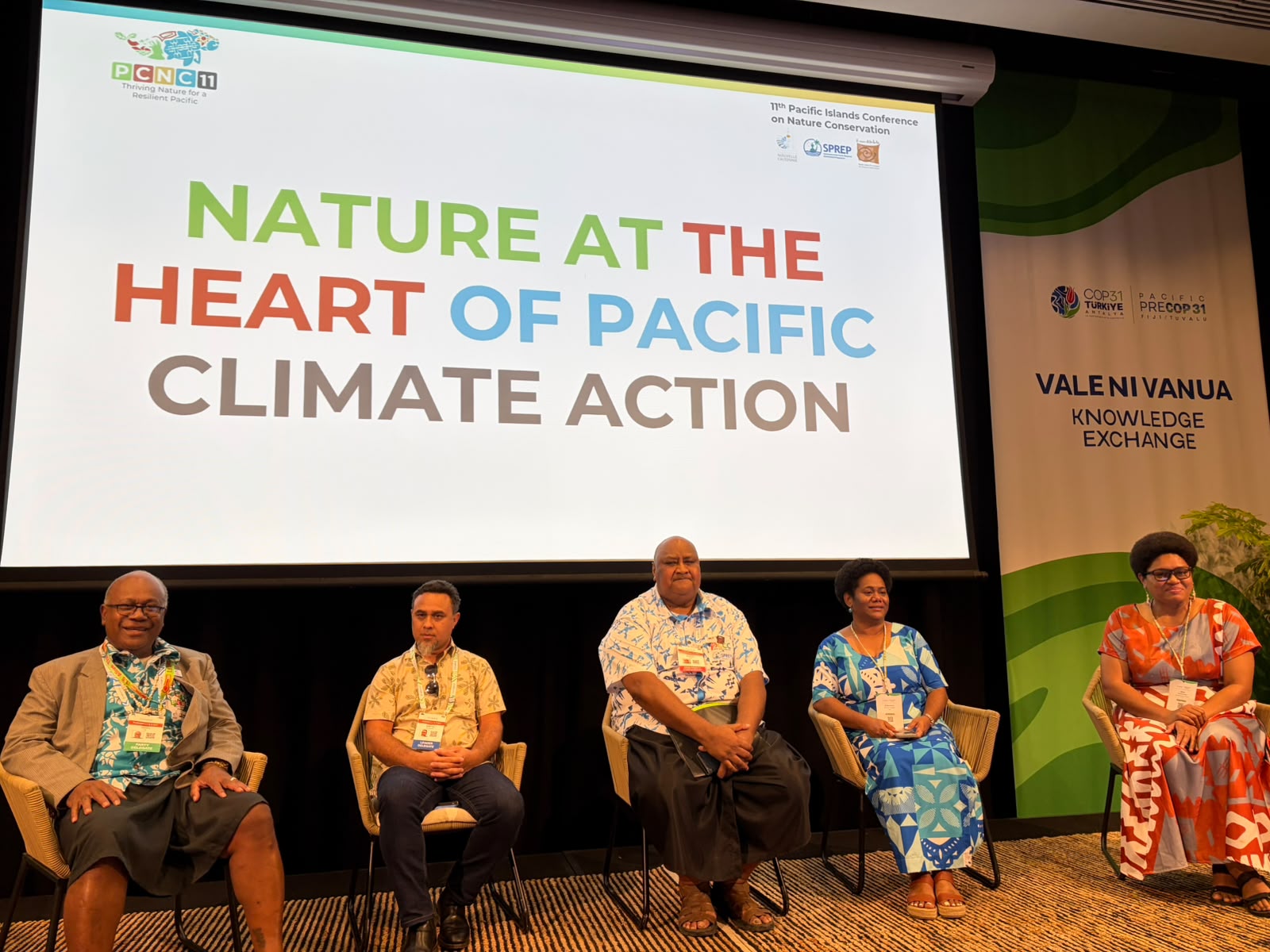
Minister Wamytan described how whale song and the gaiac tree's yellow blossoms tell the Kanak people when to plant the sacred yam. “We live through nature, and nature lives through us, it speaks to us. It's becoming increasingly difficult for us to read nature's messages. Its message is garbled because nature is being mistreated, abused, disturbed, and suffering.”
He called for climate finance that is “more accessible, more direct and truly adapted" to Pacific people and the reality on the ground. “The Pacific is not only asking to be heard. It is asking to be given the means to act.”
The Declaration calls for biodiversity, ocean and climate finance to be mobilised together, with international partners matching Pacific ambition with fiancé and action
SPREP Director General, Mr. Sefanaia Nawadra reminded the room that the conventions on climate (UNFCCC), biodiversity (CBD) and desertification (UNCCD) share "a common parent" in the Rio Earth Summit (1992).
“These issues were always supposed to be addressed together. They were not supposed to be addressed separately. The best adaptation or defence against climate change is a healthy natural environment and a healthy community.”
International Union for the Conservation of Nature (IUCN) Oceania Capacity Building Officer, Ms. Filomena Vuetaki said Pacific communities are very good practitioners and know how to mobilise their own people for conservation.
Visiting Kiwa Initiative grantees in Papua New Guinea's Simbu Province, she found communities that had gone nearly three months without any outside help but by utilising their traditional ecological knowledge. Before the trip, she had her nails painted with frigate birds and rain umbrellas.
"Sometimes when you do this work, we also have to be intentional about what we do, even if it may seem small," she said.
Reflecting on her journey in the environmental space, Youth Advocate and practitioner, Ms. Alisi Rabukawaqa said in climate work, the hardest conversations are on non-economic loss and damage. “How can I put a dollar value to my yavu, my totems, to the multi-faceted relationship I have with the yam, to the familial relationship I have with the whale? These intense discussions are already anticipating loss.”
“Pacific people learn by practice. If you continue to make young people sit there and watch the elders do the work, they will not learn. Invite them into the room, have them sit beside you, have them weave that mat, have them carve, have them build the house, lay the foundations and do the work together.”
Of all the rooms she had walked into this week, this was the most important, she said.
Hon. Wamytan closed with a teaching from Kanak elders. “We have two eyes, two ears, two legs and two arms, but only one mouth.”
"See more. Listen more. Move forward together. Act more. And speak only when our words lead us to action."
From 5-8 October, Fiji, Tuvalu and Australia are partnering to deliver the official COP31 pre-COP ministerial meeting and Leaders’ event. Attendance at Pre-COP is expected to include leaders, ministers, senior representatives and officials from invited countries, Türkiye, UN representatives and selected observers.
Stakeholder programming is also expected to include civil society, private sector, academia, First Nations, youth and community organisations.