

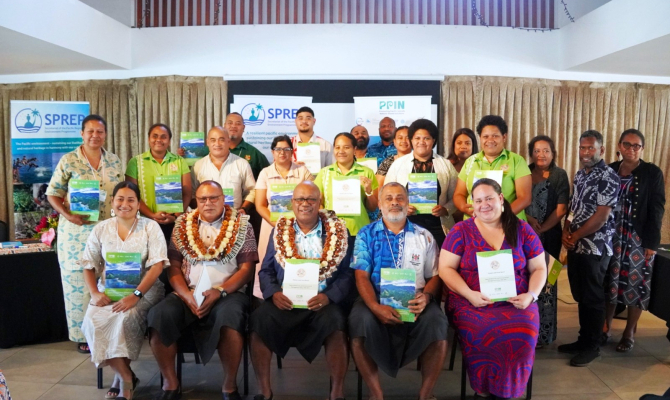
A landmark regional initiative has equipped Fiji, Tonga, and Vanuatu with practical policy tools to embed Nature-based Solutions (NbS) into national planning, leaving a legacy beyond the project's formal conclusion.
The Promoting Pacific Islands Nature-based Solutions (PPIN) Project, funded by New Zealand's Ministry of Foreign Affairs and Trade (MFAT) and implemented through a partnership between the Secretariat of the Pacific Regional Environment Programme (SPREP), the International Union for Conservation of Nature (IUCN), the Pacific Community (SPC), and the Global Green Growth Institute (GGGI), recently concluded its policy mainstreaming work. During a SPREP-hosted webinar, officials shared key lessons.
A central theme emerged: Pacific nations are building on strong foundations. "Fiji, Tonga and Vanuatu are not starting from zero," said PPIN Coordinator Utulei Lui. "NbS are already reflected through our traditional knowledge, community stewardship and ecosystem management practices. The opportunity is to strengthen those foundations."
Rather than a one-size-fits-all approach, the project tailored support to each country. In Fiji, SPREP handed over the first environmental policy for the i-Taukei Land Trust Board (TLTB) in its 86-year history, also the first NbS policy for a customary land institution in the Pacific. Ms Bale Kuruwale called it a "significant institutional milestone."
Tonga received guidelines for integrating NbS into agriculture and forestry. Deputy CEO Heimuli Likiafu emphasised: "NbS is formalising traditional knowledge, not introducing something new." He urged: "Do not invent new solutions. Look first at what people and land already do to survive storms and drought, then strengthen and scale it through policy."
Vanuatu launched guidelines to embed NbS into its National Adaptation Plan. Senior Conservation Officer Dean Launder Wotlolan noted that healthy ecosystems "play a very critical role in reducing vulnerabilities."
New Zealand MFAT's John Clemo stressed the urgency, warning against over-reliance on technology and calling for greater use of traditional knowledge. "A problem is solved by continuing to find solutions," he said.
To ensure enduring impact, SPREP introduced the Pacific NbS Resource Hub. As Ms Lui put it, the hub provides "a way of carrying learning beyond the lifespan of just an individual project."
While the formal handover marks completion, leaders agree the real value lies ahead, informing investment, planning, and land management decisions for years to come. "By strengthening regional partnerships, building coordination and investing in implementation, we can turn policy into action."
Image: Launch of resources for PPIN country partners