

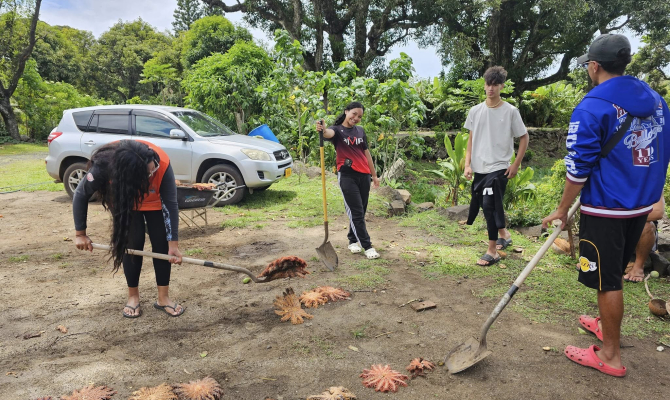
“From the sea to the land” is at the core of a conservation programme in the Cook Islands that removes the crown-of-thorns starfish from its reef, transforming it into fertiliser for root crops. Kōrero o te 'Ōrau, an NGO in the Cook Islands helps empower youth strengthening the relationship between Cook Islands culture and its natural environment. Having a broad range of activities to help achieve this, one of which focusses upon protecting our coral reefs.
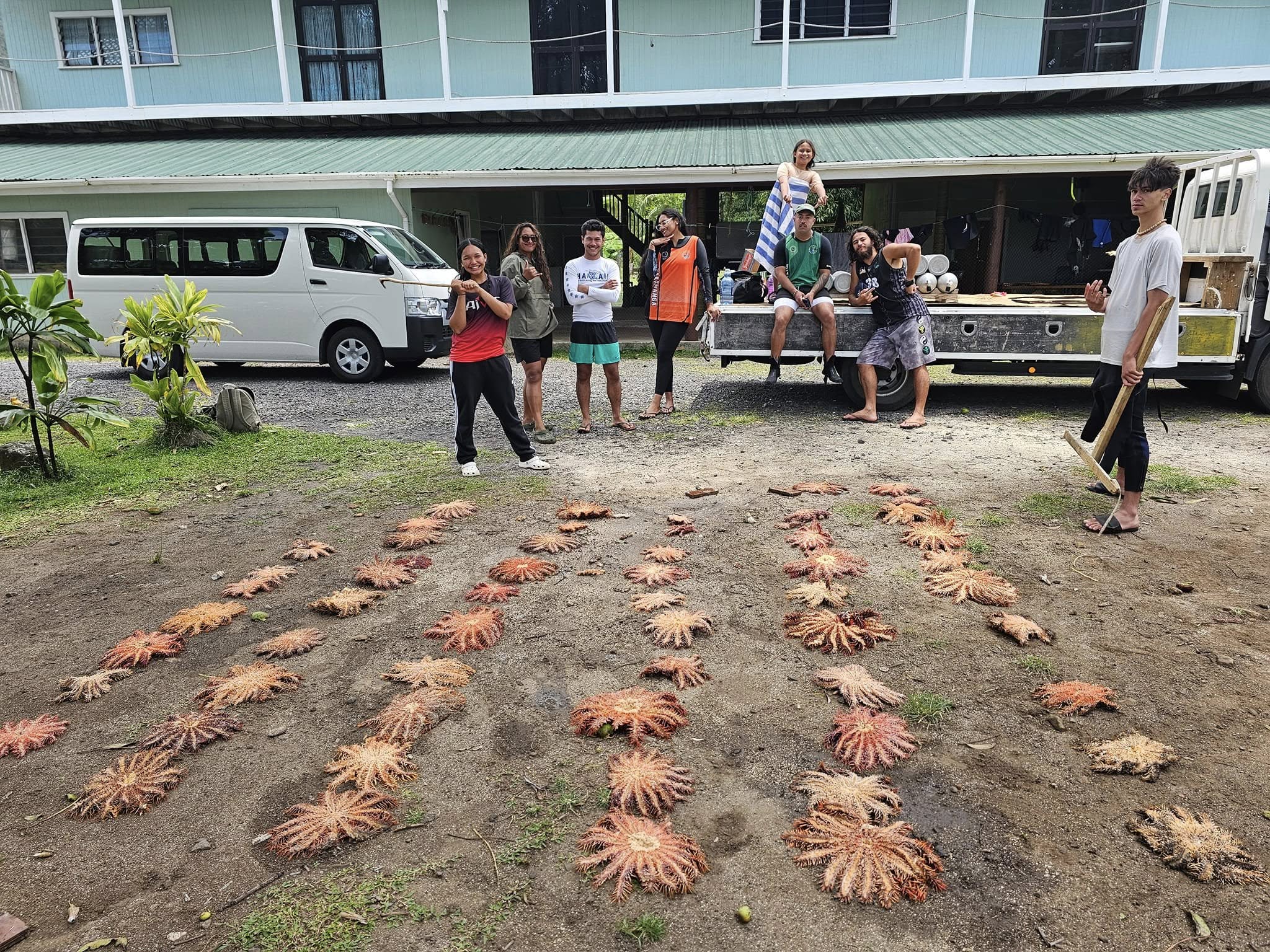
Known as Operation Taramea, it started in 2020 with a group of youths and volunteers led by Marine Biologist Dr Teina Rongo, who worked to remove the crown of thorns starfish following an outbreak. As of this year 19,000 taramea have been collected from our reefs in the Cook Islands and over 100 youth have received their PADI scuba certification through the ‘Ātui’anga ki te tango program.
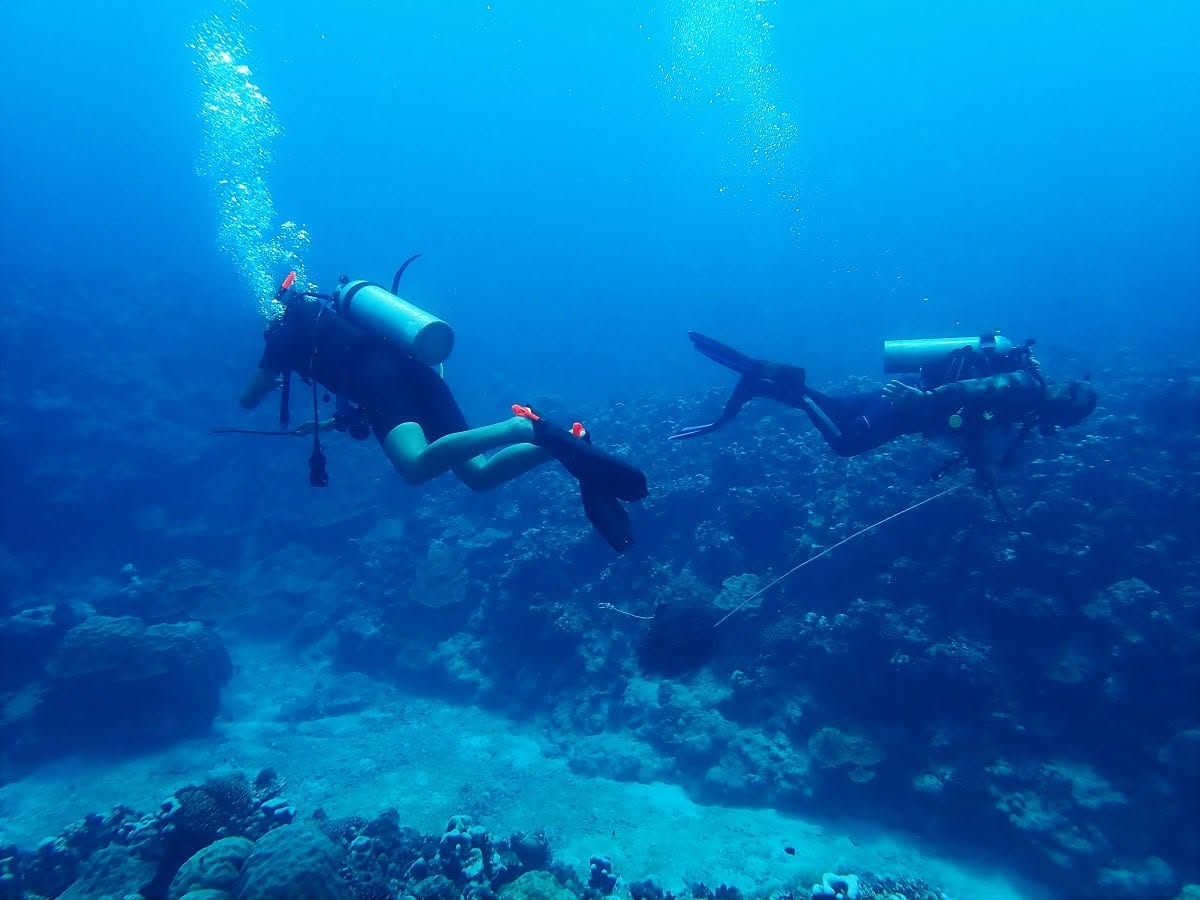
“We are trying to ensure balance in our waters, so our coral reefs aren’t overpopulated with the crown of thorns,” said Mr Sidney Fimone a programme lead for Kōrero o te 'Ōrau.
“We have collected data throughout the Operation Taramea and we’ve seen that through this our reefs are a lot healthier. Now it’s important for us to stay on top of this and maintain it.”
Mr Fimone is attending the youth program at the 11th Pacific Islands Conference on Nature Conservation and Protected Areas now underway in Noumea New Caledonia.
As part of the youth building programme in the Cook Islands, Kōrero o te 'Ōrau have taught young people about the value of our environment and how to address environmental challenges applying natural solutions while helping them upskill.
Through this the young members are learning about the process of biofertisilation.
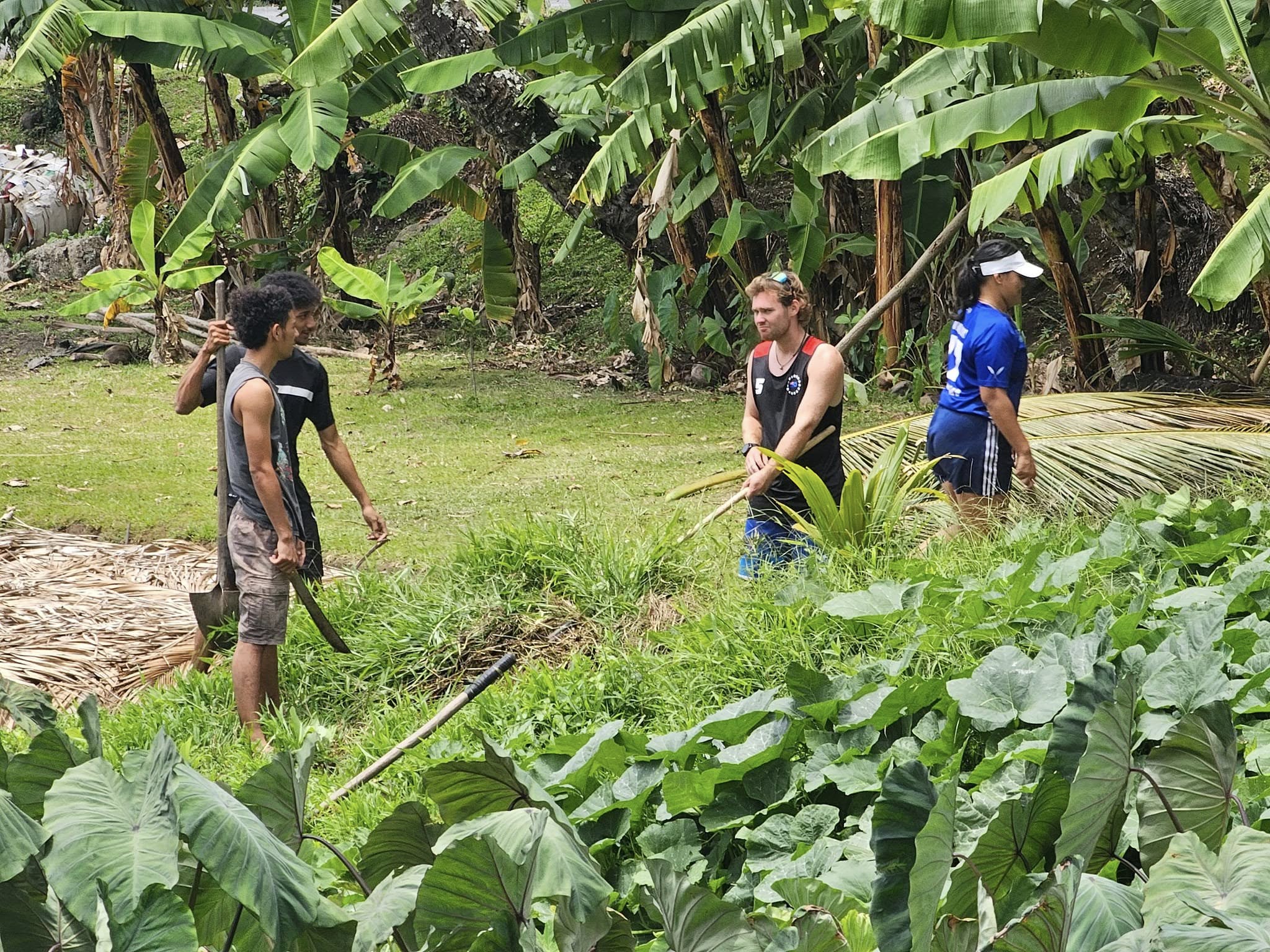
“We’re ensuring that we respect the cycle of life in this activity by turning the crown of thorns starfish into a biofertiliser which goes back into our taro plantations. We’ve found that this has led to a faster harvest time. We’re also mindful that this is rich in nitrogen, so we are also tracking this use and the amounts required to avoid nitrogen toxicity,” said Mr Fimone.
As for collecting the crown-of-thorns from the reef, the young people are using a particular type of wood, procuring and strengthening it naturally while maintaining safety from the poison released from the invasive starfish.
Building capacity through PADI scuba certification has also helped empower over 100 youth that have acquired the certification.
“Every aspect of Operation Taramea has not only cared for our environment, it has also cared for our youth as we work to empower and strengthen their knowledge in new areas. We’ve also encouraged our youth to build their cultural knowledge, learn about our environment and how to care for it as well as share their knowledge they are learning,” said Mr Fimone.
“We mustn’t hold on to knowledge, the more we all know through sharing this with our families and our community, the better our environment, our culture and our people, will be.”
Through the Pacific Coral Reef Action Plan 2021 to 2030, the Secretariat of the Pacific Regional Environment Programme (SPREP) will be developing an Action Plan in collaboration with partners to address the challenges Pacific corals are facing such as that of the crown-of-thorns.
“We congratulate Kōrero o te 'Ōrau for this initiative, we applaud our communities that are shaping our conservation efforts to help restore our coral reef resources for the future. We look forward to working with them and other organisations to achieve this goal of a healthy coral reef under the new action plan,” said Mr Amena Yavouli, Director of Biodiversity Conservation at SPREP.
Other conservation activities led by Kōrero o te 'Ōrau include a Takuvaine Valley Conservation activity protecting the Utu banana, also known as King banana, trees. To learn more about Kōrero o te 'Ōrau you can visit their facebook page at: https://www.facebook.com/korerooteorau.
Mr Sidney Fimone is one of the Ambassadors of the Pacific Global Youth Biodiversity Network participating in the PCNC11 was made possible through the generous support of the Pacific BioScapes Programme, a European Union (EU) funded action, managed and implemented by the Secretariat of the Pacific Regional Environment Programme (SPREP), whose continuous commitment to youth engagement and biodiversity conservation has been instrumental in bringing the Pacific Chapter to life. Further assistance for youth attendance to the PCNC11 was provided by the NBSAP Accelerator Partnership.
The 11th Pacific Islands Conference for Nature Conservation and Protected Areas is held from 7 to 11 September 2026 at the Tjibaou Culturel Centre in Noumea New Caledonia. Bringing together over 400 delegates from across the Pacific, the conference is organised by New Caledonia, Secretariat of the Pacific Regional Environment Programme, and the Pacific Islands Roundtable for Nature Conservation with the support of partners.
For more information please visit: https://www.pacificislandsroundtable.com/pacific-nature-conference
Images courtesy of Kōrero o te 'Ōrau Facebook page