

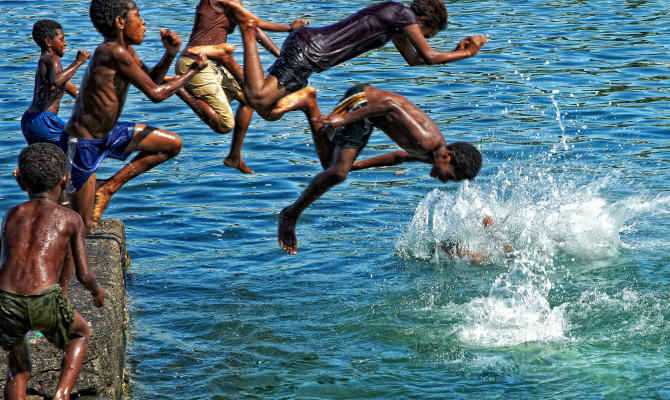
9 September 2026, Nouméa, New Caledonia – Papua New Guinea youth are playing a vital role in ensuring younger generations are connected with their land, natural resources and cultural identity, through intergenerational dialogue and digital documentation of traditional ecological knowledge.
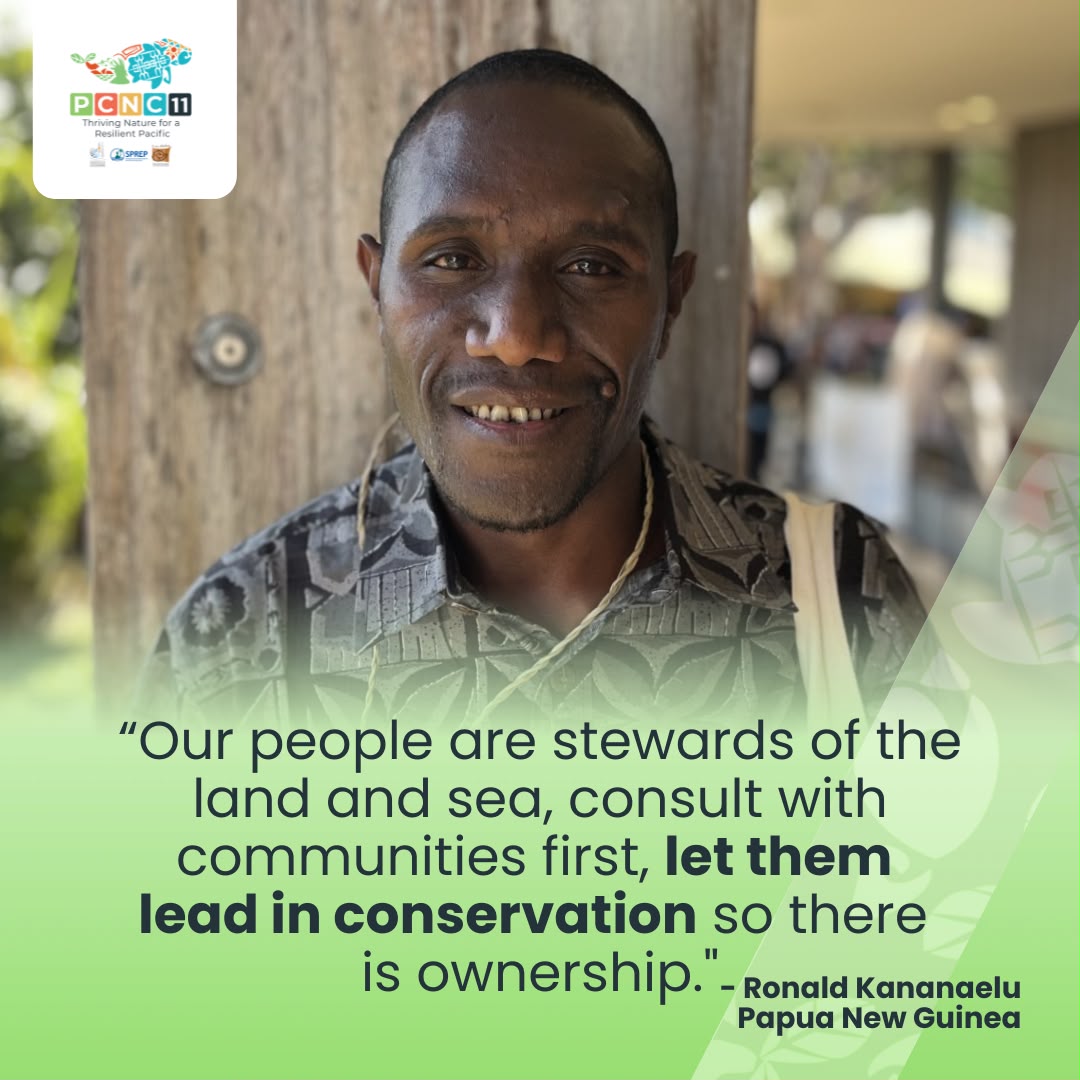
The Peling Youth Association is a youth-led organisation in the Pomio District, East New Britain in Papua New Guinea whose mission is community-led conservation, traditional knowledge preservation, and enhancing youth leadership. President, Mr Ronald Kananaelu is in Nouméa this week for the 11th Pacific Islands Conference for Nature Conservation and Protected Areas sharing about their work in documenting traditional knowledge through dialogue with elders and traditional leaders.
“The environment can live if the culture lives. We cannot carry out biodiversity conservation and protection of the environment without making sure the knowledge that has sustained this is not preserved”, said Mr Kananaelu.
With support of the World Wildlife Fund’s People Powering Biodiversity, members of the Peling Youth Association have received training in conservation action, digital literacy and digital documentation of traditional knowledge. Using smartphones and a Talanoa approach, youth are dialoguing with their elders, documenting stories about traditional ecological practices, agricultural and seasonal calendars.
“The first step we have undertaken is seeking consent. As Pacific people, as Melanesians, we belong to tribes and clans. The stewardship of the land, the sea and the forest belong to them. Before any traditional knowledge is documented and passed on, consent must be granted by the custodians because doing so is sacred.”
Mr Kananaelu added that not all traditional knowledge can be documented, but young people have a responsibility in passing this onto the next generation. “In seeking consent and dialoguing with our elders, our young people also come to understand that some traditional knowledge cannot be said or recorded, it is tabu, sacred and specific to our people, and follows traditional rites of passage and intergenerational storytelling”.
Through the documentation process, shifts and changes in the environment and natural resources over time have been recorded. Mr Kananaelu notes this is an important aspect when thinking about climate change and biodiversity decline.
“When our youth dialogue with their elders they come to learn about changes in the land, sea and forests over time. Elders have shared about changes in the agricultural calendars, shifts in planting and harvesting seasons, as well as turtle breeding and hatching seasons in their lifetime. This is important when planning biodiversity action and responses to climate change.”
Mr Kananaelu also joined Youth Plenary and Roundtable this week, and he noted that while young people are ready to undertake traditional knowledge preservation and environmental protection activities, what is required is cooperation from communities, local governments and leaders. Ensuring that opportunities and support are provided for young people to meaningfully participate and take leadership roles in these spaces.
This week at PCNC11 young Pacific people highlighted the intergenerational approach that must be taken to forge a path forward for the Pacific environment, recognising the strength of Pacific leadership and traditional and indigenous knowledge.
The digital documentation of traditional knowledge in communities by the Peling Youth Association is still ongoing. At its completion the resources will be released to local schools, ensuring a wider reach of knowledge transfer to the next generation.
“In carrying out this work, we have come to learn that some traditional knowledge has not been passed down because the traditional carriers of that knowledge have passed on. For many of our young people, we see that this makes our work even more important. To ensure that our cultural methods and practices live on and continue to sustain our Pacific environment”, said Mr Kananaelu.
The 11th Pacific Islands Conference for Nature Conservation and Protected Areas is held from 7 to 11 September 2026 at the Tjibaou Culturel Centre in Noumea New Caledonia. Bringing together over 400 delegates from across the Pacific, the conference is organised by New Caledonia, Secretariat of the Pacific Regional Environment Programme, and the Pacific Islands Roundtable for Nature Conservation with the support of partners.
For more information please visit : https://www.pacificislandsroundtable.com/pacific-nature-conference