

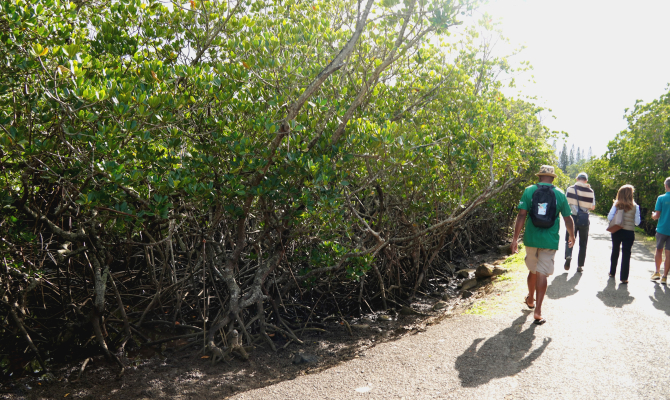
Delegates attending the 11th Pacific Islands Conference on Nature Conservation and Protected Areas in Nouméa stepped out of the conference venue yesterday for a field visit in the Greater Nouméa area, where they saw first-hand how simple, locally appropriate nature-based solutions can strengthen coastal resilience, restore mangroves and support healthier marine ecosystems.
The site visit, organised as part of the Pacific Ecosystem-based Adaptation to Climate Change Plus (PEBACC+) project, co-funded by the Kiwa Initiative and the French GEF (FFEM), brought Pacific practitioners and delegates directly to several restoration sites in the Greater Nouméa.
At Sainte-Marie Urban Park, within Nouméa city, PEBACC+ Coordinator François Tron explained how the project is addressing pressures affecting the local mangrove system. The site is connected to a watershed of approximately 200 hectares, which drains towards the coast. Urbanization of the watershed increased freshwater and nutrient flows, thus putting pressure on the mangrove ecosystem.
A key intervention has been the removal of dead wood and debris that had accumulated in the mangrove's water channels, restricting water flow and contributing to stagnant areas within the mangrove, causing its decline.
“By reopening the channels, the intervention is helping restore the tidal flows and good soil conditions for the mangroves to grow back; it also strengthens the mangrove's capacity to receive and filter incoming water, while also supporting fish habitat, vegetation resilience and coastal protection.”
The work was carried out by Caledoclean, a local civil society organisation, whose team observed a rapid ecological response following the clearing of the channels. “When the channel was cleaned, almost two days after that, there were many more and new fish in the channels,” said Thibaut Bizien, Co-founder and Project Manager, Caledoclean.
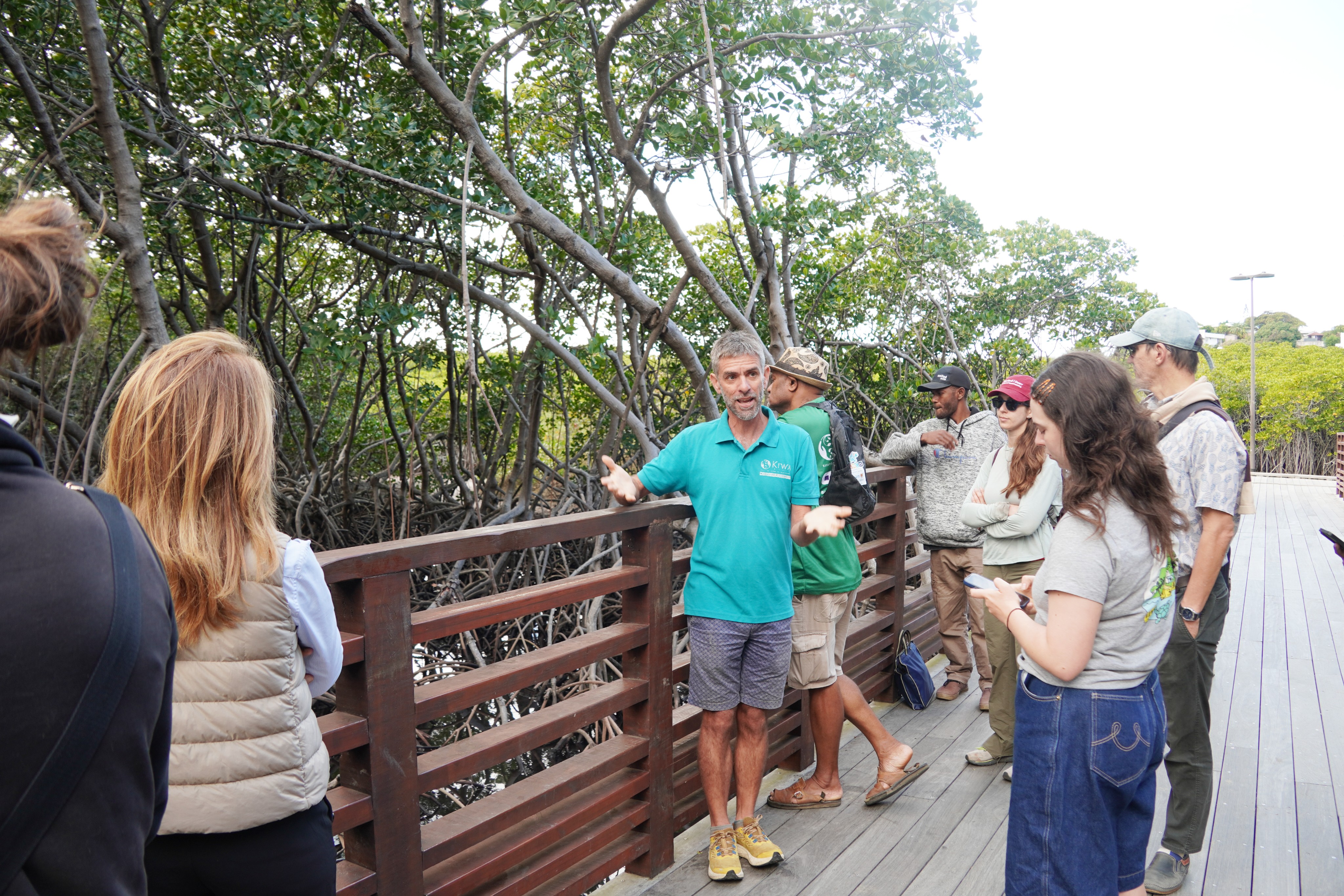
For Tron, the intervention demonstrates that this simple restoration intervention delivers multiple benefits. “It increased the capacity of the mangrove to filter dirty water coming in when the tide is rising. Healthier water flowing from the mangrove towards the lagoon can also contribute to the health of downstream coastal ecosystems, including coral reefs, a key ecosystem critically threatened by climate change.”
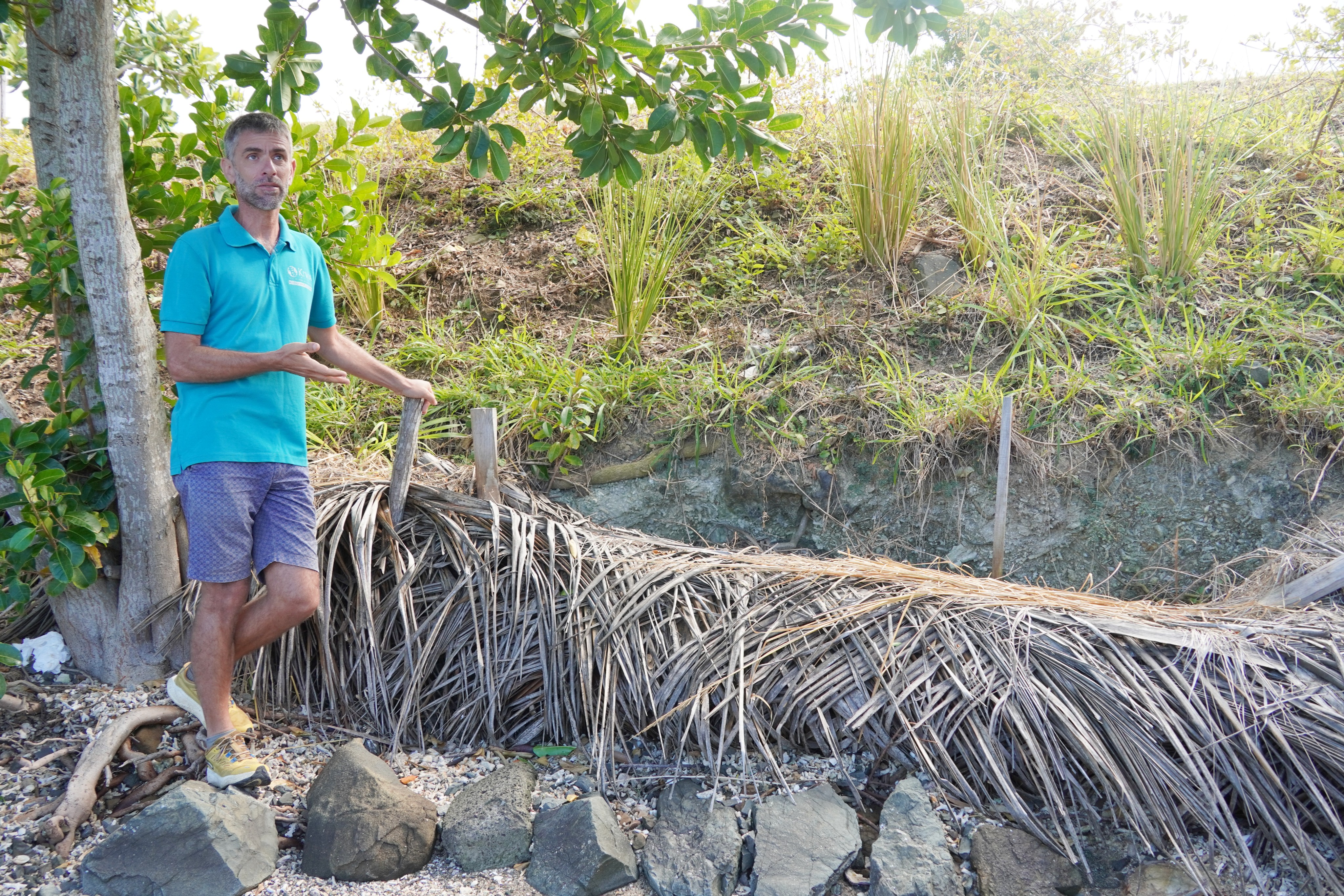
The delegates also visited areas where rock lines have been installed to encourage natural regeneration of coastal vegetation. The structures help capture seeds and sediment in the higher part of the beach during storms and high tides, creating conditions for young native plants to grow. Areas that were previously maintained as grass have been deliberately protected from mowing following strong collaboration with the Nouméa Municipality, allowing vegetation to regenerate naturally.
Another demonstration showed how locally available coconut branches can be used to reduce coastal erosion and support vegetation recovery. “Branches are secured along the shoreline to slow wave energy and help protect exposed slopes. As saplings grow on the upper part of the beach, well protected by the coconut brushes, coastal vegetation gradually thrives and reinforces the coastline,” said Mr. Tron.
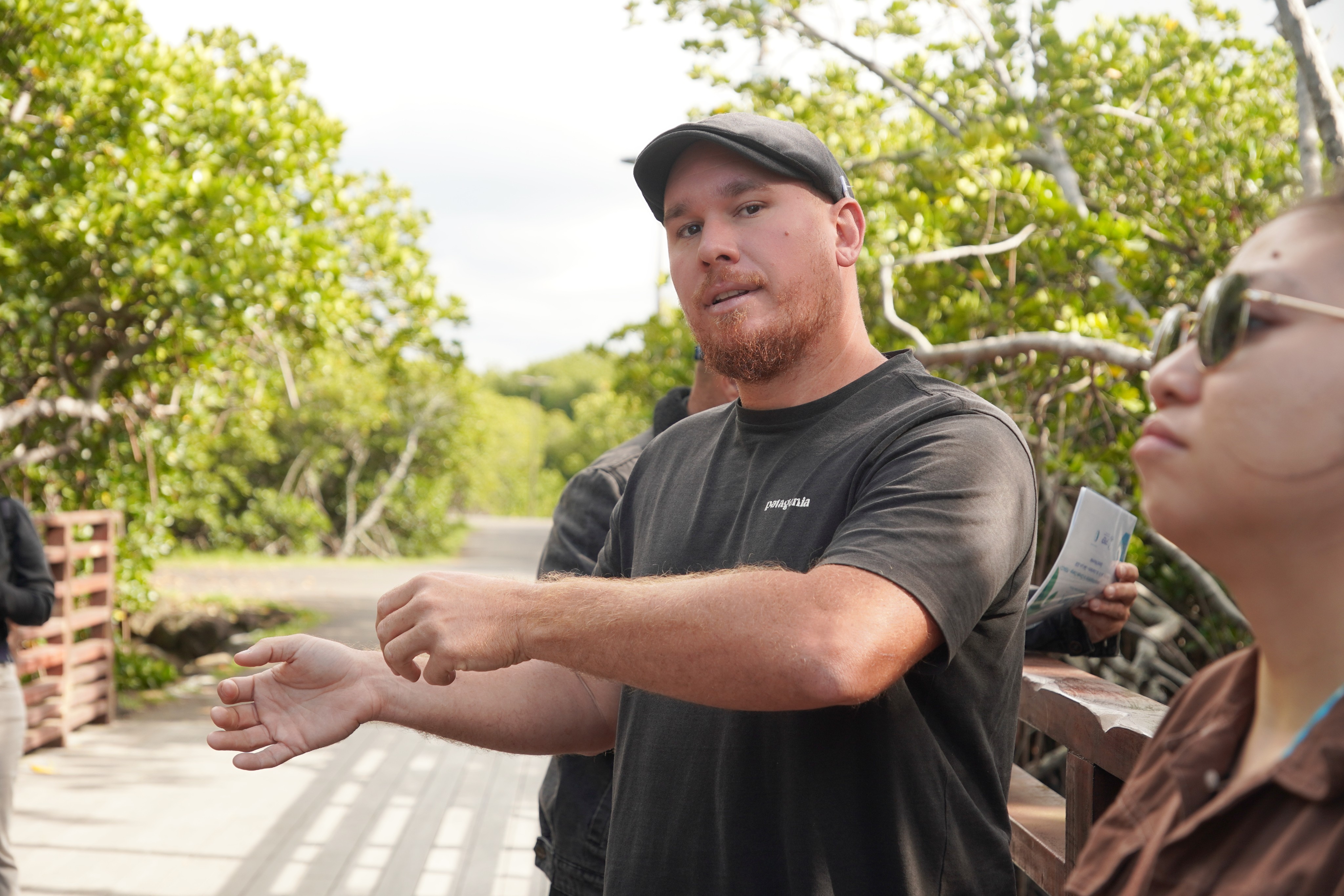
Tron eventually emphasised, “All these interventions were sourced from international experts, but as SPREP implemented them with Caledoclean team, we realized that they were anchored in traditional practices. They really are simple, easy, fast, and cost-effective interventions that allow coastal communities to step up in strengthening their climate resilience.”
For delegates from across the Pacific, the approach offered a practical example of how communities can use materials already available locally rather than relying solely on expensive engineered structures.
Frank John of ENB Sea Keepers, Papua New Guinea, said the visit demonstrated that nature-based solutions can provide effective alternatives to conventional infrastructure. “It’s always been about building infrastructure to stop coastal erosion. I’m a final-year student, and I’ve learned about nature-based solutions, and it’s great to see it in practice.”
Karlene Tevi of Live and Learn, Vanuatu, highlighted the potential for communities to take ownership of such approaches. “It can be very community-led, simple innovation ideas that we can implement in the communities, but it’s us coming here, having that exposure. I’m learning and then going back and trying to see how we can implement that.”
For Alick Konamalefo of the Ministry of Fisheries, Solomon Islands, the approach also demonstrated how local materials can support both erosion control and ecosystem regeneration. “I learned a simple way to slow down erosion using local materials like coconut branches. This allows regeneration for trees and other vegetation to be planted back.”
The final stop showcased sediment traps, an innovative intervention designed to slow sediment movement while maintaining connectivity for fish and other aquatic life. The traps use locally available bamboo structures arranged in different configurations, with gaps incorporated into the barriers to allow water and fish to move through the system.
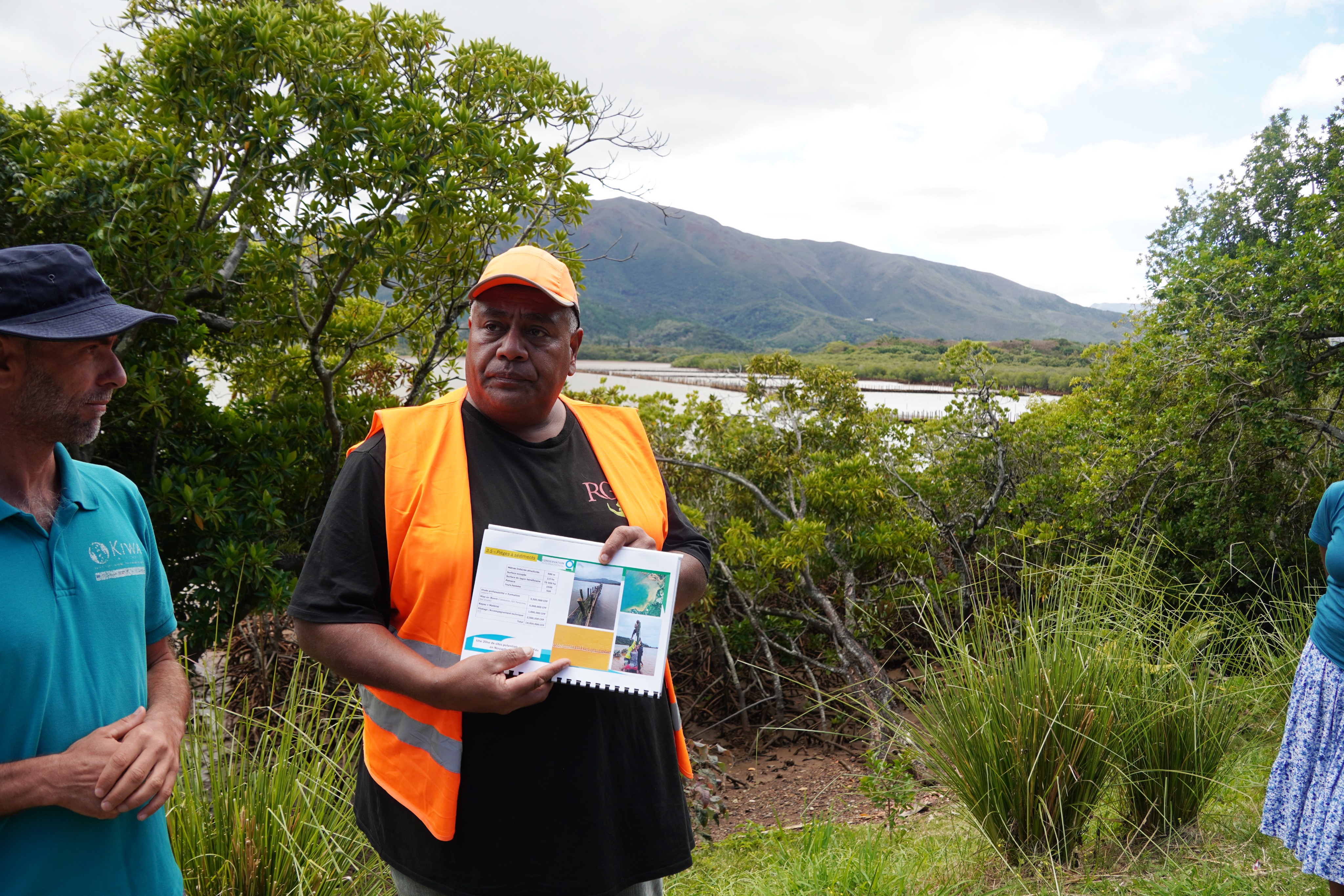
“The approach is already showing wider ecological benefits, including sediment accumulation and the natural germination of mangrove seedlings within the traps. Increased numbers of young mangroves and fish have also been observed around the intervention,” said Christian Faïnicka, President of “Red Ground”, a local civil society organization.
The sediment traps are being implemented by Conservation International, Red Ground, SOS Mangroves and Caledoclean, with contributions from the Secretariat of the Pacific Regional Environment Programme (SPREP) through the PEBACC+ project. As the project moves towards the final phase of implementation, such exchanges are helping ensure that lessons from New Caledonia can travel beyond the sites themselves and contribute to a growing Pacific body of knowledge on nature-based solutions for climate resilience.
PEBACC+ is a regional project implemented by SPREP and funded by the Kiwa Initiative through its donors, the European Union, Agence Française de Développement (AFD), Global Affairs Canada, Australian Government Department of Foreign Affairs and Trade (DFAT), and New Zealand Ministry of Foreign Affairs and Trade (MFAT), with co-financing from the French Facility for Global Environment (FFEM).
The 11th Pacific Islands Conference for Nature Conservation and Protected Areas is held from 7 to 11 September 2026 at the Tjibaou Culturel Centre in Noumea New Caledonia. Bringing together over 400 delegates from across the Pacific, the conference is organised by New Caledonia, Secretariat of the Pacific Regional Environment Programme, and the Pacific Islands Roundtable for Nature Conservation with the support of partners.