

14 September 2026, Honiara - On the eve of the official opening of the Fifth Pacific Oceans Pacific Climate Change Conference, three distinct parallel dialogues convened at the Friendship Hall in Honiara, each addressing a different facet of a defining question for the Pacific region: "how does a region on the frontline of climate change turn its lived experiences, traditional knowledge, and scientific expertise into decisions, publications and policies that the rest of the world cannot ignore``. Under the theme, "Amplifying One Pacific Voice for Action on 1.5°C to Stay Alive``, this question is set to drive discussions through the week.
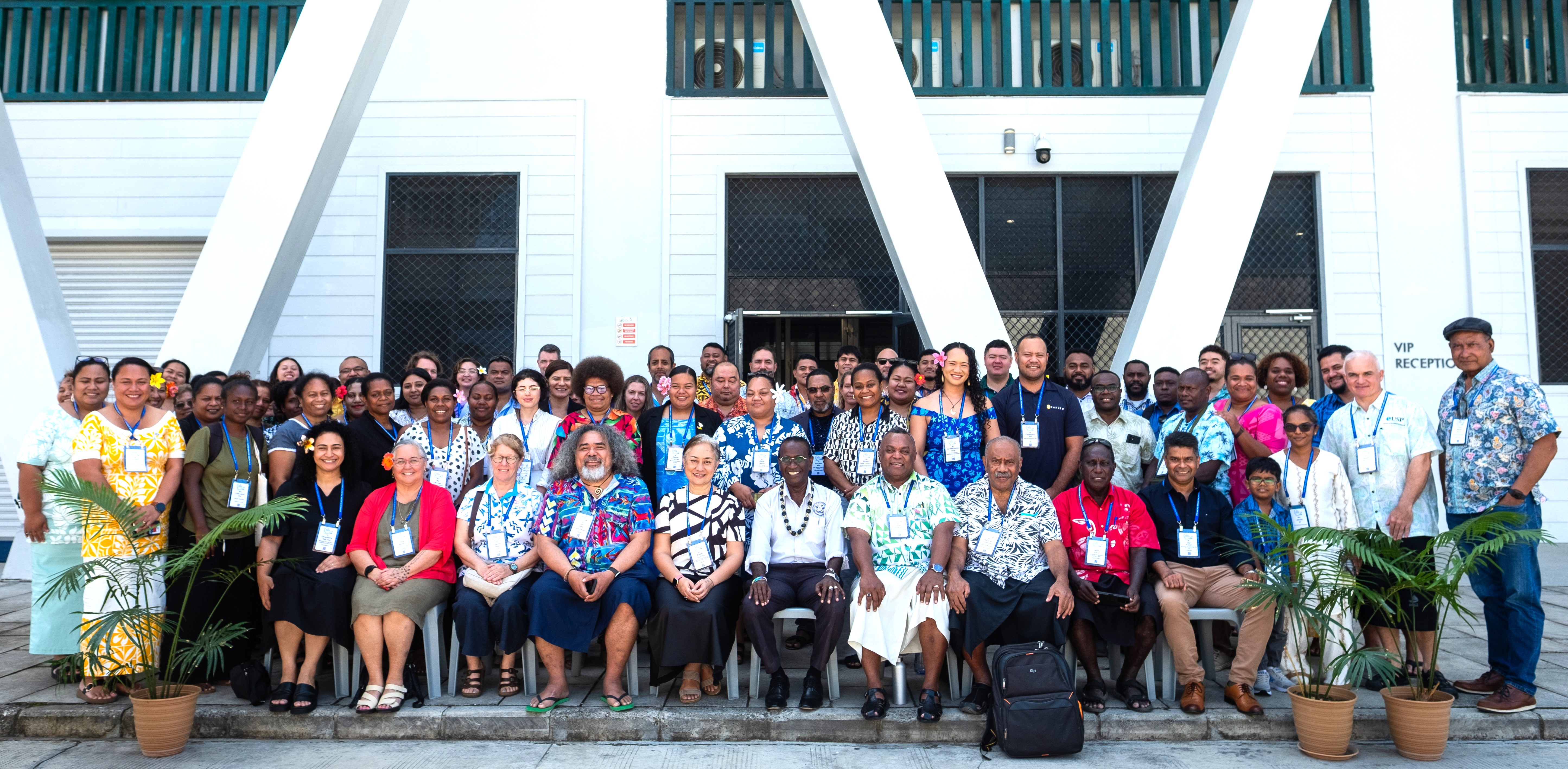
Together, the three dialogues underscored a shared imperative: ensuring that Pacific knowledge drives climate action at every level. Discussions focused on elevating Pacific research within global climate assessments, centring Indigenous knowledge and custom governance in adaptation planning, and connecting scientific evidence with community knowledge so that climate information can inform decisions that are meaningful, trusted, and actionable for Pacific peoples.
Taken together, the day's workshops facilitated by SPREP, Solomon Islands National University and Victoria University of Wellington reiterated the conference's deepest ambition: a Pacific climate science that is simultaneously world-credible and deeply rooted in place, capable of feeding assessments that shape global commitments while leaving no one behind.
The first of these dialogues was facilitated by SPREP’s Pacific Climate Change Centre, titled "Amplifying Pacific Voices in Science and Elevating Regional Research ".
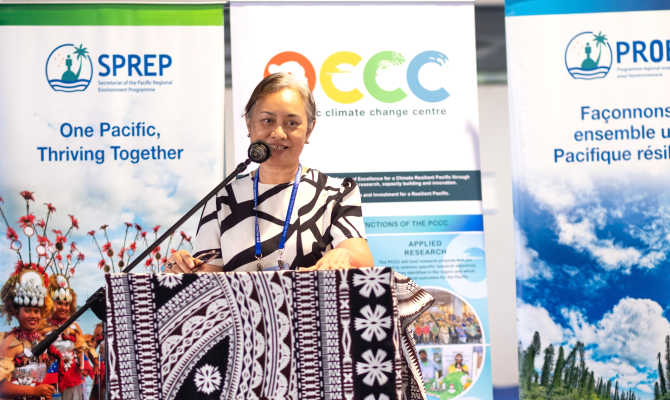
Ms Easter Chu Shing, Deputy Director General of the Secretariat of the Pacific Regional Environment Program in her opening remarks articulated the critical importance of this side event.
“Today’s workshop gives us space to reflect on recent IPCC outcomes, identify Pacific priorities, and strengthen practical pathways for future engagement”
“Our purpose today is clear, to strengthen Pacific engagement in the IPCC process, to elevate regional research and to ensure that Pacific evidence is reflected in global climate science”
Australia has been a collaborative partner in supporting the Pacific’s engagement with the IPCC. In highlighting this partnership, Mr Sean Harte of the Australian Department of Climate Change, Environment, Energy and Water (DCCEEW) in his opening remarks said, “We have heard calls, including from the Pacific Meteorological Council and IPCC Focal Points in the Pacific, for the region to strengthen its voice and help shape the IPCC’s global assessments on climate change.”
“The IPCC does not do its own research and can only assess the climate literature in existence at the time. That is why these write-shops are important – for the Pacific research community to identify key priority research area and contribute their knowledge” he further added.
The interactive side event first explored how to deepen Pacific engagement with the Intergovernmental Panel on Climate Change (IPCC), highlighting the region’s current participation across scoping, authorship, reviewing and identifying emerging opportunities under the Seventh Assessment Report (AR7) cycle to increase Pacific representation in technical summaries, chapters and cross-working group products.
The authors who have submitted articles for this conference will have them published in a journal to be launched as part of the 5POPCCC official opening on Tuesday evening, 15th September 2026.
Moving from process to substance, the second session highlighted Pacific-authored research on Non-Economic Loss and Damage capturing irreplaceable losses to culture, identity, territory and intergenerational memory that GDP-based metrics miss. It also underscored the role of research institutions in coordinating Pacific input across the IPCC’s three Working Groups and how implementation of the Pacific Climate Change Research Roadmap is giving the region a shared agenda for the work ahead.
By weaving together global scientific processes, Indigenous knowledge systems and place-based decision-making, today's dialogues set the tone for a conference that seeks not only to amplify Pacific voices but to ensure they are heard where it counts, in IPCC assessments and international negotiations.
The Fifth POPCCC is jointly organised by Solomon Islands National University, the Pacific Climate Change Centre of SPREP, the Solomon Islands Government's Ministry of Environment, Climate Change, Disaster Management and Meteorology, Te Herenga Waka Victoria University of Wellington and the National University of Samoa, continuing a lineage of Pacific-led gatherings held in Wellington in 2016 and 2018, online in 2020 and in Apia in 2024. For more information, please contact yvettek@sprep.org