

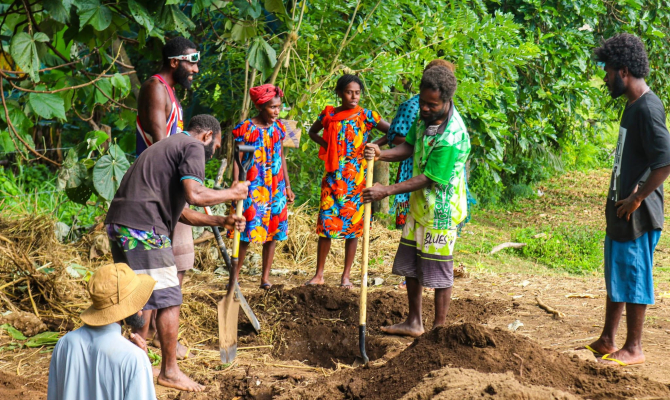
Tanna Island, Vanuatu – For communities in West Tanna working to conserve their coastal fisheries, a new source of food and income is taking shape through backyard fish farming.
The training was delivered by the Vanuatu Fisheries Department (VFD), with support from the West Tanna Area Administrator and the Secretariat of the Pacific Regional Environment Programme (SPREP) through the Pacific Ecosystem-based Adaptation to Climate Change (PEBACC+) project. From 17-30 June 2026, 35 participants from 12 communities across West Tanna gathered at Loukatai village for a 10-day training on tilapia fishpond construction and fish husbandry.
The training forms part of planned activities in Tanna and aims to promote backyard freshwater fish farming as both a climate change adaptation measure and a livelihood option for coastal communities that have committed their coastlines to marine conservation.
William Bani, PEBACC+ Coordinator for Vanuatu, SPREP, said, “As communities take steps to conserve their coastal fisheries, there is a need for alternative sources of food and livelihoods. The PEBACC+ project promotes freshwater fish farming as one such option, allowing communities to continue producing fish while coastal fishing areas are progressively closed for conservation.”
Over the two-week training, participants combined classroom learning with practical, hands-on activities. They attended theory sessions, visited an existing fishpond, and worked together to construct a demonstration pond before introducing fish fingerlings. The training alsodemonstrated how fish farming can be integrated with other farming systems. The completed demonstration pond at Loukatai includes a poultry house positioned over the pond, creating a system designed to provide mutual benefits to both forms of farming.
Since June, the demonstration site is showing how the integrated system can support food production, even under challenging climate conditions. According to William Bani, PEBACC+ Coordinator for Vanuatu at SPREP, the pond is helping sustain vegetable production in one of West Tanna’s driest areas during the current El Niño period.
“People visit the site almost every day to see the promising performance of the vegetables,” said Bani. “West Tanna is a very dry area, especially during this El Niño period we’re experiencing. However, water from the pond is keeping the vegetables healthy and thriving well. That is the whole aim of the initiative.”
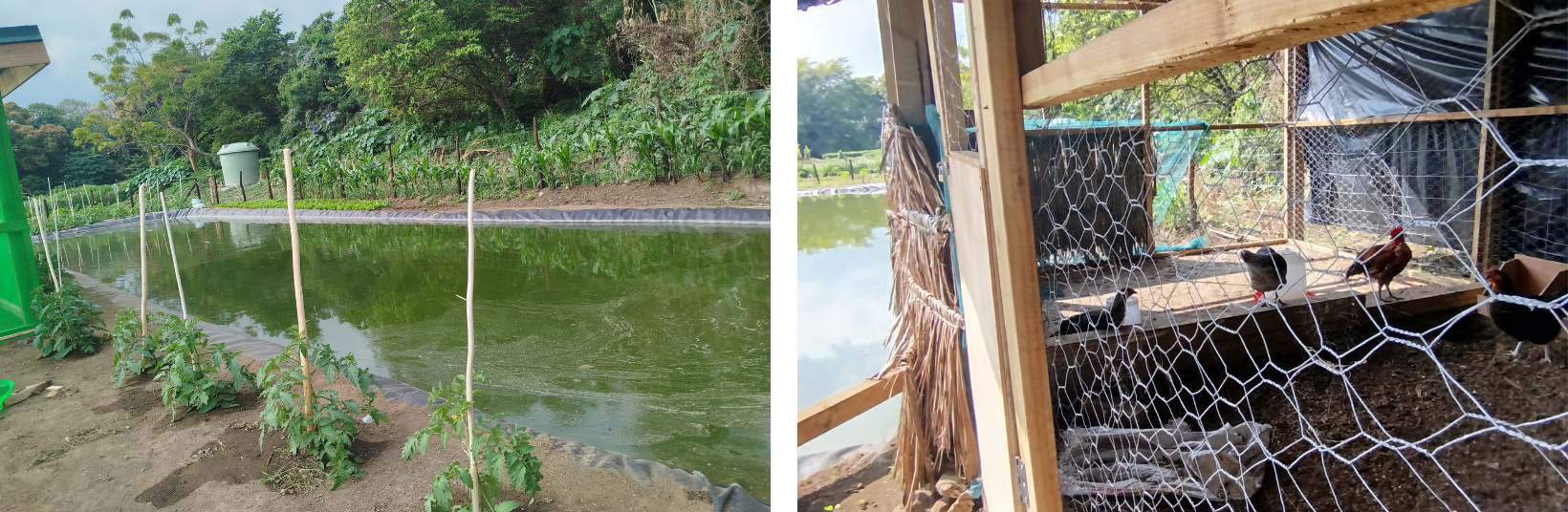
The demonstration site has already produced lettuce and other short-term vegetables, with new plantings underway. The chickens are doing well, while the fish are expected to be harvested in November.
For communities, the demonstration pond therefore offers a future source of fish. It provides a practical example of how water, fish, poultry, and vegetable production can be brought together to support food security and livelihoods in a climate-vulnerable environment.
Marina Tamuru from Lowinio community said, “We didn’t realise it is this easy to farm freshwater fish such as tilapia. We will dig our fishponds right after this training.” She added that she looks forward to working closely with VFD as they start farming fish in their backyards.
The response from communities was immediate as 25 backyard fishponds were dug following the training, with participants now looking forward to support from VFD and the PEBACC+ project to complete the ponds and introduce fish fingerlings.
Francis Korisa, Area Administrator for West Tanna, welcomed the initiative, highlighting the importance of providing communities with an alternative while coastal fisheries are being conserved. “We are in the process of conserving our coastal fisheries, and we are glad that SPREP and VFD have come up with the idea of farming fish on shore, which will make life easier and safer for our families,” said Korisa.
The training brought together project beneficiaries from Lowaniai, Lamkail, Lounapkiko, Lenpakel, Itunga, Isini, Lenmaot, Lounik, Lethaus, Lounamilo, Lounapikmita and Lenamir, alongside local fisheries officers and the West Tanna Area Administrator.
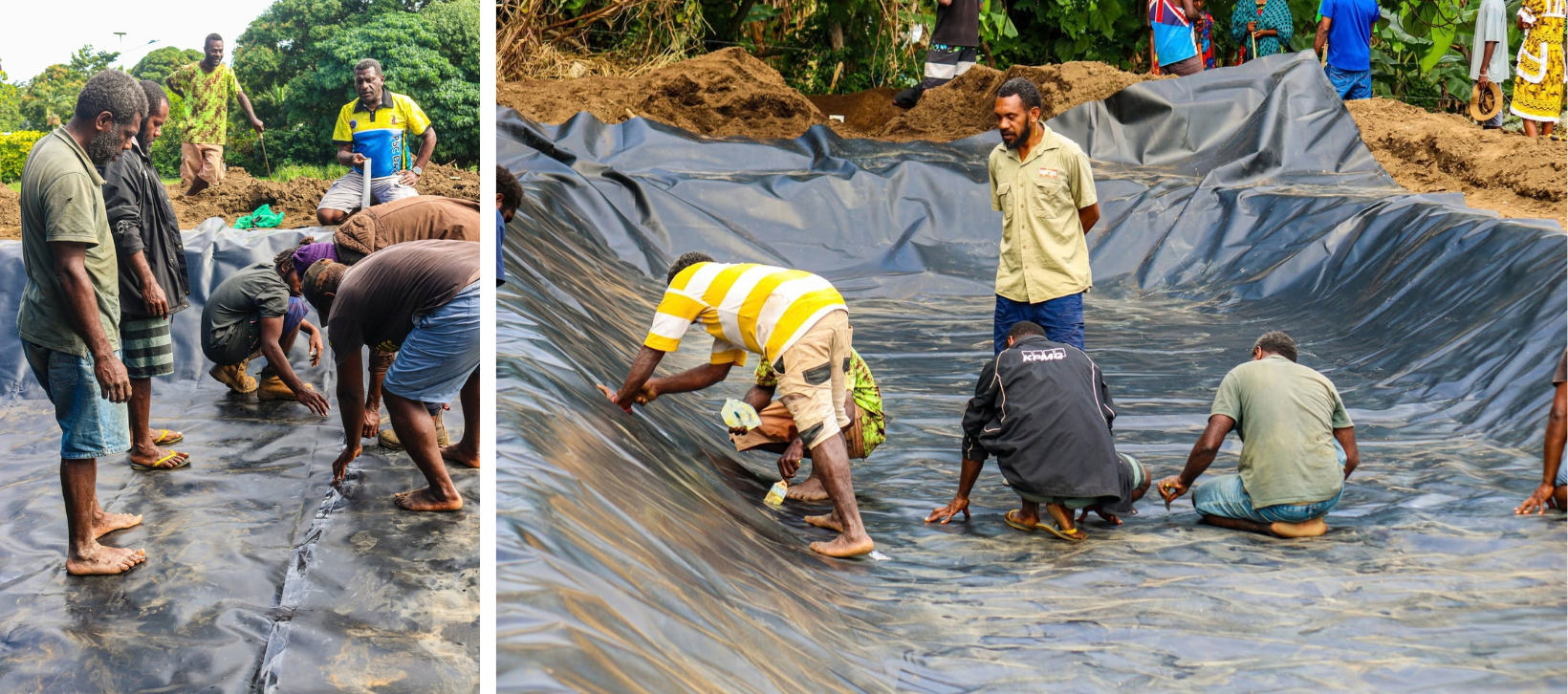
Bani said the training shows how practical, community-led solutions can build resilience while supporting conservation. “By introducing backyard tilapia farming, communities have an opportunity to maintain access to fish as a source of food and income while allowing their coastal fisheries to recover. The response from participants, with 25 fishponds already dug following the training, shows the strong interest and commitment within communities to take this opportunity forward,” said Bani.
PEBACC+ is a regional project implemented by SPREP and funded by the Kiwa Initiative through its donors the European Union, Agence Française de Développement (AFD), Global Affairs Canada, Australian Government Department of Foreign Affairs and Trade (DFAT) and New Zealand Ministry of Foreign Affairs and Trade (MFAT), with co-financing from French Facility for Global Environment (FFEM).
The project aims to develop, sustain, and institutionalize ecosystem-based approaches in Fiji, New Caledonia, Wallis and Futuna, Solomon Islands and Vanuatu. These efforts will strengthen the resilience of ecosystems, local economies, and communities against the impacts of climate change.
For more information, please contact: Setaita Tavanabola, Communications Officer, PEBACC+ Project, SPREP; email: setaitat@sprep.org or visit www.sprep.org/pebacc-plus