

8 October 2026, Nadi - It is time to move from climate finance policies and frameworks to investment, implementation to ensure measurable benefits for Pacific communities.
The call comes from Papua New Guinea (PNG) during a side event on the margins of pre-COP31 in Nadi, Fiji on Thursday, where climate finance has become a key point of discussion in the plenary hall and at several climate finance events.
“Access to climate finance must be fairer, simpler and faster,” Hon. Kaupa said. “Finance must support adaptation and resilience, respond to loss and damage, and reach communities on the front line of climate impacts. For Papua New Guinea, improved access must be matched by stronger readiness.”
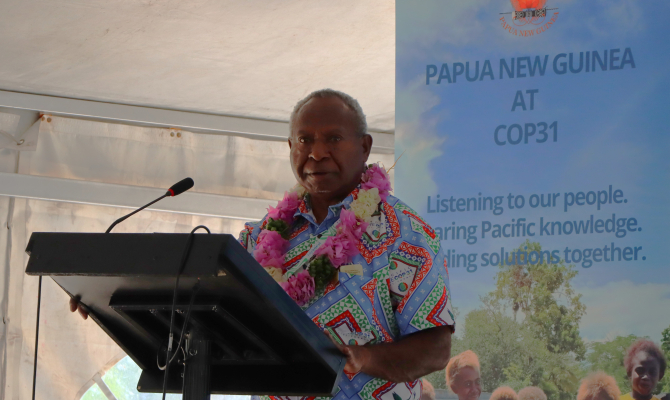
Speaking during the Mobilising Climate Finance in PNG: Public Sector Leadership, Private Sector Participation and Regional Lessons side event, Hon. John Kaupa, Minister for Environment, Conservation and Climate Change, urged world leaders, development partners, climate funds, financial institutions and the private sector to convert priorities into investable action.
“This requires coordinated public-sector leadership, financial-sector reform, private-sector participation and strong regional and international partnerships. Government must provide clear priorities and effective institutions,” he said.
“Financial institutions and investors must help develop appropriate instruments and reduce barriers to investment. Communities must see real benefits from the finance mobilised in their name.”
PNG has made important progress in establishing the policy, institutional and financial foundations needed to mobilise climate finance. But to move up the implementation chain, PNG has shifted attention on development of climate finance project pipelines.
The side event at the Hilton Hotel provided a platform for Government agencies, the Bank of Papua New Guinea, the private sector, regional organisations and development partners to discuss the next phase of climate finance implementation.
“The Taku Pakasoa Declaration gives this discussion an important regional direction. It calls for a substantial increase in climate finance and reform of the international financial architecture so that finance is delivered at the speed and scale required,” added Minister Kaupa.
“It also emphasises grant-based and concessional finance for climate-vulnerable countries, particularly Small Island Developing States and Least Developed Countries. Papua New Guinea supports this call.”
For the Secretariat of the Pacific Regional Environment Programme (SPREP), its role as an accredited entity to the Adaptation Fund, Green Climate Fund and the Fund for Responding to Loss and Damage enables it to support the aspirations of countries like PNG.
SPREP is also working towards accreditation as an Implementation Agency to the Global Environment Facility (GEF) while continuing its function as an Executing Entity, and co-develops programmes and projects with countries, through its Programmes and Project Coordination Unit (PCU), to access climate finance.

SPREP Director General, Mr Sefanaia Nawadra, said it’s important that when the Pacific talks about climate finance, it should not be mobilised as debt, and it should not be confused as development financing.
“Climate financing is an obligation, and we need to ensure that this message is very clear,” he said. “The other important point is that whether its climate financing or development financing, we should be treating it as an investment. It is something that we don’t only have to build, we should maintain it at all times, and something that we benefit from throughout its lifetime.”
Mr Nawadra also called for reforms of the international climate-finance architecture, including complex access requirements, slow approval and disbursement, and insufficient grant-based and concessional finance for SIDS and LDCs.
“COP31 should advance finance at the speed and scale required, alongside stronger support for Pacific-led mechanisms such as the Pacific Resilience Facility. SPREP stands ready to work with and support our Member countries.”
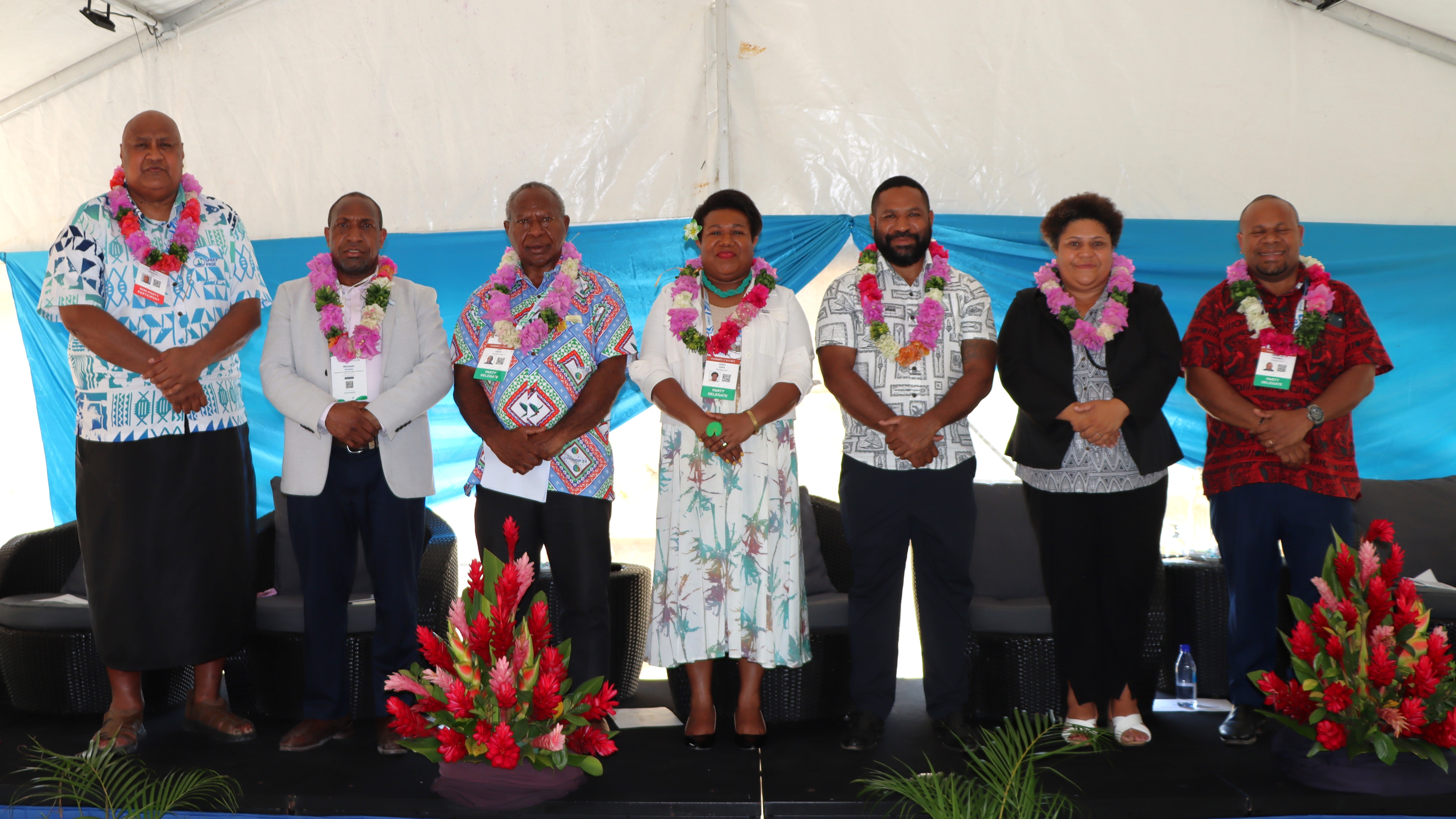
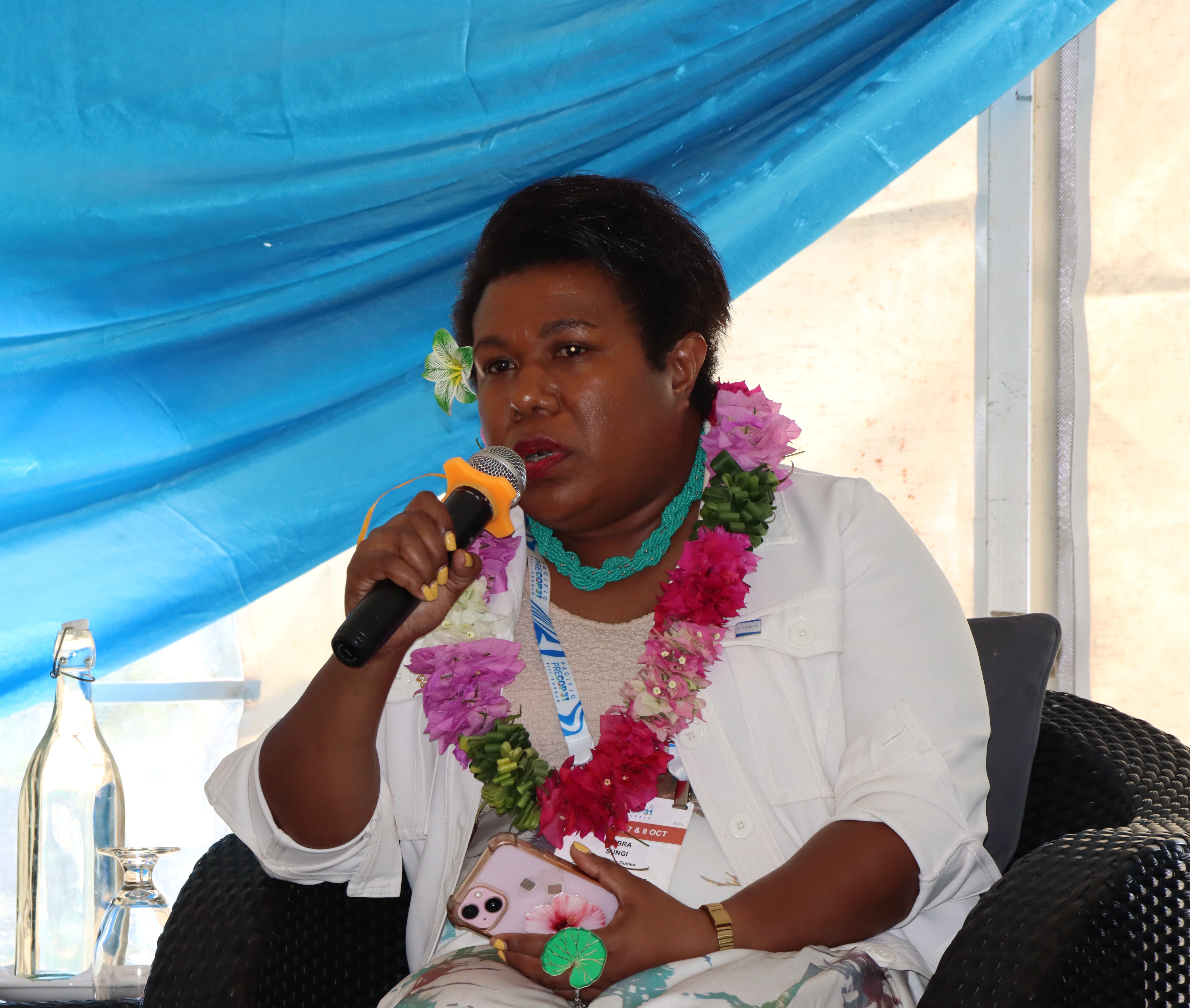
Organised by the PNG Climate Change and Development Authority (CCDA), other speakers included Ms Debra Sungi, Acting Managing Director, Climate Change and Development Authority, Mr Michael Kumung, Deputy Secretary, Department of National Planning and Monitoring, Mr George Awap, Assistant Governor, Bank of Papua New Guinea, Mr Gibson Holemba, Secretary, Department of Works and Highways, Mr Ronald Meketa, Managing Director, National Energy Authority and Ms Carmella Gabina, Director, Business Council of Papua New Guinea.
From 5-8 October, Fiji, Tuvalu and Australia are partnering to deliver the official COP31 pre-COP ministerial meeting and Leaders’ event. Attendance at Pre-COP is expected to include leaders, ministers, senior representatives and officials from invited countries, Türkiye, UN representatives and selected observers.
Stakeholder programming is also expected to include civil society, private sector, academia, First Nations, youth and community organisations.