

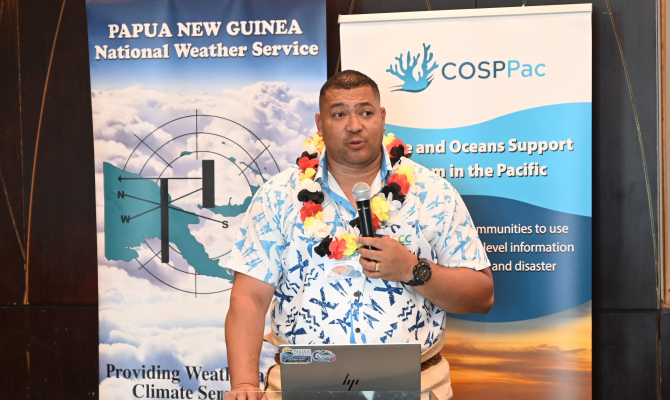
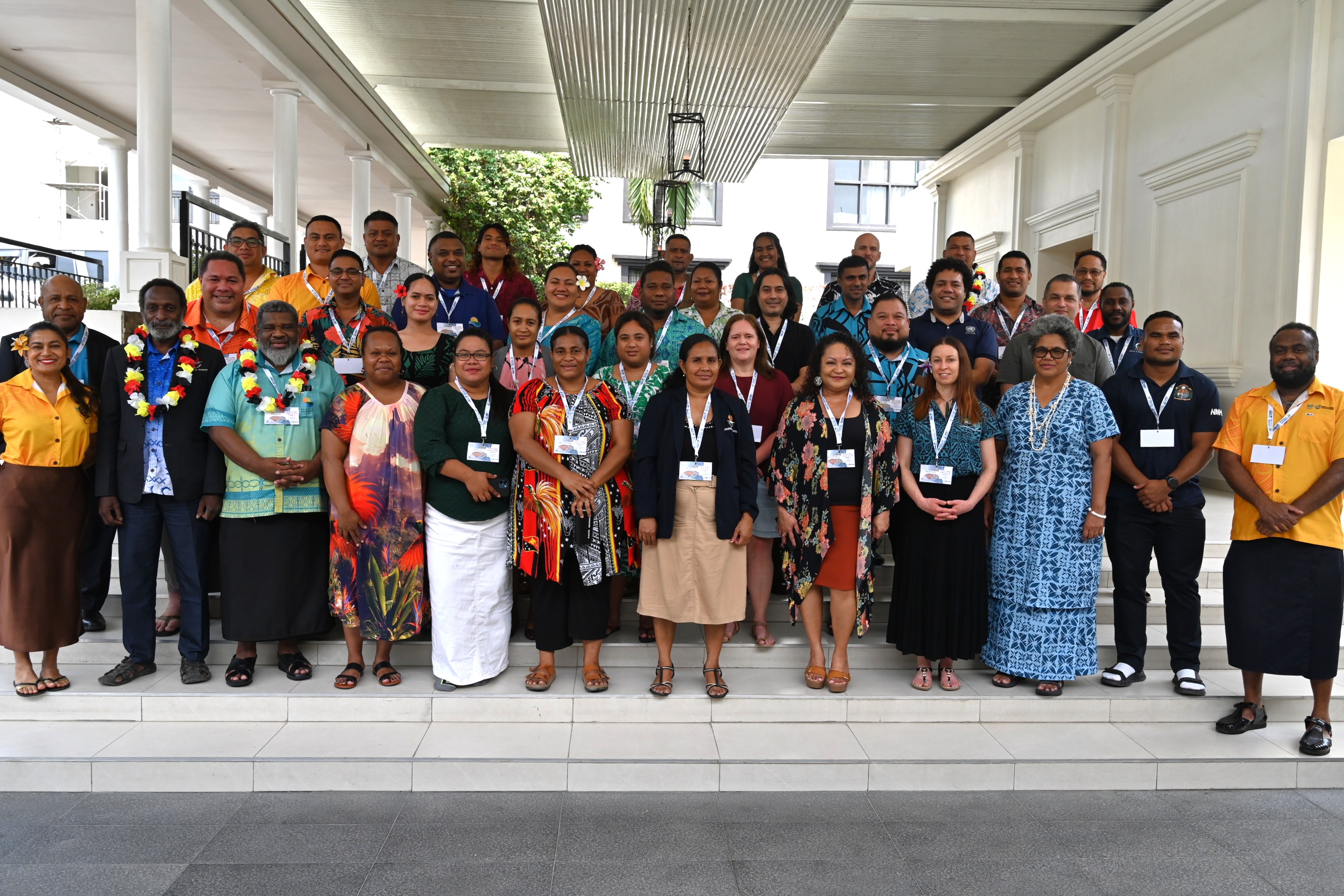
19 October 2026, Port Moresby - Directors and climate officers from Pacific National Meteorological and Hydrological Services (NMHSs) and technical partners are meeting in Port Moresby, Papua New Guinea today to assess existing climate services capabilities across the region, and identify priorities for strengthening climate services under the Pacific Roadmap for Strengthened Climate Services 2024 – 2033.
The workshop brings together the key players involved in climate services in the region to reflect on progress, identify gaps, and consider the capabilities of Pacific countries needed to deliver consistent, effective, and user-focused climate services by 2033.
In his official remarks, Pacific Meteorological Council (PMC) Chairman and President of the World Meteorological Organization’s Regional Area V (WMO RA-V), Mr. Laitia Fifita, highlighted the importance of the Roadmap as a shared regional framework for improving the production, delivery and use of climate information and services across Pacific island countries.
“The roadmap recognises that climate services are not simply about generating forecasts and climate data. They are about helping people make better decisions,” Mr. Fifita said.
“Whether it’s a farmer determining when to plant crops, or fishers monitoring ocean conditions, disaster management agencies preparing for severe weather, or governments planning long-term investments, climate services provide the information needed to reduce risks and enhance resilience,” he added.
The one-day workshop will examine the climate service capabilities that currently exist nationally and regionally, including the products and services being delivered by Pacific NMHSs, areas of strength, and any gaps requiring future attention.
It will also consider the capabilities needed by Pacific NMHSs to deliver consistent climate services and aligning these with the WMO’s Global Framework for Climate Services and the Pacific Roadmap for Strengthened Climate Services.
The process will help establish a clearer picture of where the region aims to be by 2033, while recognising that countries have different priorities, needs, and resources and will require approaches suited to their individual circumstances.
The contributions of regional programmes such as the Climate and Oceans Support Program in the Pacific (COSPPac), the Intra-ACP Climate Services and Related Applications (ClimSA), the Republic of Korea-Pacific Islands Climate Prediction Services (ROK-PI CliPS), and the UNEP Enhancing Climate Information and Knowledge Services for Resilience in 5 Island Countries in the Pacific Ocean (CIS-Pac 5) will also be a key focus of the workshop, exploring the capabilities developed by these programmes, the services and activities that need to be sustained, and the remaining gaps that require additional support.
The Monitoring and Evaluation Framework of the roadmap will also be introduced during the discussions, as well as the 17 Strategic Performance Indicators, the three monitoring data streams, and the annual reporting template for Pacific NMHSs.
These tools are intended to support a more structured approach to monitoring progress against the roadmap, and provide a way to measure progress and understand how climate services are developing and where further attention and investment may be needed.
Mr. Fifita emphasised that strengthening climate services requires more than improvements in technical systems, but also depends on regional coordination, strong partnerships, enhanced human capacity and meaningful engagement with users of climate information.
He stressed that the roadmap places people at the centre of climate services, encouraging a shift from simply producing information to ensuring it is translated into actionable knowledge that supports effective decision-making.
“The success of the Pacific Roadmap will ultimately be measured by its impact on people’s lives,” he added.
As the region faces increasing challenges from climate variability, extreme weather events, ocean warming, and sea-level rise, stronger climate services are essential to protecting lives and livelihoods, supporting food and water security, safeguarding infrastructure and building resilience.
Mr. Fifita reflected on the Pacific’s shared identity and spirit of cooperation, drawing on the word Lamana from Papua New Guinea, specifically the Motu language, commonly understood to mean a friend, companion or soulmate, as a reminder of the partnerships needed to advance climate services across the Blue Pacific.
“Just as our ancestors navigated the ocean together, we gather today as lamana to share knowledge, strengthen climate services, and build resilience across our Blue Pacific continent,” he said.
The workshop sets the stage for further regional discussions during the 19th Pacific Islands Climate and Oceans Forum (PICOF-19) convenes on Tuesday and Wednesday.