

14 November 2026, Antalya - Pacific countries, who contribute the least to global emissions, yet face some of the most severe consequences of climate change, have demonstrated leadership in climate action by developing pathways to build more resilient communities.
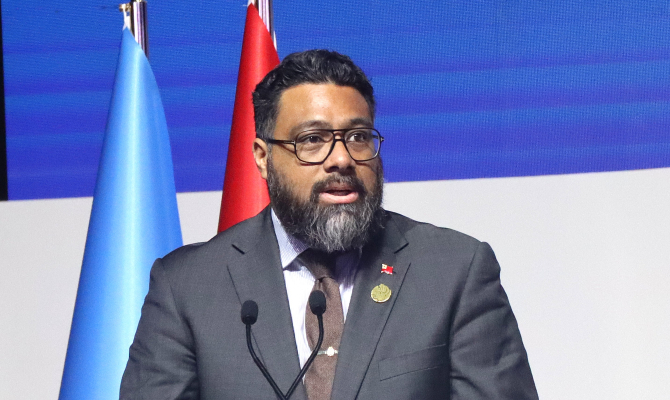
At COP31 in Antalya, Türkiye, Prime Minister of the Kingdom of Tonga, Fatafehi Kinikinilau Lolomanaia Fakafanua, has extended an invitation to all countries and global partners to invest in them.
One of the pathways is the Pacific Resilience Facility (PRF). The first Pacific-led, owned and managed, climate and disaster resilience financing facility, the PRF exits to provide resources to communities for preparedness and adaptation without adding to national debt.
It is already making an impact. From the restoration of a traditional taro patch by a women’s group in Palau, rainwater harvesting in the Marshall Islands and Nauru, youths restoring native coastal trees in Tonga, food security in Niue, and community sanitation in the Solomon Islands. These first community grants show what a facility designed by and for the Pacific can do: get money to the people on the frontline.
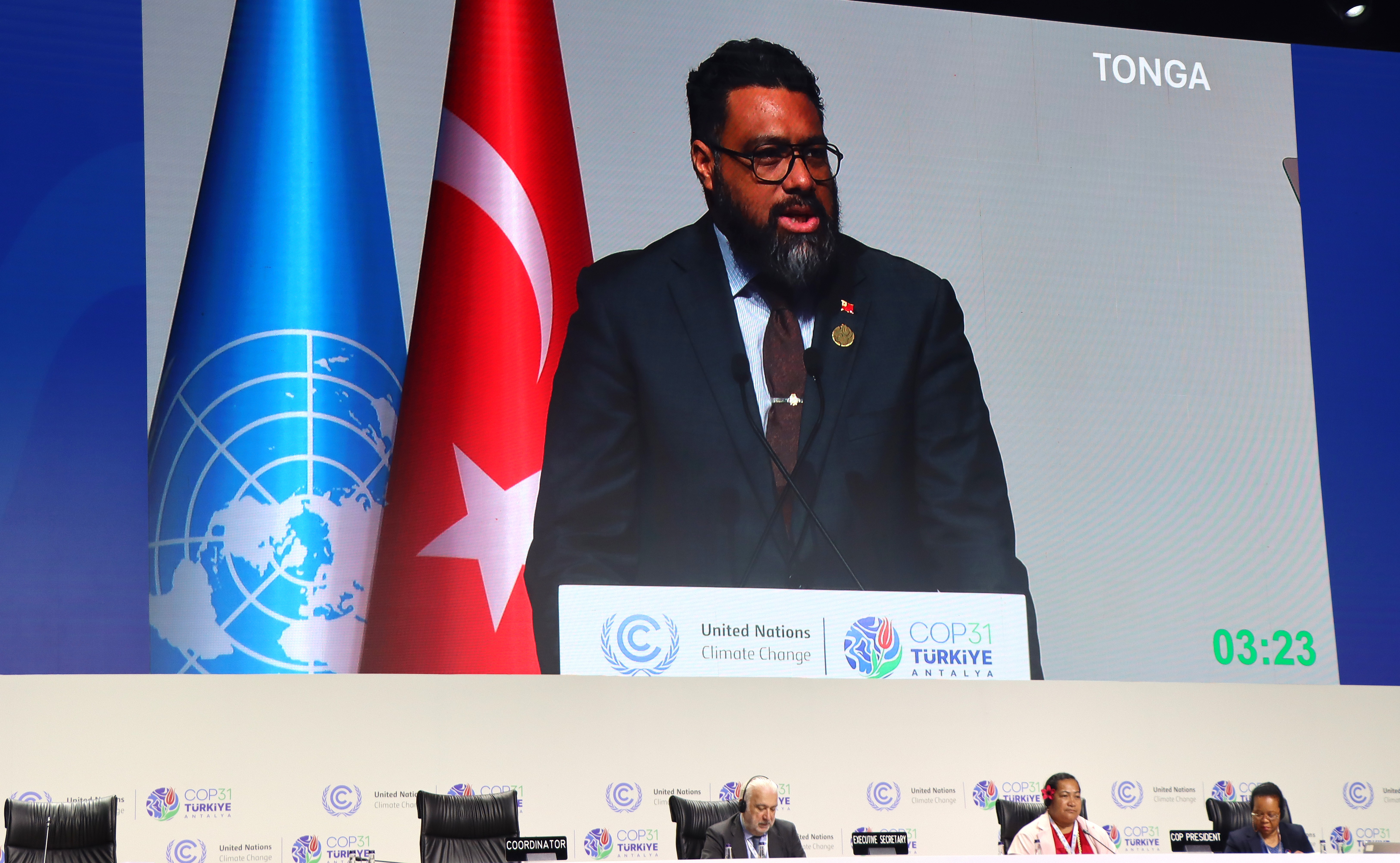
The Weather Ready Pacific (WRP) Programme is another pathway identified by Prime Minister Lord Fakafanua. The WRP Programme is a Pacific-led, Pacific-owned decadal Programme of Investment endorsed by Pacific Leaders.
Implemented by the Secretariat of the Pacific Regional Environment Programme (SPREP), WRP aims to reduce the human and economic costs of severe weather, water, and ocean events across the Pacific by strengthening National Meteorological and Hydrological Services and their partnerships with National Disaster Management Offices.
“We have built pathways to build more resilient communities,” Prime Minister Lord Fakafanua said.
Whereas the PRF needs USD 328 million to reach its capitalisation goal, the Weather Ready Pacific needs at least USD160 million, COP31 was told.
“We call on partners to invest in it, and trust our people to lead.”
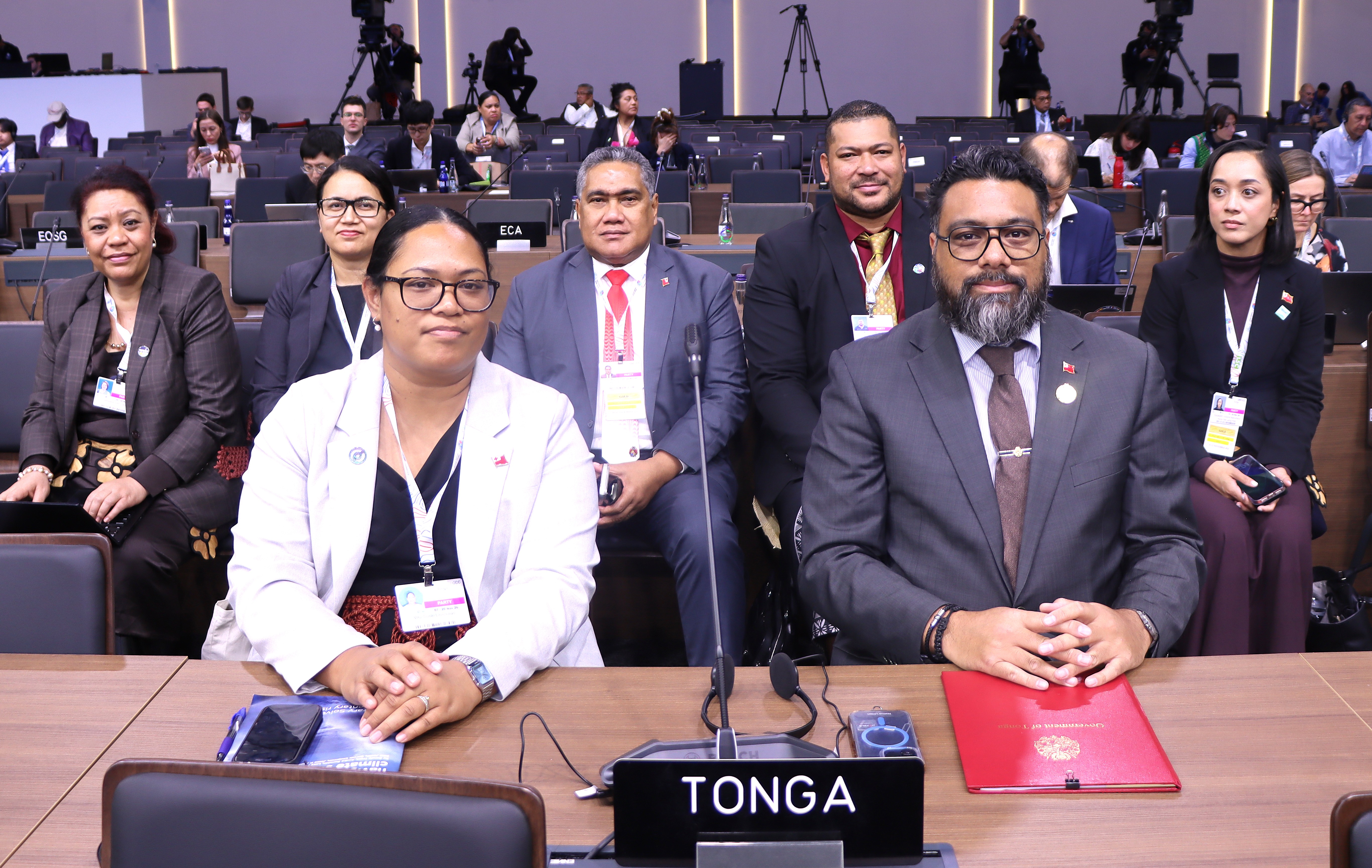
The Prime Minister of Tonga is amongst hundreds of Pacific delegates who have made the long trip from their homes to Türkiye to fight for the survival of their communities who have been unfairly placed at the forefront of climate impacts.
For Tonga, severe drought caused by the El Niño has threatened its water and food supplies while the nation prepares for the tropical cyclone season. The Kingdom is also still recovering from the devastation of the Hunga Tonga – Hunga Ha’apai volcanic eruption and tsunami that cost more than a third of the country’s GPD.
“Climate pressures compound these burdens,” said Prime Minister Lord Fakafanua. “The Belau Declaration – endorsed by Pacific Islands Forum Leaders in August – demands equal action to the climate threat.”
Tonga is doing its part. At pre-COP31, Tonga launched its third NDC, charting a course to 2035, towards a zero-emission and a more climate-resilient economy by 2050. Tonga is also committed to a goal of 70 percent renewable electricity by 2030 and 100% by 2035.
“At forums like this, we have been told that we ask too much. That our red lines are unreasonable,” said Prime Minister Lord Fakafanua. “We all have a part to play. For when these meetings end, each of us must live with our conscience – and with what we knew to do, but chose to leave undone.”
The 31st Conference of the Parties (COP31) to the UN Framework Convention on Climate Change (UNFCCC) is taking place from 9-20 November 2026 in Antalya, Türkiye.
The Pacific Islands Parties to the UNFCCC are Cook Islands, Federated States of Micronesia, Fiji, Kiribati, Republic of Marshall Islands, Republic of Naoero, Niue, Palau, Papua New Guinea, Samoa, Solomon Islands, Tonga, Tuvalu and Vanuatu.
For further information on the Pacific at COP31 please visit: www.sprep.org/cop31