

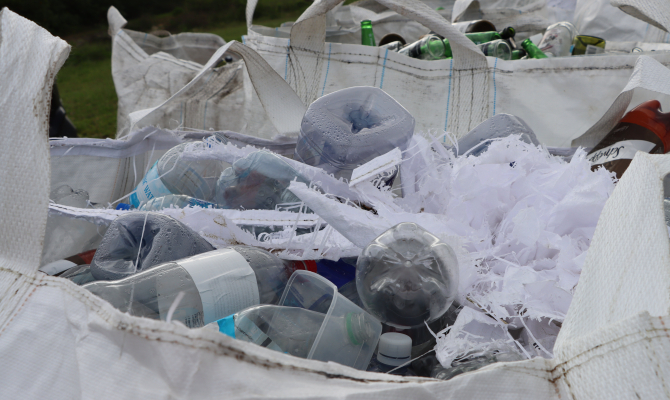
On Kiribati’s low-lying atolls, families have built te buibui, small seawalls made up of logs, branches and leaves, to hold back the tide. Now some of those walls are being built out of rubbish, said Minister Ruth Cross Kwansing at the Pacific Leadership for an Ambitious Global Plastics Treaty, a side event at COP31 (UN Climate Conference) in Antalya, Turkey.
“When the tide surges or when the king tide comes in, what happens? It comes and collects all of that waste and puts it into the ocean,” she said.
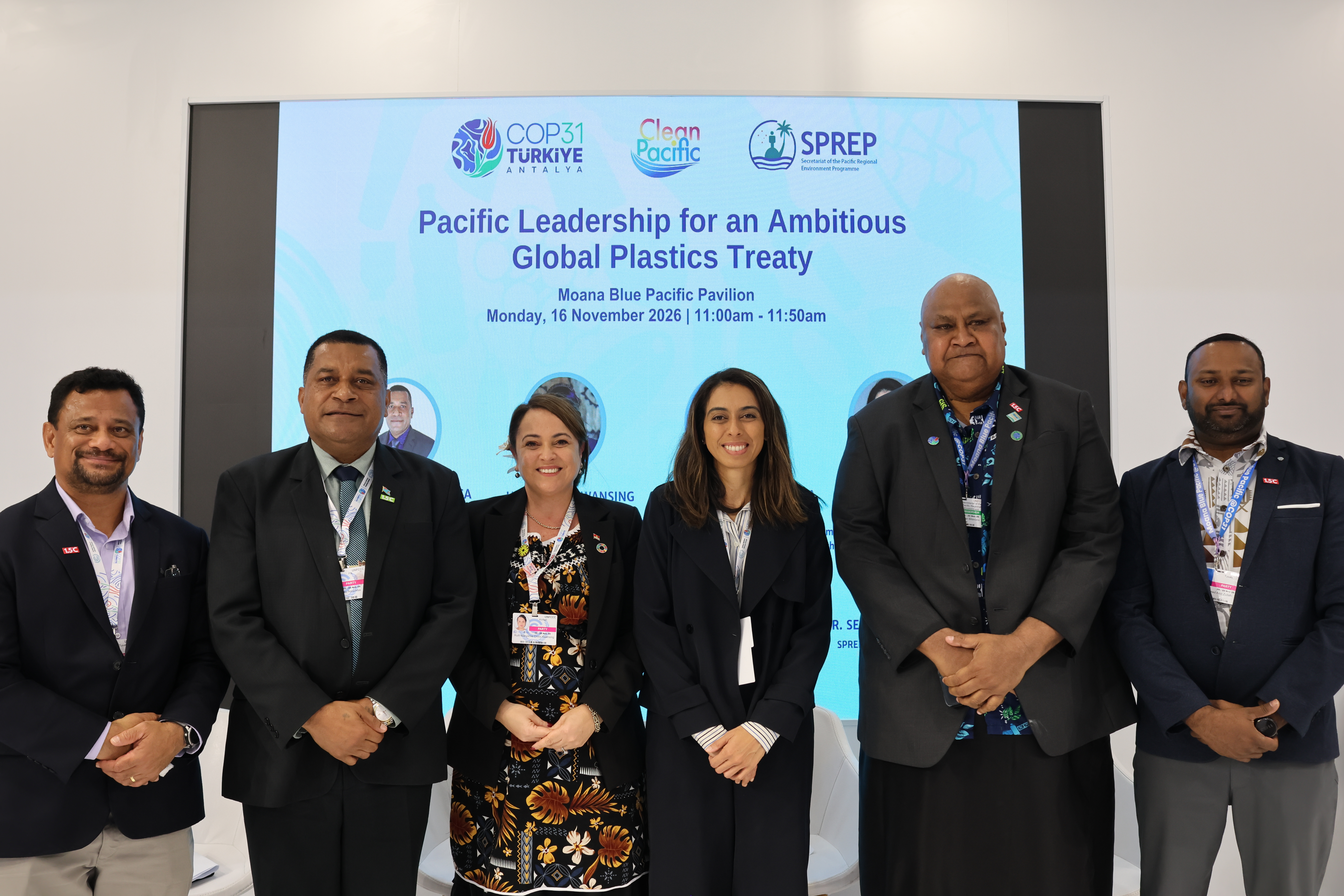
Panelists at the side event agreed that the plastics crisis is a climate crisis, and the Pacific will not settle for a treaty that only cleans up the mess.
Unfinished Business Since Geneva
Opening the session, Mr. Anthony Talouli, Director of Waste Management and Pollution Control at the Secretariat of the Pacific Regional Environment Programme (SPREP) said bringing the debate to a climate COP was deliberate after treaty talks stalled at INC-5.2 in Geneva.
“For us in the Pacific, plastic pollution and climate change are two sides of the same coin. Voluntary recycling will not solve a global production crisis.”
Moderator, Mr. Sefanaia Nawadra, SPREP Director General said the world had spent decades cutting emissions while leaving the fossil fuels behind them largely untouched. “We shouldn’t make that mistake with plastics. We should stick to the whole life cycle.”
Reflecting on his chairmanship at the PSIDS in Geneva, Hon. Dr Maina Talia, Minister for Climate Change and Environment in Tuvalu, called the non agreement there a show of strength. “By not signing, we are telling the world that we are strong. We won’t sign any international treaty that is weak.”
He urged the region to stay restless. “We should be frustrated all the time when we come to COP,” he insisted. Adding that the plastics talks cannot be negotiated in isolation from the climate process. “If you are not on the table, you are on the menu. But if you are not on the table and not on the menu, you will be in the fire.”
Hon. Dr Talia asked the room to stand behind the Pacific’s negotiators, saying the glory belonged to those doing the hard work through long nights in Geneva. With the COP’s ocean day tomorrow, he called for the ocean to be an agenda item in its own right, rather than scattered across others. “All that waste will end up in the ocean.”
At the Receiving End
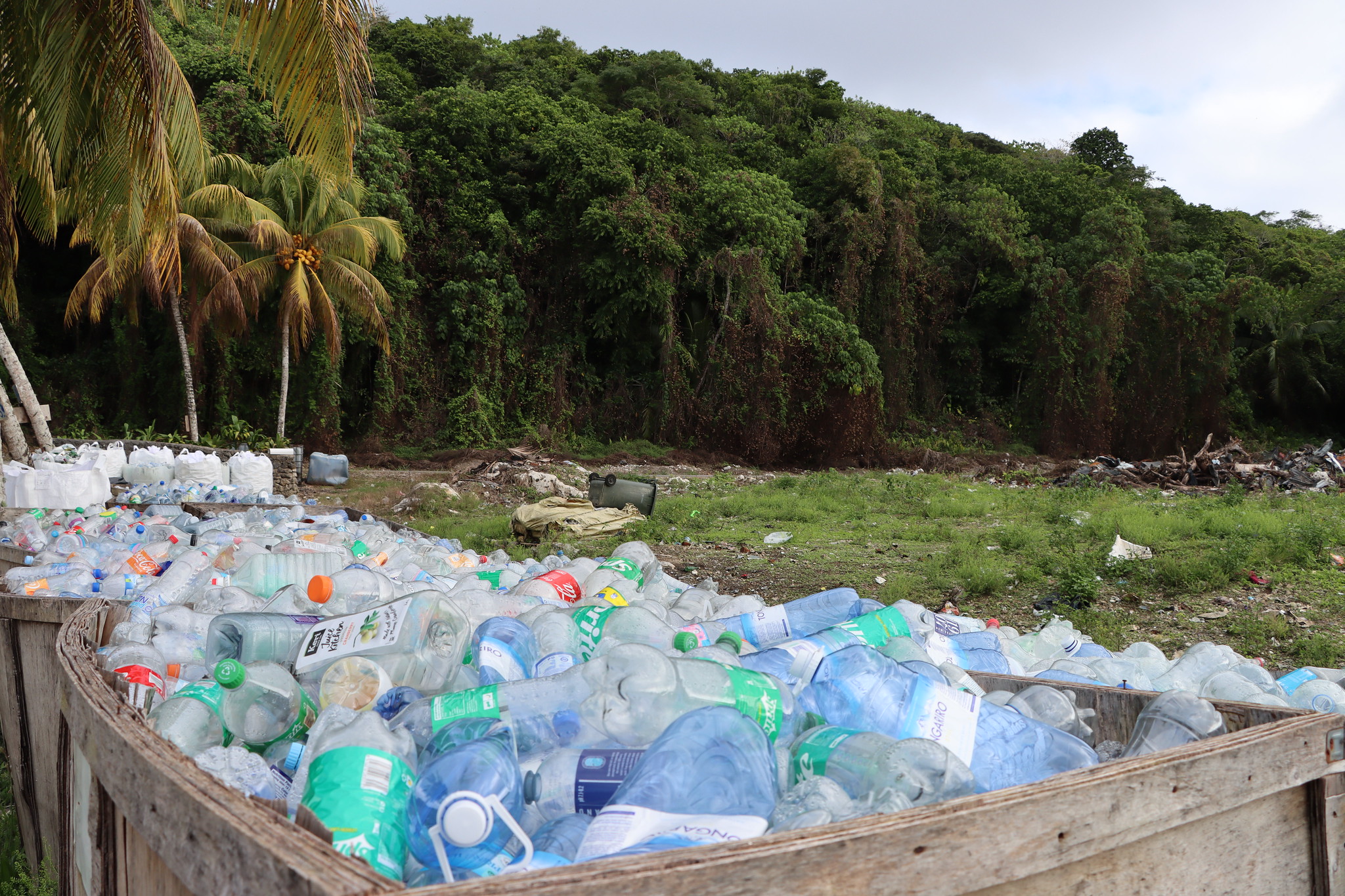
Hon. Maciu Katamotu Nalumisa, Minister for Housing and Local Government from Fiji said island nations sit “at the receiving end” of a global supply chain. He quoted figures putting plastic at nearly 85 percent of ocean waste. Fiji is not waiting for the treaty. Upon his return from the Zero-Waste Forum in Türkiye last October, Hon. Nalumisa supported the launch of return and earn scheme that pays five cents for every plastic bottle or aluminium can handed in. It began as a pilot project in one town and now town councils across the nation are joining. Between January and October this year, the pilot project collected close to 20 million containers. To support this initiative further, a container deposit regulation, with a levy on importers and manufacturers is being drafted.
Turning Trash into Timber
Kiribati has about 130,000 people spread across 21 islands, and 60,000 of them live in the capital, South Tarawa. With no spare land, landfills become reclaimed land. When collection of trash falls behind informal dumps spring up near the beach, sometimes behind the very seawalls meant to protect it.
As an advocate for waste management, Hon. Kwansing sponsors community clean-ups. Three to four take place every day, six days a week, and about 70 percent of the people taking part are women and young people. She also highlighted he practical island innovations in plastic waste circularity such as transforming recovered plastic into termite proof plastic timber as a durable substitute for wood, and repurposing recycled plastic to fibers added into cement to reinforce concrete for seawalls and resilient coastal infrastructure.
“You’re allowed to get frustrated when you’re at the community level. When you come into the government level, you have to move out of frustration and start problem solving.”
Hon. Kwansing makes no apology for her passion. “People might say that it’s not sexy, but I think cleanliness is very sexy. Cleanness is godliness.” The real fix, she added lies “further up the food chain,” at the source. “Prevention is better than cure.”
“A Tsunami of Ocean Plastics”
H.E. Ilana Seid, Palau’s Permanent Representative to the UN and Chair of AOSIS, was direct. She said “A lot of the low-ambition countries are trying to have a waste management treaty, and we know that that won’t work. We’re looking at a tsunami of ocean plastics that’s going to end up on our shores.”
“Pacific islanders eat about four times more fish per person than the global average, making microplastics a direct health threat,” she added. Countries behind abandoned “ghost” fishing gear must pay to remove it. “Solidarity is key. A treaty must solve the problem, not just a Band-Aid to create headlines.”
SPREP DG Nawadra was in agreement with H.E Seid, when he said “The most important thing is political will and political leadership.”
Small No More
Asked by a Mauritian delegate how such small nations cope, Hon. Kwansing told a story. During the King’s Baton Relay ahead of the Commonwealth Games, countries were challenged to collect a million pieces of ocean plastic. Kiribati weighed its haul and estimated it had collected 15 million.
“Your smallness stops feeling so small because you realise that you’re taking the lead,” she said. Today, she speaks not just from Kiribati but on behalf of small island states everywhere.
Held on 16 November 2026, the Pacific Leadership for an Ambitious Global Plastics Treaty is a side event at the Moana Blue Pacific Pavilion.
The 31st Conference of the Parties (COP31) to the UN Framework Convention on Climate Change (UNFCCC) is taking place from 9-20 November 2026 in Antalya, Türkiye.
The Pacific Islands Parties to the UNFCCC are Cook Islands, Federated States of Micronesia, Fiji, Kiribati, Republic of Marshall Islands, Republic of Naoero, Niue, Palau, Papua New Guinea, Samoa, Solomon Islands, Tonga, Tuvalu and Vanuatu.